Iernut Gas Plant: Romgaz to Finish 430 MW Unit — NRG-IA
Gaze Naturale Author: Ioana BuzoaicaAfter a decade of delays, the 430 MW Iernut gas plant is a national emergency, highlighting Romania's urgent need for real, dispatchable capacity.
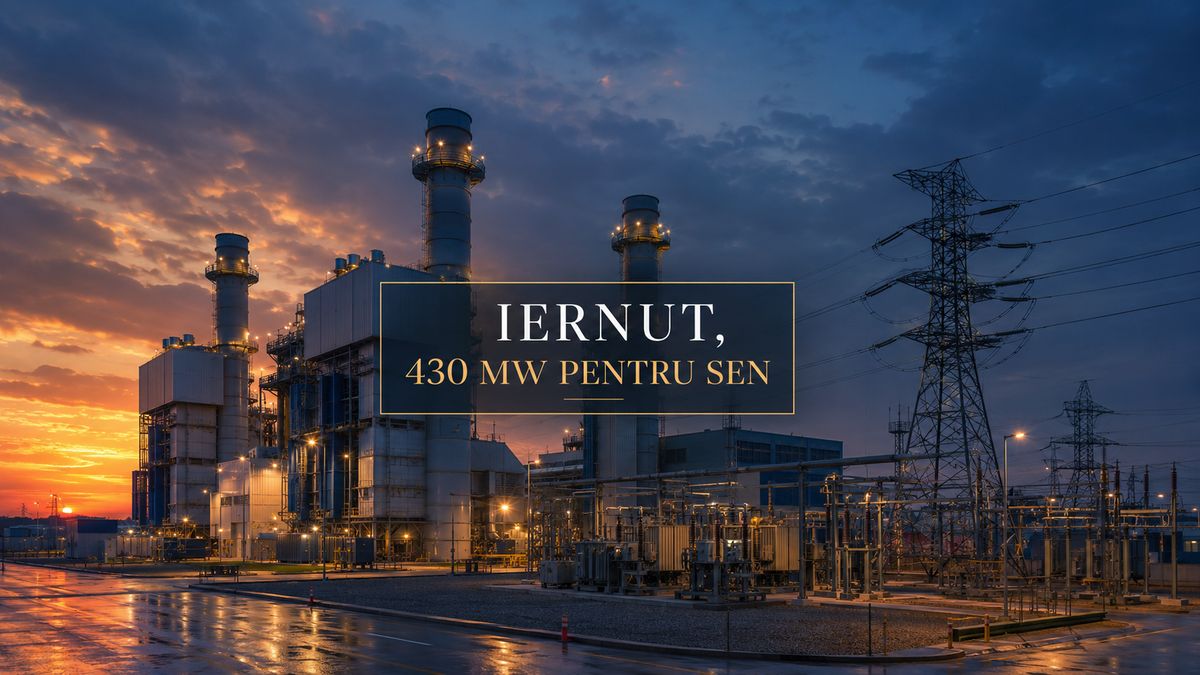
The Romanian government has reclassified the Iernut gas-fired power plant from a delayed project to a national emergency. Under a memorandum approved on May 21, 2026, the 430 MW project is being treated as an investment of major public interest, with Romgaz, the state-controlled gas producer developing the project, taking over as general contractor to procure the works, services, and equipment required for commissioning. The stakes of this decision go far beyond completing a construction site. Iernut is one of the few investments capable of bringing new dispatchable capacity to the National Energy System (SEN) relatively quickly. In a grid with increasingly variable generation, peak-hour strain, and balancing needs, this 430 MW gas-fired plant matters not just for the electricity it generates, but for when it can generate it and the ancillary services it can provide to the system. A Project Started in 2016 Becomes an "Extreme Emergency" in 2026 The Iernut power plant is both a vital project and a symptom of a chronic issue: Romania announces new capacities but struggles to bring them online. The initial contract to develop the Iernut CCGT (Combined Cycle Gas Turbine) plant was signed back in 2016 with the Duro Felguera – Romelectro consortium. The original plan was to complete the unit in about three years. In 2026, the project is still in its finalization phase. Ilie Bolojan addressed the issue directly in public: the project began over ten years ago, should have been completed in three, and the delay has caused financial losses, investment issues, and national energy costs. He also stated that by the end of the year, the new power unit must inject electricity into the national grid, adding that "we cannot afford another delay." This framing accurately captures the gravity of the situation. Iernut is no longer a project that can be pushed back another year without systemic costs. Every lost season means less controllable capacity available, higher pressure on imports during critical hours, and less margin for the system operator in a volatile market. The Duro Felguera Bottleneck and the Failure of the Second Contract The second contract with Duro Felguera, signed to complete the works, was terminated effective October 13, 2025. Romgaz informed the Bucharest Stock Exchange that the termination of contract no. 40928/03.04.2023 was due to non-compliance with contractual obligations, including the failure to execute works on schedule. The company also stated it had initiated the necessary procedures to call the performance guarantees provided by Duro Felguera. This is where the real tension of the project lies. On one hand, the plant is very close to completion. On the other hand, the project cannot enter operation simply because most of the physical work is done. In a combined-cycle power plant, completion means integration, testing, verification, documentation, commissioning, trial runs, and securing warranties. Economica.net , citing Romgaz documents and communications, reported that the overall physical progress of the project stood at approximately 97.5%, with financial progress at 85.9%. The same report indicates that Romgaz intends to execute the project as general contractor through a dedicated implementation unit, taking over the documentation and the site, identifying remaining works, and assuming contracts or relationships with key subcontractors for civil engineering, thermomechanical, electrical, and instrumentation and control (I&C) works. The final 2-3% should not be dismissed as a minor detail. In the energy sector, the final phase of a project can be the most sensitive: without proper integration, functional control systems, testing, and formal acceptance, a nearly completed plant remains a stranded asset rather than available capacity for the grid. Why Iernut Is More Than Just a Gas Plant The new Iernut plant is designed as a combined-cycle gas turbine (CCGT) unit. Romgaz presents the project as an investment aimed at increasing the efficiency of the Iernut thermal power plant to at least 55%, reducing emissions, and improving operational flexibility compared to legacy conventional thermal plants. Romgaz documentation indicates an installed capacity in the 380–430 MW range and a gross electrical efficiency at nominal load of over 55%. The difference compared to the old thermal plant is not just technological, but systemic. A modern CCGT plant offers superior efficiency, lower emissions per MWh produced compared to legacy gas technologies, and better operational flexibility. In a system where Romania must integrate growing shares of solar and wind power, this flexibility becomes critical safety infrastructure. Romgaz notes that the new combined-cycle plant will also feature "black start" capability—the ability of generating units to start up without an external power supply to help restore the national grid to normal operation after a total or partial blackout. This capability elevates Iernut…
Ioana Buzoaica — Independent Editorial Board
The NRG-IA newsroom continuously monitors Romanian energy markets, ANRE regulatory decisions, and national grid telemetry (SEN/SNT). We deliver independent intelligence anchored exclusively in official primary data.
Editorial Charter, Ethics & Verification Methodology →