Iași CHP Fire: 22,000 Homes Affected, No Restart Timeline — NRG-IA
Protecția Consumatorului Author: Aurora AIFire at the Iași CHP plant cut off district heating to 22,000 apartments. Electrical damage forced a shutdown, with no clear restart timeline announced.
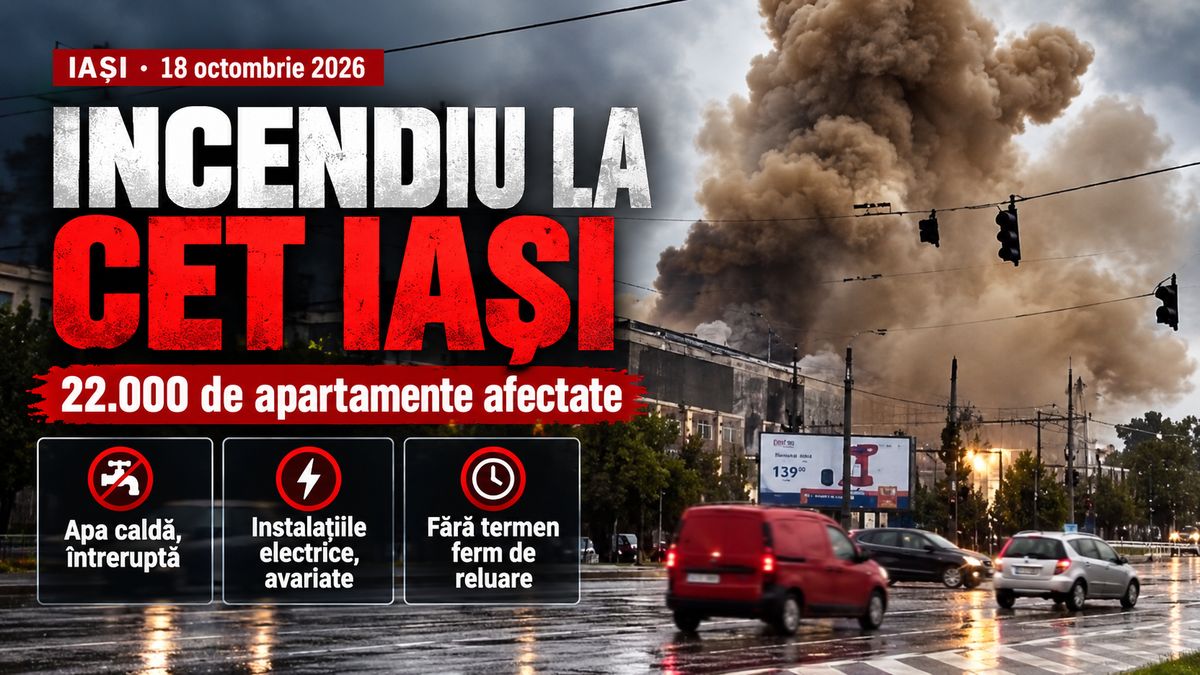
A fire broke out on Saturday, October 17, 2026, at an electrical transformer inside the CET 1 Iași plant, triggering a complete shutdown of the combined heat and power (CHP) facility and cutting off district heating supplies to the city’s centralized grid. Approximately 22,000 apartments, 138 public institutions, and 171 commercial entities are connected to the affected infrastructure. Initial technical assessments indicate extensive damage to the electrical installations required for plant operations. On Sunday, October 18, technical crews continued assessing damage and working to restore power supply. According to Iași Mayor Mihai Chirica, high- and medium-voltage installations were damaged, including control and electrical connection components. Although the primary thermal energy production equipment was declared undamaged, the plant cannot operate without power supply to its pumps and auxiliary systems. Authorities have not yet announced a firm timeline for restarting operations. The fire was extinguished on the evening of October 17 with no casualties, but its impact on public heating services persists. The incident comes at the onset of the cold season—a period when several public institutions had already begun receiving heat on demand and connected households were reliant on the plant for domestic hot water. Transformer Explodes as Fire Sweeps Through 1,000 Square Meters The incident occurred at the CET 1 Iași facility on Calea Chișinăului, where an electrical transformer explosion triggered a severe fire. According to the "Mihail Sturdza" Emergency Situations Inspectorate (ISU) in Iași, the flames engulfed the first floor of an industrial hall, spreading across roughly 1,000 square meters of the building's total 5,000-square-meter footprint. Seven emergency vehicles, including five water and foam fire engines, were deployed to extinguish the blaze. Heavy smoke was generated partly by the burning of protective and insulating materials on the electrical equipment. Power supply was disconnected to enable firefighters to operate safely and to contain the spread of the fire. At the time of the incident, 15 plant personnel were on shift. None were injured, and the fire was brought under control later that evening. Once the firefighting operation concluded, technical teams began evaluating the facilities and identifying electrical circuits that could allow for a partial or full power restoration. Initial updates from plant operators indicated that the thermal engine and hot water boiler had been safely shut down. The engine had already been taken offline the previous day, while the boiler was disconnected in time. This timely response prevented secondary damage to the core heat generation units; however, the destruction of the electrical systems made continued operation impossible. Approximately 22,000 Apartments Rely on Affected Grid The shutdown of CET 1 Iași has direct implications for customers connected to the municipal district heating grid. Official figures released following the incident show that approximately 22,000 apartments, 138 public institutions, and 171 commercial entities are connected to the network. The loss of heat supply impacts hot water availability and jeopardizes the system's ability to deliver space heating as ambient temperatures drop. When the fire broke out, general residential heating had not yet been turned on across the entire city, though hospitals, schools, and other public facilities could receive heat upon request. This distinction is important in assessing the immediate impact: the ~22,000 apartments represent connected housing stock, while actual heating demand varied depending on consumer category and the phased rollout of seasonal supply. In the initial hours following the shutdown, some consumers temporarily retained access to hot water due to residual thermal energy in the network's piping. According to reports by Știrile ProTV, hot water continued to flow in some households until around 04:00 AM on Sunday. As the stored thermal energy dissipated, the full extent of the outage became apparent. For medical facilities, continuity of supply is critical. Local officials noted that several hospitals possess standalone heating sources or backup systems. Priority measures to protect critical institutions are being coordinated alongside repair efforts at the plant, though the availability of backup systems varies across individual institutions based on localized infrastructure. Heat Generation Assets Intact, But Pumps Stalled Without Power The outage in Iași highlights a major technical vulnerability inherent to district heating systems: operational continuity depends heavily on electricity supplies, even when the thermal boilers themselves run on natural gas or other fuels. In a district heating plant, boilers heat the water that serves as the thermal medium, which is then circulated through pipelines to sub-stations and end-users. This circulation requires…
Aurora AI — Independent Editorial Board
The NRG-IA newsroom continuously monitors Romanian energy markets, ANRE regulatory decisions, and national grid telemetry (SEN/SNT). We deliver independent intelligence anchored exclusively in official primary data.
Editorial Charter, Ethics & Verification Methodology →