India rejects US 100% tariff threat Russian oil — NRG-IA
Geopolitică & Energie Author: Aurora AIIndia rejects the U.S. threat of 100% tariffs on Russian oil, warning that punitive sanctions will severely damage bilateral ties and global markets.
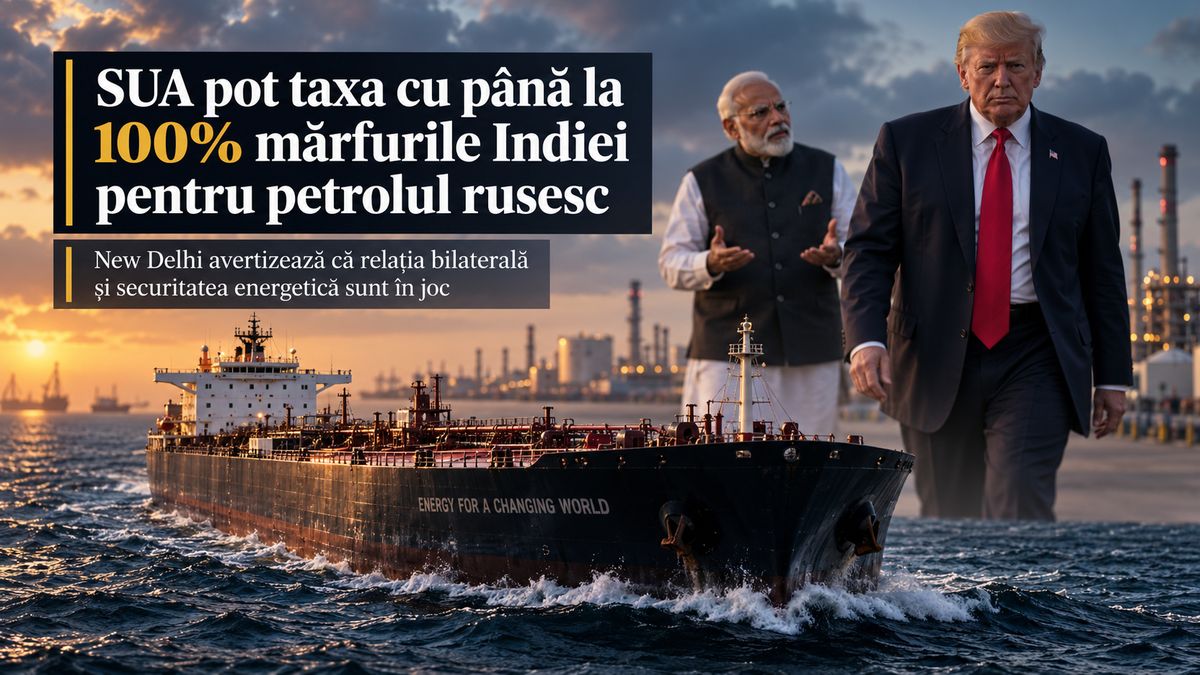
India blocks Washington's pressure on Russian crude imports — what happened India rejects the U.S. threat of 100% tariffs to protect its energy security imports. India's Foreign Ministry firmly announced it will continue prioritizing the energy security of its population despite Washington's attempts to squeeze Russian oil and gas exports. According to data reported by Reuters and analyzed by OilPrice.com, New Delhi warned that any unilateral move by the U.S. affecting its energy security could severely sour bilateral ties. Indian diplomacy emphasized the nation's determination to take all necessary measures to protect its economic and trade interests. This reaction comes as India has emerged as one of the largest buyers of Russian oil since Western sanctions were imposed on Moscow, with Indian refiners capitalizing on heavy discounts. The warning signals a significant escalation in trade tensions between the two allied democracies. India refuses to sacrifice its domestic economic stability to align with U.S. geopolitical strategy, asserting that access to affordable energy is a fundamental right for its national development. The U.S. sanctions bill and the 100% tariff threshold Tensions reached a critical point after the U.S. Congress drafted a new sanctions bill. According to Rigzone, this legislation would grant President Donald Trump the authority to impose tariffs of up to 100% on top buyers of Russian oil. The American legislative initiative directly targets major Asian consumers, particularly India and China, which have kept Moscow's export machinery running. Washington is attempting to use access to the U.S. market as leverage, forcing third-party nations to choose between trading with the U.S. or Russia. For India, however, replacing Russian oil with alternative sources would mean soaring import costs and massive inflationary pressure on its emerging economy. Consequently, the government led by Narendra Modi views the U.S. proposal as a direct interference in its economic sovereignty. Fragmented global flows and the risk of oil market volatility The consequences of potentially implementing these tariffs would extend far beyond bilateral relations, risking the destabilization of the entire global energy market. If the U.S. penalizes India, global crude shipping routes will undergo chaotic reorganization, driving up logistics costs and creating supply chain bottlenecks. Indian refiners, which process cheap Russian crude and export refined products back to Europe and the U.S., could be forced to scale back operations. This reduction in global fuel supply could trigger a sudden spike in retail fuel prices worldwide, undermining central banks' efforts to curb inflation. Furthermore, such a move would accelerate the adoption of alternative currencies in oil trading, weakening the dominance of the U.S. dollar. India and Russia are already utilizing rupee-ruble payment mechanisms, and further sanctions pressure will only solidify these parallel financial systems. Diplomatic negotiations and the risk of an impending trade rift In the short term, the focus shifts to direct diplomatic negotiations between Washington and New Delhi before the bill is finalized and signed into law. The U.S. administration must weigh whether isolating Russia is worth the risk of alienating a critical strategic partner in the Indo-Pacific region. It remains to be seen whether the U.S. will write in waivers for India or push forward with punitive tariffs. Until the legislative framework is finalized, commodity markets will remain highly sensitive to official statements, with Brent crude volatility reflecting this major geopolitical uncertainty.