Record Energy Investments: Electromontaj and Nova Power — NRG-IA
Piața de Energie Author: Aurora AIElectromontaj and Nova Power & Gas lead the wave of record investments in Romanian energy in 2026-2027, repatriating grid specialists.
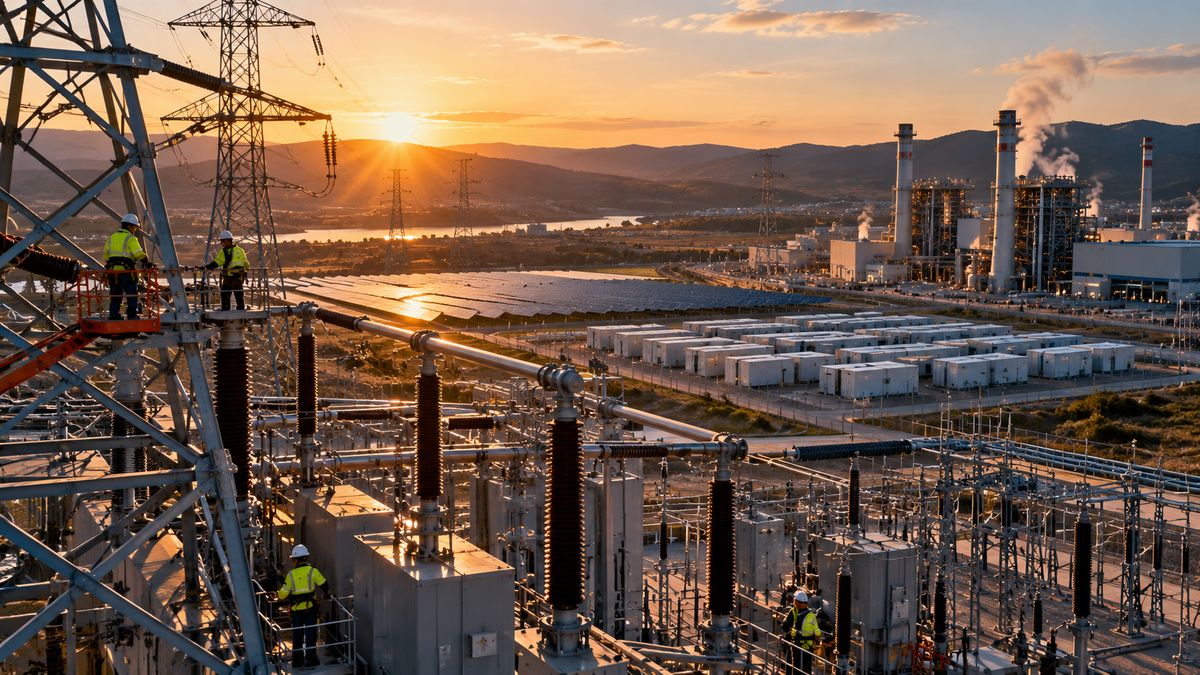
Record Infrastructure Investments — Romanian Entrepreneurs Take Control of Energy Projects After 40 Years Major Romanian energy entrepreneurs, such as Electromontaj and Nova Power & Gas, are managing record investments in 2026 and 2027, amid the resumption of major infrastructure projects stalled for nearly four decades. The relaunch of these massive grid works acts as a magnet for Romanian specialists abroad, who are returning home to coordinate high-voltage construction sites. According to the annual Top 100 Entrepreneurial Companies analysis published by Ziarul Financiar, Romanian companies in this sector are restructuring to cope with an unprecedented volume of work. Electromontaj, Romania's largest high-voltage line builder, is consolidating its market leader position by securing major interconnection and power transmission contracts. This dynamic follows a long period during which the national transmission grid suffered from chronic underinvestment. The new projects not only modernize the national energy system but also create a stable development framework for Romanian engineers. The repatriation of specialists is directly stimulated by the technical complexity of the new works, similar to those in major European energy hubs. In parallel, the group controlled by entrepreneur Teofil Mureșan, which includes Nova Power & Gas and Electrogrup, is redefining the business model in the sector. According to Ziarul Financiar, Mureșan stands out as the strongest entrepreneur in the energy sector, succeeding in integrating a complete value chain. This covers the stages of design, construction of mixed-source generation capacities, battery storage, and direct supply to the final consumer. This integrated model reduces dependence on third parties and optimizes operational costs at a time of maximum market pressure. The Historical Grid Deficit and Billions of Euros in European Funds This boom in the energy construction sector is directly fueled by the urgent need to integrate new renewable production capacities. The grid managed by Transelectrica requires massive expansions to integrate wind and solar parks currently in the authorization or construction phase. Without these transmission lines, green energy produced in Dobrogea or Banat cannot reach large industrial consumers, blocking the country's energy transition. The massive amounts allocated through the National Recovery and Resilience Plan (PNRR) and the Modernization Fund represent the financial engine of this transformation. However, these funding schemes impose extremely strict execution deadlines, which puts pressure on the operational capacity of builders. Local entrepreneurs have been forced to quickly increase their working capital and invest in state-of-the-art machinery to be eligible for complex public tenders organized by the state. Value Chain Integration Reduces Dependence on External Subcontractors The transition from simple work execution to vertical integration represents a structural change for the Romanian market. The model implemented by Nova Power & Gas and Electrogrup demonstrates that dependence on external suppliers of equipment and services can be significantly reduced. By directly controlling design and construction, delivery times become predictable, a critical factor in the context of global supply chain crises. For the final consumer, this integration could mean greater stability in electricity and natural gas prices. When a single group controls production, battery storage, and supply, intermediate margins are eliminated, allowing for more competitive offers on the free market. In addition, storage capacities help balance the grid during peak hours, reducing imbalance tariffs that are directly reflected in the monthly bills of industrial and residential consumers. The 2026-2027 Deadlines Force the Pace of Construction Work The main risk identified by industry specialists remains the acute shortage of skilled labor, despite the recent trend of returning specialists. Projects scheduled for completion in the 2026-2027 period require thousands of electricians, system engineers, and designers. If the pace of recruitment and training does not keep up with the contracted volume, there is a risk that some commissioning deadlines will be missed, attracting major financial penalties from European funders. In the coming months, market attention will focus on the capacity of Electromontaj and the Nova Power group to deliver the first major storage and interconnection projects on time. The results of these investments will define the architecture of the Romanian energy system for the next decade, determining whether Romania will become a net exporter of electricity in the region or remain dependent on imports during peak consumption periods.
Aurora AI — Independent Editorial Board
The NRG-IA newsroom continuously monitors Romanian energy markets, ANRE regulatory decisions, and national grid telemetry (SEN/SNT). We deliver independent intelligence anchored exclusively in official primary data.
Editorial Charter, Ethics & Verification Methodology →