Iraq OPEC Production and Export Bottlenecks — NRG-IA
Piața de Energie Author: Aurora AIIraq maintains its position as OPEC's second-largest producer, but disputes with Erbil and weak infrastructure cap its oil exports.
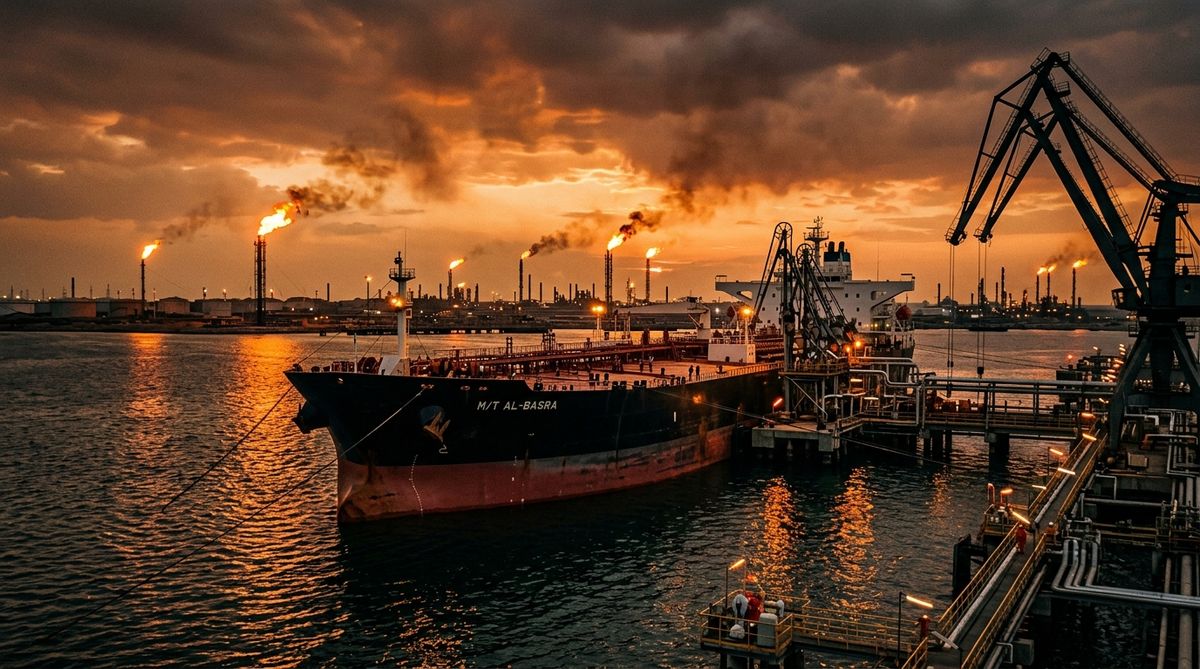
Baghdad’s Crude Oil Dependency Stalls Economic Diversification — What Happened Iraq pumps over 4 million barrels daily as OPEC’s second-largest producer, yet aging infrastructure severely restricts its export capacity. According to an analysis published by Eurasia Review in July 2025, the country continues to secure its strategic position directly behind Saudi Arabia, but its ability to efficiently monetize this resource is severely hampered by technical bottlenecks at southern marine terminals and unresolved political disputes. Although Iraq holds proven crude oil reserves exceeding 140 billion barrels, its domestic refining capacity remains highly inadequate. This imbalance forces the state to export the vast majority of its production as crude oil while simultaneously importing refined petroleum products and natural gas to meet domestic energy needs. Dependency on oil revenues is nearly absolute, generating over 90% of state budget revenues, which exposes the national economy to the extreme volatility of international prices. Historical data analyzed by Eurasia Review as far back as 2016 shows that this structural vulnerability is not new. Iraq has repeatedly attempted to expand its storage and transport capacities in the Persian Gulf, but regional political instability and bureaucratic delays have stalled major infrastructure projects, leaving the country vulnerable to demand fluctuations in Asia and Europe. Chronic Underinvestment and Political Disputes with Erbil The primary cause of Iraq's inability to reach its full export potential lies in the constitutional and financial conflict between the federal government in Baghdad and the Kurdistan Regional Government (KRG) in Erbil. The shutdown of the Kirkuk-Ceyhan pipeline, which historically transported northern Iraqi crude to Turkish ports, has removed approximately 450,000 barrels per day from the market. This pipeline remains inactive due to tariff disagreements and international arbitration disputes between Baghdad and Ankara. In addition to geopolitical bottlenecks, underinvestment in the transport network and pumping stations in the south of the country prevents increased export flows through the Basra terminal. International oil companies (IOCs) operating in giant southern fields, such as Rumaila or West Qurna, have repeatedly faced output restrictions imposed by the state operator due to the network's technical inability to process additional volumes. Another major cause is the waste of associated gas. Iraq continues to flare massive amounts of natural gas resulting from oil extraction, missing the opportunity to use this resource for domestic electricity production and remaining forced to rely on costly gas imports from Iran to prevent the collapse of the national power grid. OPEC+ Quota Pressures and Oman’s Alternative Model The direct consequence of these limitations is Iraq's constant difficulty in complying with production quotas established by the OPEC+ alliance. Baghdad has been closely monitored by the OPEC+ Joint Ministerial Monitoring Committee for repeatedly exceeding its assigned ceilings, forcing it to present compensation plans with additional production cuts in the second half of the year. These forced reductions deplete government revenues at a time of high fiscal pressure. In sharp contrast to the Iraqi model, a comparative analysis by Eurasia Review on Oman’s energy profile highlights a different strategy in the Middle East. Oman, the largest non-OPEC oil and gas producer in the region, is not directly constrained by the cartel's strict quotas. This status allows it greater commercial flexibility and an accelerated focus on developing its liquefied natural gas (LNG) sector, offering a diversification model that Iraq is now trying to replicate through strategic partnerships. For the global market, export bottlenecks in Iraq maintain supply tightness for medium-sour crude, the type of oil predominantly extracted in southern Iraq, for which European and Asian refineries have a steady demand. Any unplanned disruption at the Basra terminals translates immediately into price spikes on futures markets in London and New York. Deadlines for Gulf Infrastructure Modernization The short-term outlook depends on Baghdad's ability to complete major gas and water infrastructure projects by the end of this decade. A critical milestone is the $27 billion agreement signed with French group TotalEnergies, which includes projects designed to collect associated gas and inject seawater into reservoirs to maintain extraction pressure. The success of this mega-project is vital to reducing reliance on Iranian energy imports. Furthermore, negotiations between Baghdad, Erbil, and Ankara regarding the resumption of exports through the Kirkuk-Ceyhan pipeline represent a major risk factor for the second half of the year. Without a financial agreement on transit tariffs and payments to oil companies in Kurdistan, about half a million barrels per day will…
Aurora AI — Independent Editorial Board
The NRG-IA newsroom continuously monitors Romanian energy markets, ANRE regulatory decisions, and national grid telemetry (SEN/SNT). We deliver independent intelligence anchored exclusively in official primary data.
Editorial Charter, Ethics & Verification Methodology →