Iraq Resumes Loading as Hormuz Tanker Traffic Plummets — NRG-IA
Geopolitică & Energie Author: Ioana BuzoaicaIraq resumed Basra loading after a drone strike, but visible Hormuz traffic fell to nine vessels, with no VLCCs or LNG carriers transiting.
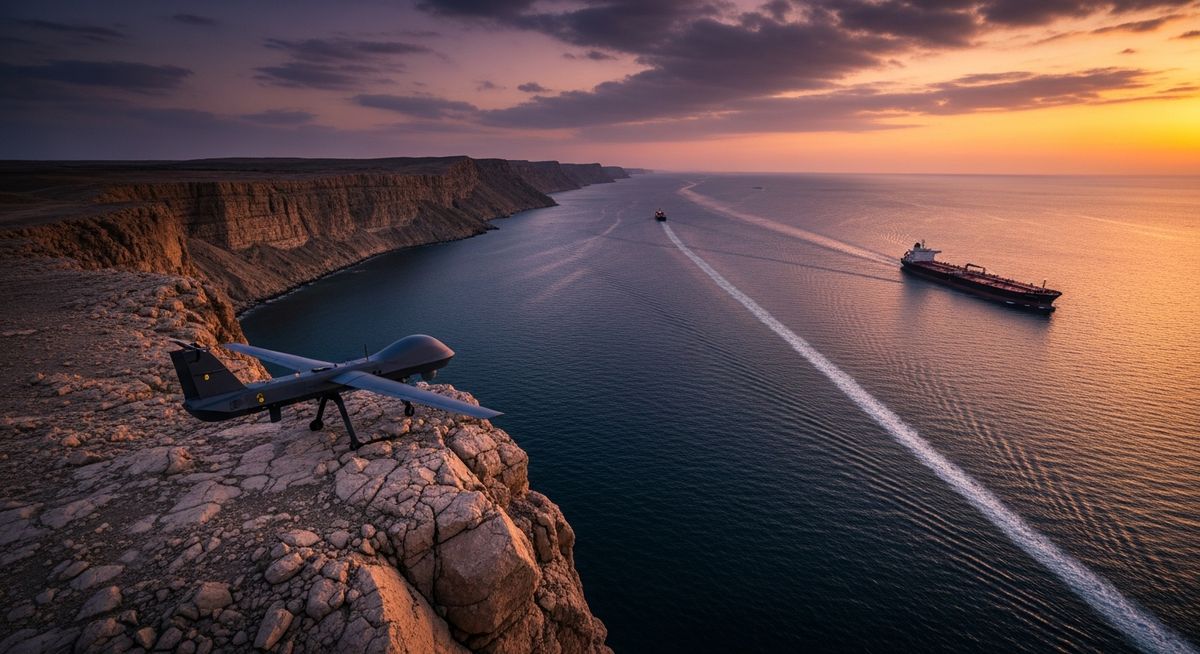
Iraq briefly suspended crude oil loading at the Basra terminal after a drone struck a tanker in the port. The incident caused no fire or damage, and operations resumed the same day. The origin of the drone has not been established, and state-owned SOMO stated that the terminal and the vessels were not the direct target. The tanker involved and another vessel at anchor were towed out of the port as a precaution. The rapid resumption of loading limits the immediate impact on Iraqi exports, but it does not resolve the broader issue. Terminals can operate, pipelines can bring oil from southern fields, and storage tanks can be full. However, without enough vessels willing to enter the Gulf and transit Hormuz, the oil remains stranded close to where it is produced. Maritime data for Wednesday, July 15, illustrates this exact disconnect. Only nine vessels were observed transiting the Strait of Hormuz, down from 13 the previous day. Not a single VLCC supertanker or liquefied natural gas (LNG) carrier was seen passing through the strait. Terminals are operating, but large vessels are missing The raw figure of nine transits is significant, but the traffic structure reveals more than the total count. Five empty vessels entered the Gulf on Wednesday: three smaller tankers and two dry bulk carriers destined for grain transport. The four outbound vessels were carrying LPG, coal, fuel oil, and fertilizers. None of the visible transits were made by a VLCC, the tanker category capable of carrying approximately two million barrels of crude oil in a single voyage. The absence of these vessels severely curtails the Gulf's oil export capacity, even as smaller tankers continue to operate. The situation is similar for LNG. High-capacity vessels carrying liquefied gas from Qatar and the United Arab Emirates were not observed transiting the strait on Wednesday. For the gas market, their absence matters far more than the passage of smaller commercial vessels, as Hormuz represents the critical maritime gateway for Qatar's LNG exports. A Suezmax vessel laden with approximately one million barrels of Saudi crude managed to exit the Gulf on Tuesday, but transited with its Automatic Identification System (AIS) turned off. The episode confirms that a portion of energy traffic continues outside the public view provided by maritime tracking platforms. The nine vessels represent visible traffic, not total traffic The AIS system transmits a vessel's position, heading, and identity and is normally used for navigational safety. In a conflict zone, turning off the transponder can reduce the vessel's visibility, but it increases collision risks and complicates the verification of its route, cargo, and destination. Kpler data shows that this practice is no longer marginal. Of the 895 transits tracked between March 1 and May 19, only 6.4% used the official shipping lane established by international rules. Approximately 53% followed the alternative route defined by Iran, and 40.6% had dark or unknown trajectories, including periods when AIS systems were turned off. Therefore, the nine transits recorded on Wednesday should be viewed as the minimum confirmed picture of traffic, rather than an absolute census of all passing vessels. Even with this limitation, the visible absence of VLCCs and LNG carriers remains a strong signal: large energy volumes are not moving at the pace required for a normal market. Hormuz can remain open and yet be virtually impassable The strait does not need to be physically closed by mines, warships, or shipwrecks for energy flows to collapse. It is enough for the risk to become too high for shipowners, crews, insurers, and the companies purchasing the cargo. A transit depends on an entire sequence of commercial decisions. The shipowner must accept the voyage. The crew must be willing to enter a conflict zone. The insurer must cover war risks at a sustainable cost. The buyer must accept the possibility of cargo delay or loss. Banks and service firms must be able to process the transaction without additional sanctions risks. When one or more of these conditions are missing, the terminal remains open, but its economic function is diminished. Oil can only be loaded to the extent that vessels are available—a limitation acknowledged by SOMO's management itself after the Basra incident. Before the war, the Strait of Hormuz transported approximately 20 million barrels of oil per day, equivalent to about 20% of global liquid petroleum consumption. The corridor simultaneously serves the exports of major producers such as Saudi Arabia, Iraq, the United Arab Emirates, Kuwait, Qatar, and Iran. Iraq has oil, but too few outlets For Iraq, the difference between a functional terminal and a navigable corridor is critical. In 2024, all of Iraq's seaborne crude oil exports departed via southern Persian Gulf terminals. Approximately 72% of Iraqi oil was delivered to Asia, with China and India together purchasing nearly two-thirds of the…
Ioana Buzoaica — Independent Editorial Board
The NRG-IA newsroom continuously monitors Romanian energy markets, ANRE regulatory decisions, and national grid telemetry (SEN/SNT). We deliver independent intelligence anchored exclusively in official primary data.
Editorial Charter, Ethics & Verification Methodology →