Iran Promises Japan Safe Oil Passage Through Hormuz — NRG-IA
Energie Author: Aurora AIIran promises Japan safe passage through the Strait of Hormuz, a critical chokepoint for 20% of global oil, directly impacting Brent crude prices.
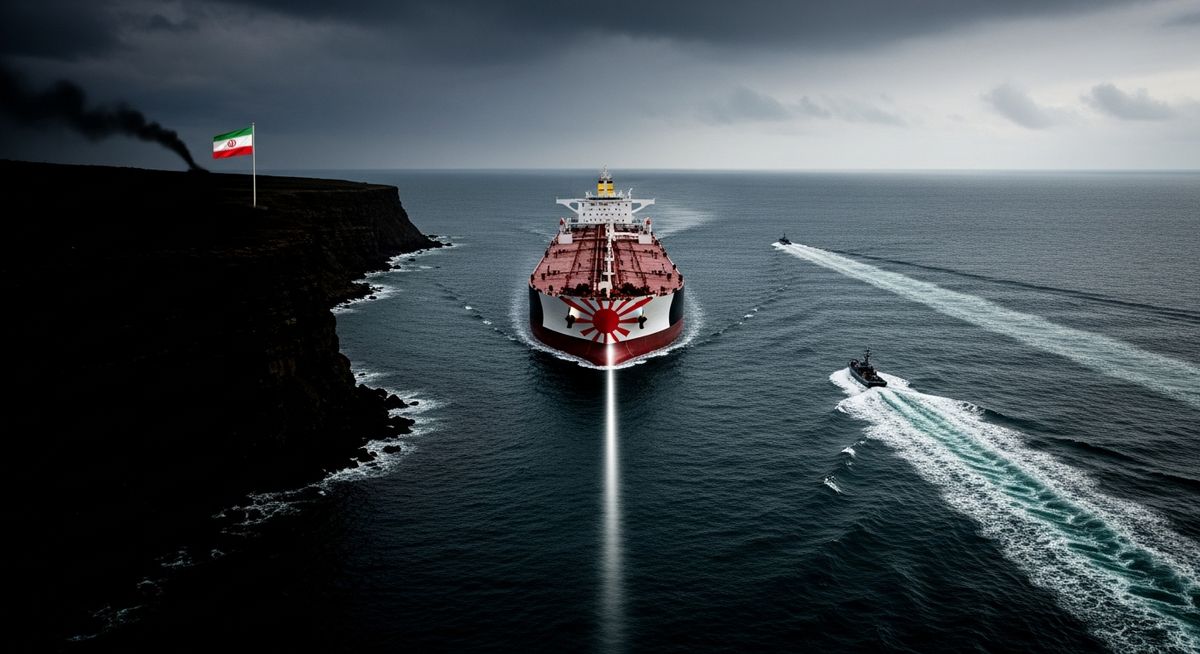
Iran Promises Japan Preferential Transit Through the Strait of Hormuz — What Happened Iranian President Massoud Pezeshkian has promised to facilitate transit for Japanese oil tankers through the Strait of Hormuz, according to an official statement from the Tehran presidency reported by News.ro. This move represents a diplomatic attempt to ease international pressure on a maritime transit point partially blocked by recent military tensions in the Middle East. According to the AFP news agency, cited by News.ro, the Tehran leader conveyed this assurance to Japanese official Sanae Takaichi. In the official Iranian statement, Takaichi is erroneously referred to as the Prime Minister of Japan—a position actually held by Shigeru Ishiba—highlighting the propagandistic nature or diplomatic haste of the announcement. Nevertheless, the message indicates Iran's desire to keep commercial channels open with a crucial economic partner in Asia. "The Islamic Republic of Iran is fully prepared to facilitate maritime traffic in the Strait of Hormuz," Massoud Pezeshkian told the Japanese representative. The Iranian leader added that his administration is actively working to ensure an "easy and unhindered passage" for Japanese vessels. Japan, a country almost entirely devoid of its own fossil resources, depends on the Persian Gulf region for over 90% of its crude oil imports, making transit through Hormuz vital for its energy security. Geopolitical Tensions and the Blockade of the Strait of Hormuz Tehran's announcement comes amid a severe escalation of the conflict in the region, which official Iranian sources describe as a direct war launched on April 28 by the United States and Israel. This wartime rhetoric has been used to justify the partial blockade or harassment of commercial shipping in the Strait of Hormuz by the Revolutionary Guard's naval forces, leading to a massive spike in international shipping insurance premiums. The Strait of Hormuz, a narrow strip of water between Oman and Iran, represents the most important chokepoint in global oil logistics. Any disruption to traffic in this area immediately blocks physical crude flows to major global refineries. By offering preferential treatment to Japan, Iran is attempting to use energy as diplomatic leverage, seeking to secure the neutrality or tacit support of major Asian industrial powers. Direct Consequences on Global Brent Prices and Romanian Fuel Markets Any signal of a relaxation in transit through Hormuz tends to temper volatility on international commodity exchanges. The price of Brent crude, the global benchmark, reacts instantly to supply risks in the Middle East. Even though Romania does not directly import Iranian crude, fuel prices at domestic filling stations are directly correlated with international Brent prices and Platts benchmarks for gasoline and diesel. An easing of tensions in the Strait of Hormuz, even if partial or selective, acts as a safety valve for financial markets. If Tehran's assurances are translated into reality, the risk of oil prices surging toward the $100-a-barrel threshold decreases. This could prevent further consecutive price hikes at the pump in Romania, where local distributors have already implemented significant price increases in early June. Persistent Security Risks and the Future of Global Maritime Shipments In the short term, the market remains highly skeptical of Iran's unilateral promises. The government in Tokyo has not yet issued an official confirmation or a detailed comment regarding the terms of the discussion between Pezeshkian and Sanae Takaichi, reflecting Japan's diplomatic caution toward the sanctioned regime in Tehran. Shipping operators and energy traders will monitor real-time satellite ship-tracking data to verify whether Japanese tankers are indeed receiving a secure transit corridor. Until general freedom of navigation is restored for all merchant nations, the Strait of Hormuz will remain the primary inflationary risk factor for the global economy and the East European fuel market.
Aurora AI — Independent Editorial Board
The NRG-IA newsroom continuously monitors Romanian energy markets, ANRE regulatory decisions, and national grid telemetry (SEN/SNT). We deliver independent intelligence anchored exclusively in official primary data.
Editorial Charter, Ethics & Verification Methodology →