Iran Continues LPG Exports Despite US Blockade: 4.1M Barrels — NRG-IA
Geopolitică & Energie Author: Ioana BuzoaicaIran shipped ~4.1m barrels of LPG despite a US naval blockade, a Reuters probe shows, underscoring military limits in controlling maritime energy trade.
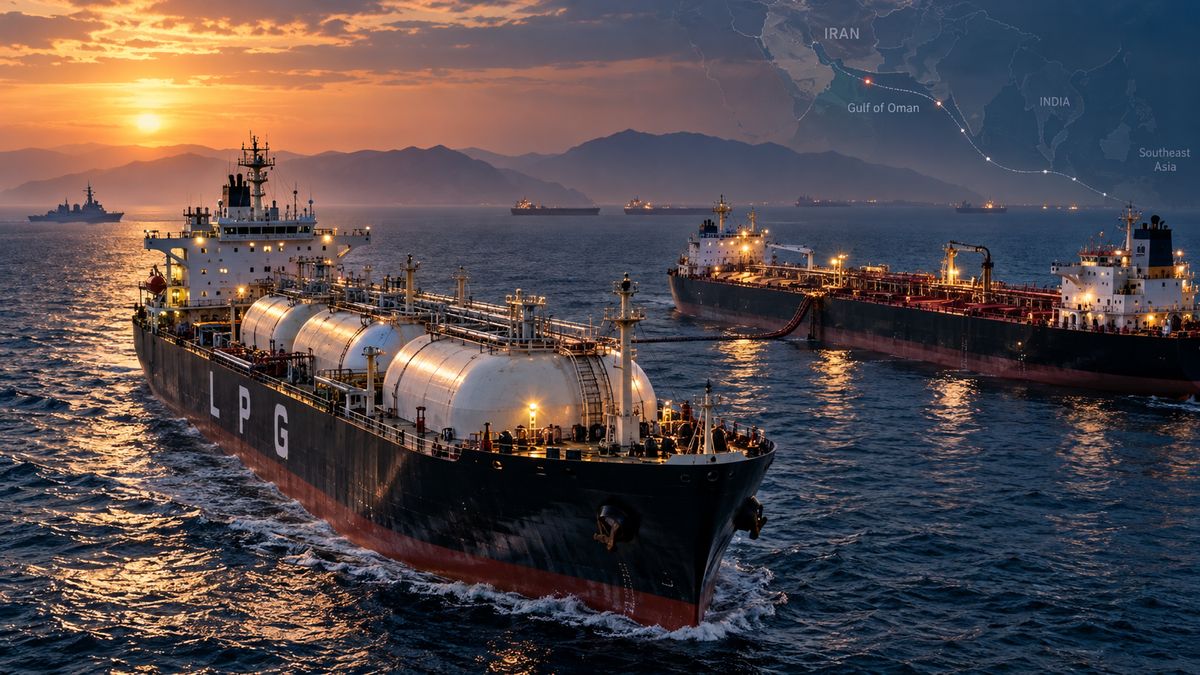
Iran has continued to export limited quantities of liquefied petroleum gas (LPG) and jet fuel despite a United States naval blockade that has nearly halted its crude oil exports. A Reuters investigation published on October 16, 2026, identified at least eight vessels carrying Iranian-origin LPG—with cargoes estimated at roughly 4.1 million barrels—as well as a separate shipment of jet fuel that arrived in Myanmar in September. The findings highlight a key friction point of the US blockade: while large crude shipments can be effectively stopped, smaller deliveries persist through ship-to-ship transfers and commercial intermediaries. In the Gulf of Oman, Iranian cargoes were detected near maritime operations conducted by other regional producers, with some shipments continuing onward to Malaysian transshipment hubs, where China was the likely destination. The investigation relies on tracking data from the US advocacy group United Against Nuclear Iran (UANI), satellite imagery analyzed by SynMax, and details provided to Reuters by four maritime security sources in the region. According to Reuters verifications, six of the eight LPG vessels, as well as the tanker linked to the Myanmar delivery, were listed on US sanctions rosters for transporting Iranian petroleum or petrochemical products. US blockade has nearly halted Iranian crude oil exports The United States imposed its initial naval blockade on Iranian energy shipments on April 13, 2026, marking a significant military and diplomatic escalation in the Middle East conflict. The measure was temporarily lifted in June following a preliminary agreement between Washington and Tehran, but was reinstated on July 14 after talks broke down. US forces resumed interdiction operations targeting vessels transiting the blockade zone in the Gulf of Oman, near the maritime border between Iran and Pakistan. The impact on crude oil exports has been severe. Energy analytics firm Kpler reported that Iran recorded no detected seaborne crude exports to external markets in September—the first time this has occurred in a full calendar month since tracking began in 2013. Vortexa data similarly showed new crude exports remaining at zero through early October. The sheer scale of the military operation explains the decline. According to updates from US Central Command (CENTCOM), by October 13, US forces had turned back 135 commercial vessels and non-operationally disabled four others that failed to comply with instructions. The physical blockade was reinforced by financial sanctions targeting shippers and intermediaries involved in trading Iranian energy products. However, maritime tracking data reveals clear discrepancies between product categories. While crude oil tankers were prevented from departing the enforcement zone, certain carriers transporting LPG, naphtha, and other refined products managed to breach the perimeter. As of October 16, UANI estimated that approximately nine small vessels loaded with LPG and naphtha had successfully bypassed maritime restrictions since their re-imposition. Oman and Malaysia serve as key nodes for Iranian fuel flows Off the Omani coast near Shinas and Sohar, several identified LPG tankers conducted ship-to-ship transfers to secondary carriers. Other vessels held in anchorage within the Gulf of Oman before resuming their voyages. According to the Reuters investigation, these operations occurred at a time when a growing number of Gulf producers were resorting to STS transfers to reorganize supply routes disrupted by the wider regional conflict. Ship-to-ship (STS) transfers allow crude and refined products to be moved between tankers without offloading at a land terminal. While a standard industry practice used to optimize logistics, STS transfers within a sanctioned supply chain complicate the tracing of fuel origins and obfuscate the identity of end buyers. The majority of LPG shipments analyzed by UANI subsequently headed for the Eastern Outer Port Limits (EOPL) off Malaysia—a major offshore anchorage hub heavily utilized for STS operations. According to UANI, China was the likely destination for many of these cargoes, though full identification of end buyers was not possible for every transaction. The hub's importance extends beyond recent LPG flows. In September, UANI identified eight STS transfers in the Malaysian EOPL, six of which involved approximately nine million barrels of Iranian crude already positioned in Asian waters. These operations are distinct from fresh exports departing Iran: oil loaded prior to the blockade can continue to be transferred or traded downstream, even as interdictions prevent new crude sailings. As scrutiny over Malaysian waters intensified, some Iran-linked vessels adjusted their positions, relocating to alternative anchorages across the South China Sea. UANI reports noted transfers conducted in September near Hong Kong and Zhuhai, illustrating the mobility of the trade network and the operational challenges…
Ioana Buzoaica — Independent Editorial Board
The NRG-IA newsroom continuously monitors Romanian energy markets, ANRE regulatory decisions, and national grid telemetry (SEN/SNT). We deliver independent intelligence anchored exclusively in official primary data.
Editorial Charter, Ethics & Verification Methodology →