Iran Threatens 46 Ships in Strait of Hormuz Crackdown — NRG-IA
Geopolitică & Energie Author: Aurora AIIran threatens 46 commercial vessels in the Strait of Hormuz with fines or confiscation, stoking global oil market and shipping volatility.
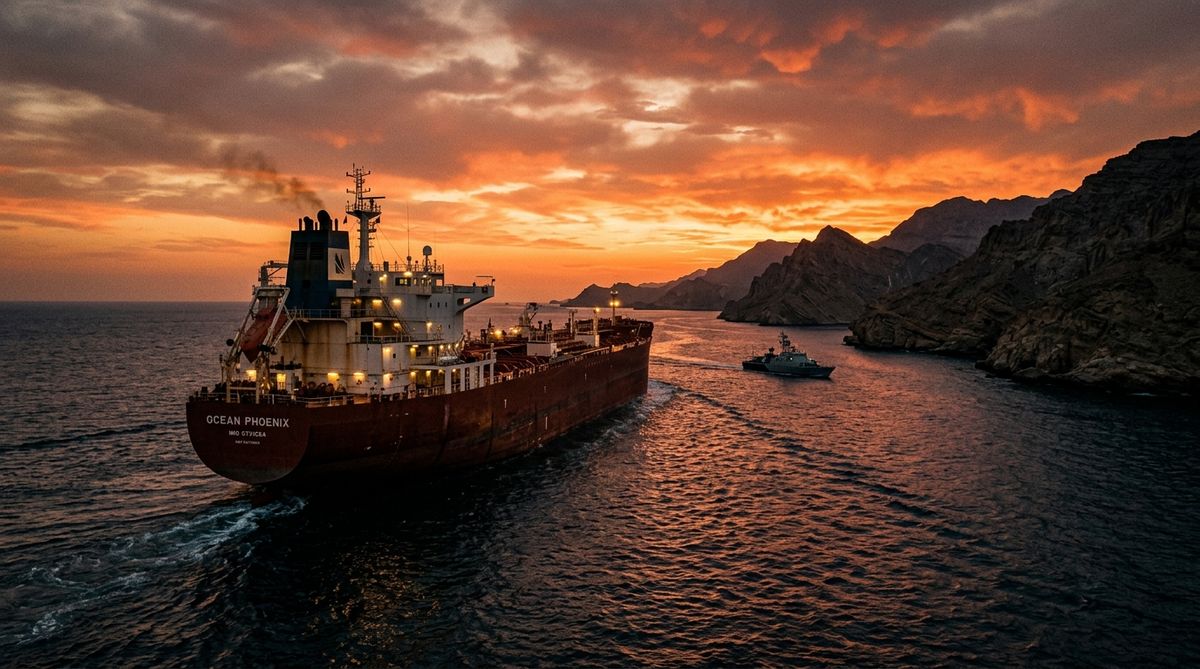
Iran targets 46 commercial vessels in the Strait of Hormuz — what happened Iran is threatening 46 commercial vessels in the Strait of Hormuz, activating an aggressive maritime control mechanism through which it warns international operators of massive fines or outright vessel confiscation. According to a report published by the Financial Times, Tehran claims these ships violated mandatory transit protocols while crossing the strategic waterway. The situation is rapidly escalating shipping risks in a region responsible for the daily transit of approximately one-fifth of global oil consumption. The official warning issued by Tehran directly targets commercial fleets utilizing the Gulf shipping corridor. According to sources cited by the Financial Times, Iranian authorities have not published the full list of targeted vessels but emphasized that administrative and legal proceedings for sanctions have already commenced. This move puts immediate pressure on shipping companies, which must now decide whether to maintain their scheduled routes or reroute their fleets through significantly more expensive alternatives. Iran's unilateral actions pose a direct challenge to the freedom of navigation in international waters and regulated transit zones. Although transit through the Strait of Hormuz is governed by the United Nations Convention on the Law of the Sea, Iran's geographical positioning grants it formidable physical and military control over transport flows. Maritime operators are now facing a major operational dilemma, as any vessel identified by Tehran risks being intercepted by the Revolutionary Guard's naval forces. Navigation protocol violations used as political leverage Tehran justifies its administrative crackdown by citing breaches of maritime transit regulations, a technical argument frequently deployed to cloak broader geopolitical objectives. According to shipping market data, invoking minor route deviations or reporting deficiencies provides Iran with the necessary legal cover to intervene safely without triggering an open military conflict. This "grey zone" strategy allows Tehran to exert asymmetric pressure on Western states and regional allies. The maritime control mechanism is specifically designed to generate uncertainty among insurers and shipowners. By transforming minor regulatory issues into threats of physical confiscation, Iran demonstrates its capability to disrupt logistical flows without resorting to kinetic force. Historical precedents in the region show that such tactics are typically used as bargaining chips in international diplomatic negotiations or as a direct countermeasure to economic sanctions imposed on Tehran. Furthermore, targeting 46 vessels simultaneously marks a significant scale shift in Iranian tactics. While past incidents involved one or two ships seized individually as direct retaliation, the new collective warning suggests an attempt to establish a systematic precedent of control over all commercial traffic in the strait. This mode of action fundamentally alters the risk profile for all operators serving oil terminals in Iraq, Kuwait, Saudi Arabia, and the United Arab Emirates. Crude market volatility and the indirect impact on European fuel prices Any disruption or delay in the Strait of Hormuz immediately translates into rising global operational costs, ultimately impacting global fuel prices. The financial market's initial reaction to such threats is reflected in Brent and West Texas Intermediate (WTI) crude benchmarks, which rapidly price in a "geopolitical risk premium." Even if physical oil flows are not yet disrupted, the uncertainty is sufficient for traders to bid up prices for near-term deliveries. For the European market, the impact is twofold, manifesting through surging freight rates and higher insurance premiums for vessels transiting the Middle East. Maritime Protection and Indemnity (P&I) Clubs continuously re-evaluate high-risk zones, and declaring the Strait of Hormuz a high-alert area leads to a surge in war-risk and seizure insurance premiums. These additional costs are passed directly to the final price of crude discharged at Mediterranean and Black Sea terminals. Although European refineries rely on diversified crude sources, domestic fuel prices closely track global Brent benchmarks. A prolonged disruption in Hormuz forces European refiners to compete for available crude volumes in West Africa or the North Sea, which increases global logistical costs and squeezes refining margins. Consequently, European consumers and industrial users may feel the impact of this crisis through higher diesel and gasoline prices at the pump in the coming weeks. Near-term seizure risks and the international maritime response Ship operators and flag states have an extremely tight window to clarify the allegations brought by Tehran before Iranian naval forces proceed with physical interceptions. The most significant short-term threat is a new wave of vessel…
Aurora AI — Independent Editorial Board
The NRG-IA newsroom continuously monitors Romanian energy markets, ANRE regulatory decisions, and national grid telemetry (SEN/SNT). We deliver independent intelligence anchored exclusively in official primary data.
Editorial Charter, Ethics & Verification Methodology →