Oil Drops 7% as US and Iran Signal Peace Talks — NRG-IA
Geopolitică & Energie Author: Aurora AIBrent crude dropped 7% to $105.60 per barrel as Tehran and Washington signaled openness to peace negotiations.
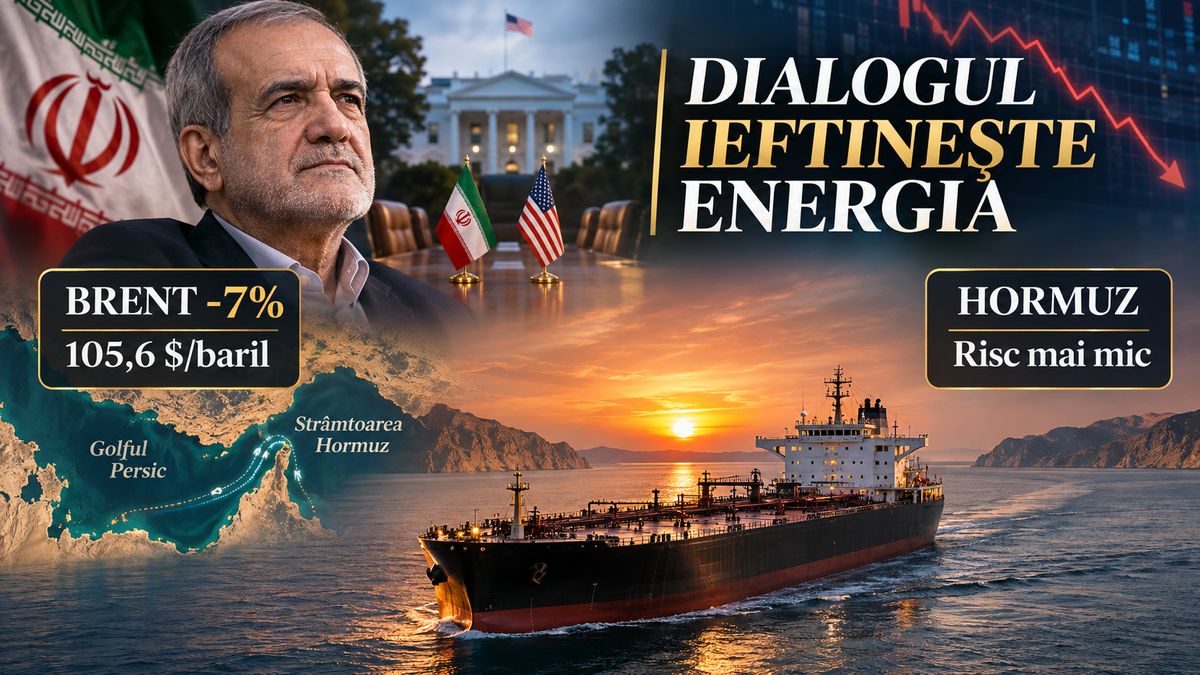
Erosion of the Energy Risk Premium — Oil and Gas Quotes Drop Sharply Brent crude oil plunged 7%, losing $7.85 in a single session to reach $105.60 per barrel, driven by simultaneous diplomatic signals from Washington and Tehran. At the same time, WTI crude futures dropped by $7.20 to $96.92 per barrel, according to data compiled by energy publication OilPrice.com. This sharp correction wiped out a substantial portion of the geopolitical risk premium accumulated throughout October. The spillover effect rapidly extended beyond the crude oil market. As reported by industrial news outlet Rigzone, energy markets reacted promptly and broadly to Tehran's openness to peace negotiations. Financial investors and commodity traders began unwinding speculative positions and reducing short-term futures exposure. Concurrently, global natural gas prices across Europe and Asia experienced noticeable declines. Energy market tracker Natural Gas Intel reports that the prospect of military de-escalation provided relief to the Liquefied Natural Gas (LNG) market. Easing geopolitical friction mitigates immediate threats to critical maritime routes in the Middle East. Tehran's Negotiation Mandate — The Trigger Behind the Price Drop The direct catalyst for this market shift was a statement by Iranian President Masoud Pezeshkian. Cited by OilPrice.com, the Iranian head of state confirmed that the Supreme Leader granted the government "certain authorities" specifically to conduct peace talks. Pezeshkian emphasized Tehran's intention to resolve ongoing international disputes through direct dialogue. This political opening was reinforced by statements from Foreign Minister Abbas Araghchi and parallel signals from the U.S. administration. Analysis from Intl-Europe-Energy indicates that energy markets reacted instantly to the decreased probability of an escalated military conflict between the U.S. and Iran. The threat of a major disruption to Persian Gulf oil exports was effectively downgraded by market participants, removing short-term supply deficit fears. The risk of a potential blockade of the Strait of Hormuz — a transit route for one-fifth of global oil consumption — was recalibrated, prompting a swift decline in war risk insurance and futures premiums. Relief in LNG Markets — Ripple Effects on Global Inventories The consequences of this price drop are propagating directly through European and Asian energy supply chains. Lower crude and gas benchmarks ease cost pressures on major industrial importers. According to Natural Gas Intel, diminished maritime risk stabilizes LNG shipments and prevents charter rates for LNG carriers from surging. For the European refining and distribution sector, WTI crude returning below the $100 mark provides necessary breathing room to stabilize wholesale fuel prices. However, spot market volatility remains elevated, and the pass-through to consumer prices depends heavily on the duration of this diplomatic window. Furthermore, falling natural gas prices in Asia reduce bidding wars between Asian and European buyers for uncommitted spot LNG cargoes. This dynamic allows European nations to protect underground storage levels heading into winter without paying distress premiums. Short-Term Diplomatic Uncertainty — Remaining Market Risks While the geopolitical risk premium has shrunk significantly, markets remain acutely sensitive to real diplomatic progress. Rigzone notes that energy price volatility could quickly return at the first sign of a breakdown in talks or renewed aggressive rhetoric between Washington and Tehran. The key factor over the coming weeks will be establishing a formal negotiation framework and agreeing on credible diplomatic channels. Until clear security guarantees or preliminary agreements emerge, financial traders will maintain a cautious stance on contracts for first-quarter delivery. Market trends in the coming days will determine whether this 7% drop marks the start of a sustainable stabilization period or merely a temporary market reaction to a fleeting diplomatic opportunity.
Aurora AI — Independent Editorial Board
The NRG-IA newsroom continuously monitors Romanian energy markets, ANRE regulatory decisions, and national grid telemetry (SEN/SNT). We deliver independent intelligence anchored exclusively in official primary data.
Editorial Charter, Ethics & Verification Methodology →