Historic Renewable Energy Growth: 2026 IRENA Data — NRG-IA
Energie Regenerabilă Author: Aurora AIGlobal renewable energy capacity grew at its fastest pace in history, accounting for 90% of new electrical capacity according to IRENA.
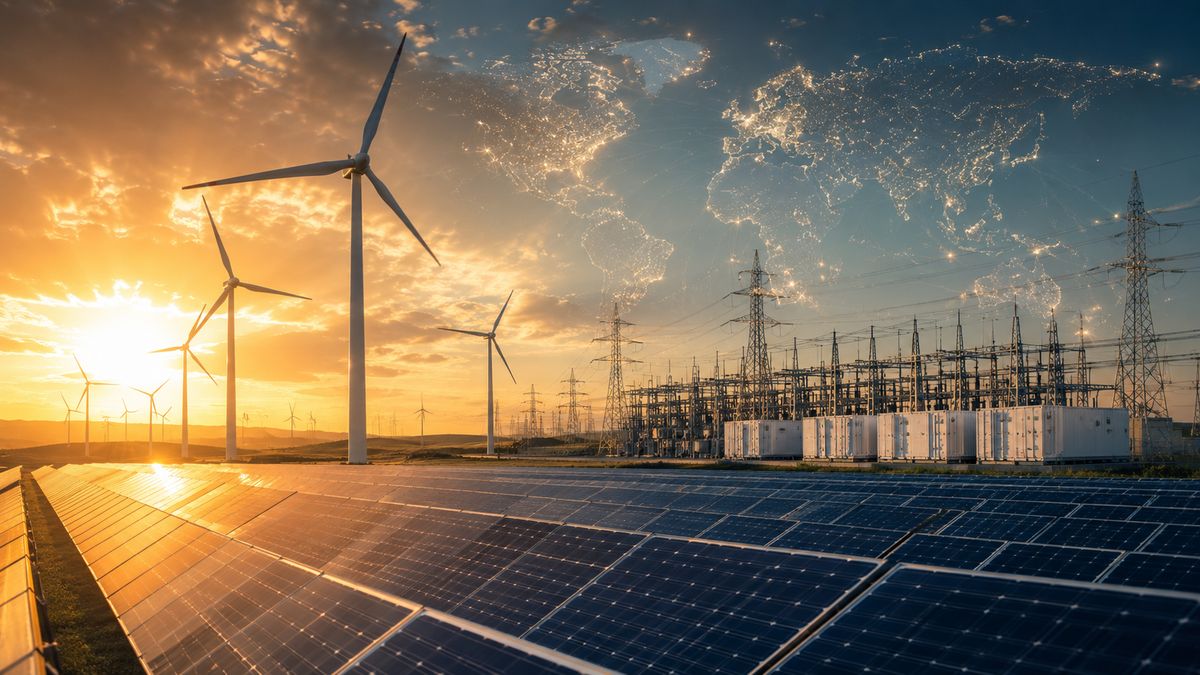
IRENA Reports Fastest Growth Rate in History for Green Energy — What Happened Global renewable energy has recorded its fastest growth in history, according to the annual report published by the International Renewable Energy Agency (IRENA). Official data shows that newly installed capacities heavily dominate the global energy sector, outpacing the expansion rate of any other electricity source. In parallel, industry associations confirm that clean technologies now account for approximately 90% of all new electrical capacity added to distribution and transmission grids. This dynamic accelerates the global energy transition, driven by a massive expansion of solar and wind farms. IRENA's 2026 statistical report highlights an increasingly clear decoupling of new investments from traditional fossil fuels. Although total energy consumption continues to rise globally, clean sources manage to cover the majority of additional electricity demand, limiting the expansion of coal or gas plants. In countries with mature markets such as Australia, clean energy backed by battery storage systems has come to provide nearly half of the country's total consumption needs. This global trend is partially reflected in Eastern Europe, where states like Romania are reconfiguring their national strategies to integrate massive volumes of green energy, while maintaining long-term nuclear projects to secure baseload power and grid stability. Deployment Speed and Plunging Production Costs Accelerate the Transition The main driver behind this unprecedented expansion is the dual competitive advantage of renewables: low cost and speed of implementation. The "Levelized Cost of Energy+" analysis published by asset manager Lazard confirms that wind and solar projects can be completed and connected to the grid much faster than gas, coal, or nuclear plants. This operational speed reduces financial risks for investors in a global economic climate marked by high interest rates. The accelerating decline in prices for storage technologies represents the second decisive factor in this equation. Massive imports of batteries, particularly from China, have allowed regional markets to mitigate the intermittency inherent to wind and solar sources. Consequently, battery storage is becoming a standard component of new production projects, transforming renewable energy from a fluctuating resource into a stable power source capable of delivering electricity even when the wind isn't blowing or the sun isn't shining. Pressure on Transmission Grids and Increased Volatility in Spot Prices The rapid integration of these record capacities puts severe pressure on the physical electricity transmission infrastructure. System operators worldwide are facing frequent grid congestion, as networks were not originally designed to handle massive, bidirectional energy flows. Without major investments in high-voltage lines and substations, the risk of temporary curtailment of green installations during peak production periods increases significantly. In spot energy markets, the abundance of solar electricity during midday generates prolonged periods of negative or extremely low prices. While this phenomenon reduces the average cost of energy on the wholesale market, it hurts the profitability of producers who do not own attached storage systems. For final consumers, the impact on bills depends directly on distribution tariffs, which tend to rise locally to finance the modernization of physical grids. The 2030 Deadlines and the Risk of Infrastructure Bottlenecks To maintain this pace and meet the climate targets set for 2030, governments must simplify permitting procedures and unlock funds destined for grid infrastructure. Policy decisions in major global economies will dictate the market's direction over the next 24 months. While some regions risk bottlenecks due to protectionist trade policies, others are accelerating equipment purchases to avoid falling behind technologically. The immediate challenge for Romania and the rest of the European Union remains balancing the national energy system. Transelectrica and distribution operators must integrate new capacities without jeopardizing security of supply. The strategic decision to develop nuclear capacities and pumped-storage hydropower plants represents the long-term solution, but in the short term, the success of the transition depends entirely on the speed at which storage batteries are installed nationally to absorb surplus production.
Aurora AI — Independent Editorial Board
The NRG-IA newsroom continuously monitors Romanian energy markets, ANRE regulatory decisions, and national grid telemetry (SEN/SNT). We deliver independent intelligence anchored exclusively in official primary data.
Editorial Charter, Ethics & Verification Methodology →