Irisolaris Ploiesti: French solar group enters Romania — NRG-IA
Energie Author: Aurora AIFrench group Irisolaris opens its first European branch in Ploiești, marking a shift in Romania's solar market toward integrated O&M services.
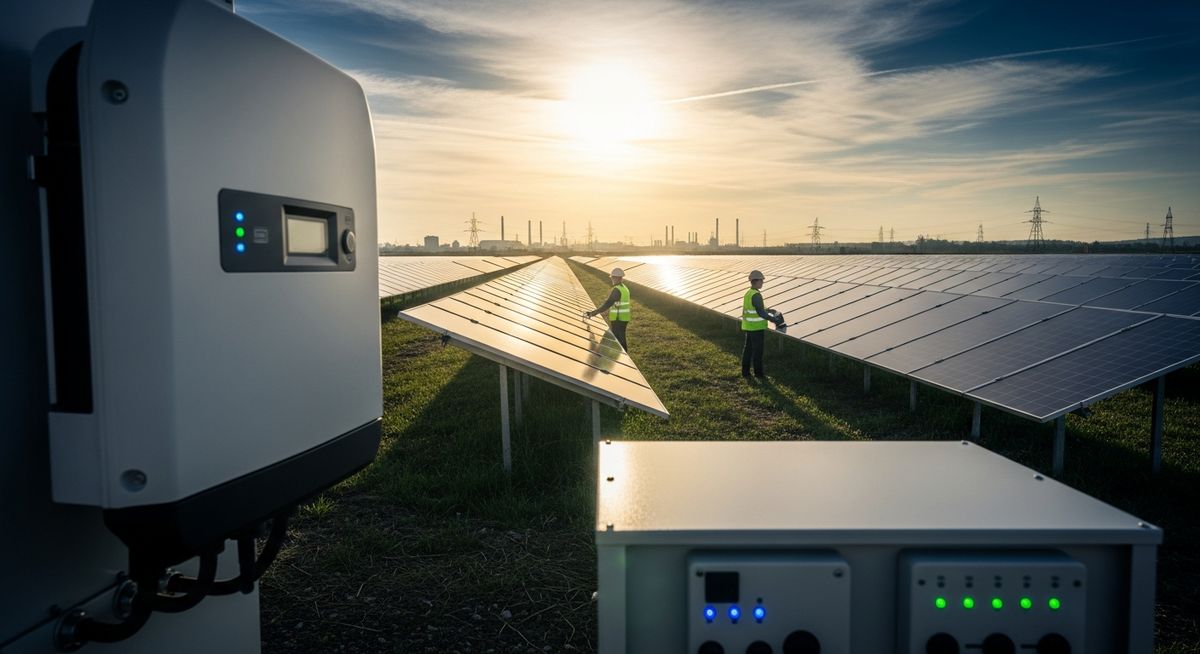
French group Irisolaris opens its first branch outside France in Ploiești — strategic expansion into the industrial heartland French group Irisolaris has opened its first European branch in Ploiești, signaling a strategic shift for Romania’s solar energy market toward integrated services. This operational move represents the company's first expansion outside French borders, confirming Romania's regional attractiveness within the renewable energy ecosystem. According to reports published by Profit.ro and Economedia, the new branch will operate within the Ploiești Industrial Park, a location selected specifically for its highly developed industrial and logistical infrastructure. The official inauguration ceremony took place in the presence of local representatives and the French group's management team. Irisolaris brings over 17 years of experience in the photovoltaic sector to Romania, a level of technical maturity that is rare in a local market previously dominated by speculative project developers. The physical establishment of such a company indicates a paradigm shift: the focus is moving from merely securing grid connection permits (ATRs) to the actual, long-term operation of assets. The French company stands out due to its comprehensive control over the entire energy value chain. It covers project development, solar plant construction, commercial operation, and technical operation and maintenance (O&M). Through this integrated approach, Irisolaris aims to replicate its successful domestic model, where it manages a vast portfolio of decentralized and utility-scale solar projects across France. Market drivers — the solar boom and the urgent demand for technical expertise The decision by Irisolaris to invest in Romania is directly driven by the massive volume of solar capacity scheduled for deployment over the coming years. With ambitious targets set under the National Integrated Energy and Climate Plan (PNIESC), Romania has become a major magnet for foreign capital. However, the initial phase of speculative paper-only development is drawing to a close, making way for the critical phase of execution, physical construction, and technical operation. Furthermore, the Ploiești Industrial Park offers a crucial competitive advantage in terms of logistics and human resources. The Prahova region boasts a long industrial heritage and a solid pool of specialized engineers and technicians, who are essential for the construction and maintenance activities of Irisolaris. This proximity to skilled personnel reduces operational costs and execution risks at a time when the labor market in the Romanian energy sector remains highly constrained. Market consequences — transitioning from real estate speculation to professional asset management The entry of an integrated player like Irisolaris will accelerate the professionalization of the local market, forcing domestic developers to raise their technical standards. Until recently, a significant portion of Romania's solar market was characterized by speculative trading of unbuilt projects. Integrated business models that guarantee technical performance and maintenance over a 20-year lifecycle will lower financing costs for large-scale projects by providing greater security to lending banks. For industrial consumers and the national grid, better-managed solar farms translate into more stable and predictable power generation. The advanced O&M services introduced by the French group can minimize downtime for solar installations. In the interpretation of NRG-IA, rigorous technical management reduces grid imbalance risks, indirectly helping to stabilize prices in the balancing market, which ultimately impact industrial consumers' bills. What lies ahead — the battle for technical talent and grid capacity limits In the immediate future, Irisolaris will need to secure its first major construction and maintenance contracts in the highly competitive Romanian market. The ultimate test for the Ploiești branch will be its ability to rapidly recruit qualified technical personnel in a market where the shortage of power engineers remains critical. Additionally, operational success will depend heavily on the capacity of the national transmission and distribution grids to absorb new photovoltaic capacities. In the short term, market attention is focused on the upcoming Contracts for Difference (CfD) auctions, where the presence of integrated service providers like Irisolaris could offer a crucial competitive edge to consortia bidding for state support.