Kazakhstan Curbs Vehicle Entry Amid Russian Fuel Crisis — NRG-IA
Geopolitică & Energie Author: Ioana BuzoaicaKazakhstan protects its fuel market as price gaps draw Russian drivers, highlighting Russia's vulnerability: plenty of crude, but scarce refined fuel.
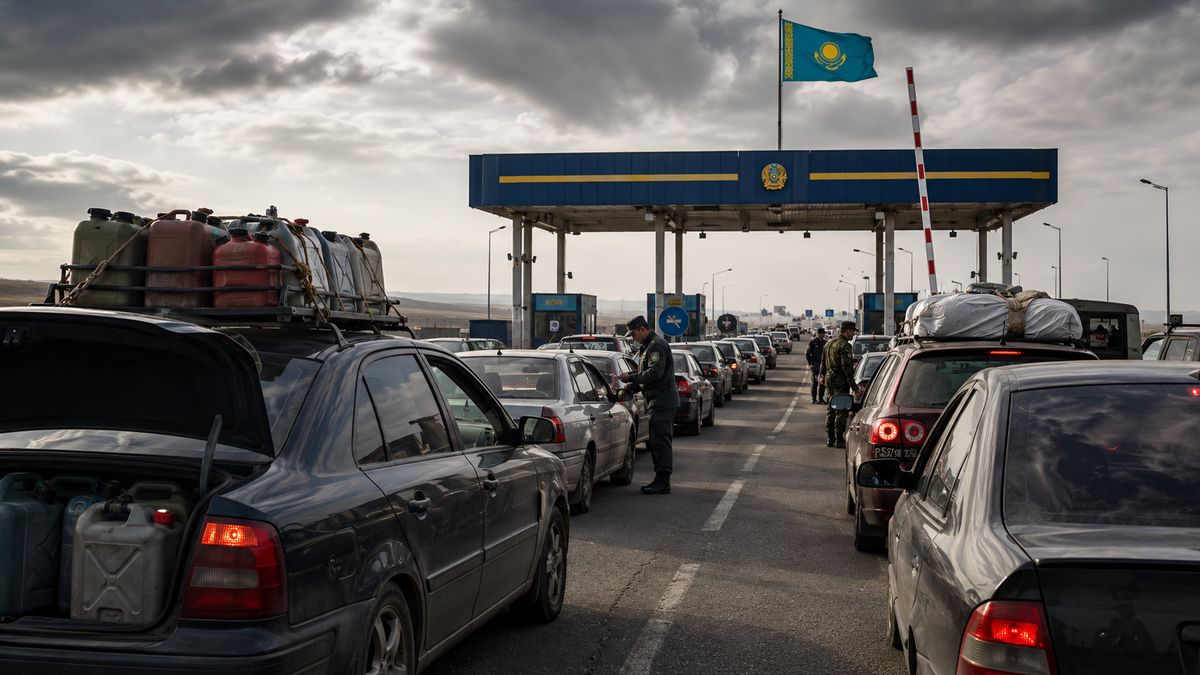
Kazakhstan has introduced a rule restricting passenger cars and freight vehicles from neighboring states to entering its territory no more than once a day, as part of a suite of measures targeting the illegal smuggling of fuel out of the country. Deputy Minister of Energy Kaiyrkhan Tutkyshbayev stated that authorities are particularly targeting vehicles equipped with auxiliary fuel tanks used for "grey-market" fuel exports. The crackdowns are being jointly conducted by the Ministry of Internal Affairs, the Financial Monitoring Agency, border services, and customs authorities. The measure comes amid visible pressure in Kazakh border areas adjacent to Russia. In the West Kazakhstan, Aktobe, and Pavlodar regions, gasoline demand has surged, and queues have begun forming at some stations, according to reports cited by the Kyiv Post. The price differential has turned Kazakh fuel into an attractive alternative for Russian drivers in nearby regions. Kazakh gasoline becomes a safety valve for Russian drivers The phenomenon has a simple explanation for the public: the same gasoline is much cheaper across the border. Forbes Kazakhstan, cited by the Kyiv Post, indicated that a liter of AI-95 gasoline in Uralsk cost approximately 45 rubles, compared to around 74 rubles in Russia. The price differences are significant enough to make a cross-border trip a source of real savings for drivers from the Russian regions of Samara, Saratov, Orenburg, Astrakhan, Volgograd, Novosibirsk, and Omsk. The most intense influx has been reported in Uralsk, a city located about 200 kilometers from Samara. There, cheaper fuel is no longer just a local option for Kazakh consumers, but has become a highly sought-after commodity for drivers arriving from Russia. When this behavior is repeated daily and amplified by jerry cans or auxiliary tanks, the pressure quickly shifts from a mere price differential to a strain on local station supplies. Kazakh authorities report that in just two days, 61 attempts to illegally smuggle over three metric tons of fuel transported in jerry cans and auxiliary tanks were thwarted. Since the beginning of the year, 593 attempts of illegal petroleum product exports have been identified. Russia's crisis is at the refinery, not the wellhead The episode on the Kazakh border highlights the difference between crude oil and refined fuel. Russia remains a major crude producer, but crude oil does not directly power cars, trucks, tractors, or buses. For the economy and the population, what matters are gasoline and diesel, which depend on refineries, logistics, and distribution. Reuters reported that several Russian regions have introduced fuel sales restrictions, citing shortages of certain grades of gasoline and diesel, queues at filling stations, and disruptions caused by Ukrainian attacks on refineries. In some areas, sales have been capped at 20, 30, 50, or 60 liters per vehicle, while in Crimea, stations suspended sales to individuals and businesses starting June 21. Russia has even resorted to importing gasoline by sea from India and receiving 50,000 metric tons of fuel from Kazakhstan for July and August, according to Reuters. The same report indicates that the fuel issue is directly impacting agriculture, public transport, and essential services in some Russian regions. Kazakhstan defends its domestic market Kazakhstan does not frame the measure as a border closure, but rather as a safeguard against the uncontrolled export of fuel. The once-a-day entry rule and inspections of auxiliary tanks aim to halt repeated crossings, bulk purchases, and the smuggling of fuel out of the country through hard-to-monitor methods. This response carries domestic stakes for Astana. If cheaper gasoline is heavily drained by buyers coming from abroad, it leads to queues, local tensions, and the risk that internally regulated or controlled prices will be exploited by more expensive neighboring markets. In energy, the price differential between two neighboring states can quickly translate into consumption flows, and consumption flows can rapidly escalate into economic security issues. Kazakhstan has its own energy calculations. The country produces oil and has refineries, but its domestic market requires stability, especially when seasonal demand peaks and when border regions can be disrupted by the consumer behavior of a much larger neighboring country. Kazakh authorities are intervening before the phenomenon exerts widespread pressure on domestic supply. The refinery war is felt at the pump Attacks on Russian refineries have produced effects that extend far beyond the targeted infrastructure. The crisis is visible in regional restrictions, gasoline imports, temporary diesel export bans, and now, pressure on Kazakh filling stations. Russia banned diesel exports until July 31 to support domestic market supply, following a sharp drop in exports and severe supply tensions. For Ukraine, refineries are a strategic target because they…
Ioana Buzoaica — Independent Editorial Board
The NRG-IA newsroom continuously monitors Romanian energy markets, ANRE regulatory decisions, and national grid telemetry (SEN/SNT). We deliver independent intelligence anchored exclusively in official primary data.
Editorial Charter, Ethics & Verification Methodology →