Kazakhstan Oil: CPC Novorossiysk Exports Resume — NRG-IA
Piața de Energie Author: Aurora AIKazakhstan has resumed oil exports through the CPC Novorossiysk terminal, removing immediate supply risks for Romania's Petromidia refinery.
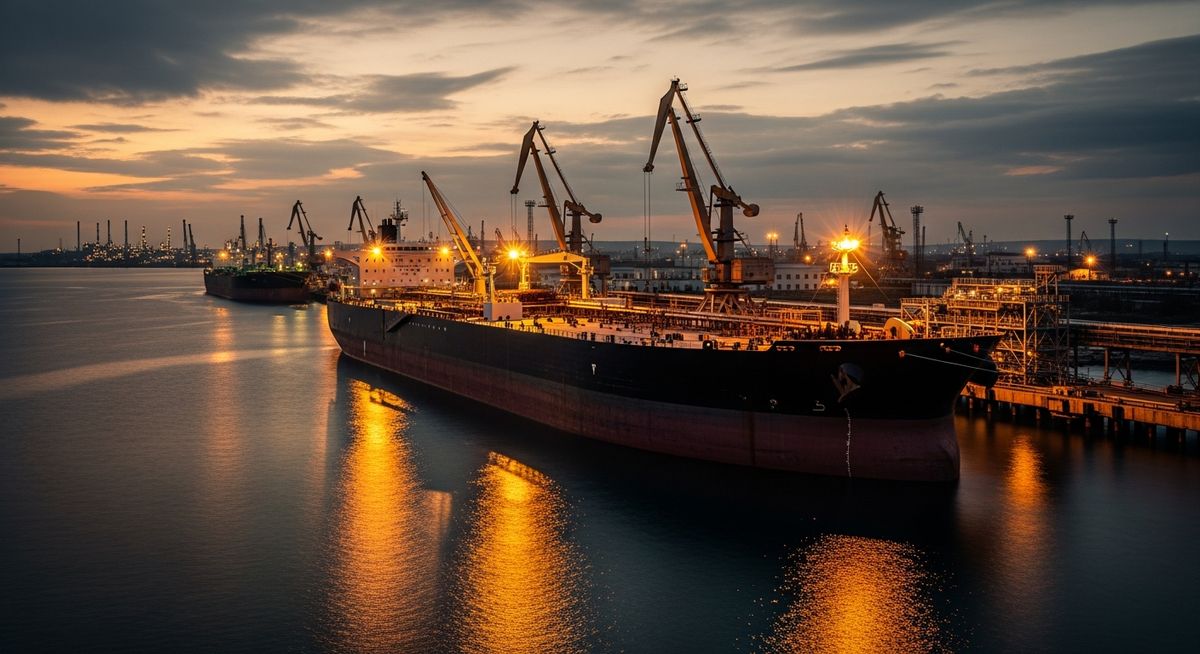
The CPC consortium restarts oil tanker loading in the Black Sea — what happened Kazakhstan resumes oil exports through Novorossiysk, temporarily securing the supply of Romania's largest crude refinery. The Ministry of Energy of Kazakhstan officially confirmed that the Caspian Pipeline Consortium (CPC) has resumed accepting crude oil from shippers and restarted tanker loading operations at the Black Sea marine terminal. This decision marks the easing of a major logistical bottleneck that threatened the stability of crude supplies in Eastern Europe and Romania. The resumption of deliveries has a direct impact on Romania's energy security. The Petromidia Năvodari refinery, controlled by KMG International (Rompetrol) — a subsidiary of Kazakhstan's national oil and gas company KazMunayGas — structurally relies on this transport corridor. CPC Blend crude, transported through the 1,500-kilometer pipeline from Kazakh fields in the Caspian Sea to the Russian port of Novorossiysk, is the primary feedstock used by the refinery on the Black Sea coast. Without a swift restart of this flow, regional refineries would have faced the necessity of securing alternative sources in a market already tightened by international sanctions against Russia. CPC's decision to restore port operations normalizes maritime commercial flows in the Black Sea basin, providing Romanian operators with the predictability required for fuel production planning. Resolving the logistical bottlenecks at the Russian Novorossiysk terminal The temporary disruption of deliveries through the CPC terminal was caused by technical and logistical constraints at the loading facilities in the Russian port of Novorossiysk. These single-point mooring (SPM) buoys, located offshore to accommodate supertankers, are highly sensitive to adverse weather conditions and security risks in the Black Sea. The Kazakh Ministry of Energy indicated that all technical systems of the consortium have been inspected and are now fully operational to handle nominal crude throughput. The CPC pipeline is one of the world's largest oil export routes, carrying approximately 1.2% of global crude demand. For Kazakhstan, this corridor represents the main gateway to Western markets, with over 80% of its oil exports transiting Russian territory to the Black Sea terminal. Dependence on this logistical infrastructure located in an active geopolitical conflict zone represents a constant vulnerability for all European buyers of Kazakh crude. Why 90-day strategic crude stocks do not guarantee diesel at the pump The resumption of Kazakh crude imports comes amid intense debate over Romania's energy resilience. Although national legislation and EU directives mandate Romania to maintain strategic stocks of crude oil and petroleum products equivalent to 90 days of net imports, an analysis by the Intelligent Energy Association (AEI) warns against a false sense of security. Strategic crude oil reserves cannot be instantly converted into diesel or gasoline at the pump in the event of a total import halt. The processing mechanism depends directly on the continuous operation of local refineries. If crude deliveries through the Black Sea had been blocked long-term, Romanian refineries could not have immediately replaced the volume of CPC Blend. Furthermore, a significant portion of the strategic reserves is stored as crude oil in Oil Terminal storage tanks or Conpet pipelines, requiring weeks to be refined and distributed as usable fuel. Consequently, the restart of the CPC terminal eliminates the risk of a real diesel deficit on the domestic market, which could have emerged if retail commercial stocks had been depleted. Black Sea transit remains highly vulnerable to future geopolitical disruptions Although loading operations at Novorossiysk have resumed, short- and medium-term risks remain high for Romania's supply security. The Black Sea continues to be a high-risk geopolitical zone, where military incidents or unilateral political decisions could suspend CPC terminal operations once again. Energy companies are pressured to seek alternative diversification routes, such as the Middle Corridor (Trans-Caspian), but the current logistical capacities of this route are extremely limited and entail significantly higher transport costs. In the coming period, market attention will focus on the CPC consortium's ability to maintain a steady delivery pace without further technical interruptions. For Romanian consumers, the resumption of flows translates into short-term retail price stabilization, removing speculative pressure driven by fears of potential fuel shortages. However, the structural vulnerability of local refineries to transit through Russian ports remains unresolved, keeping the Romanian energy sector on permanent alert.