Why Romania Pays RON 5,321/MWh for Evening Peaks — NRG-IA
Piața de Energie Author: Ioana BuzoaicaThe RON 5,321/MWh DAM price shows the system cannot shift enough cheap midday solar to the evening, when demand peaks and flexible resources are scarce.
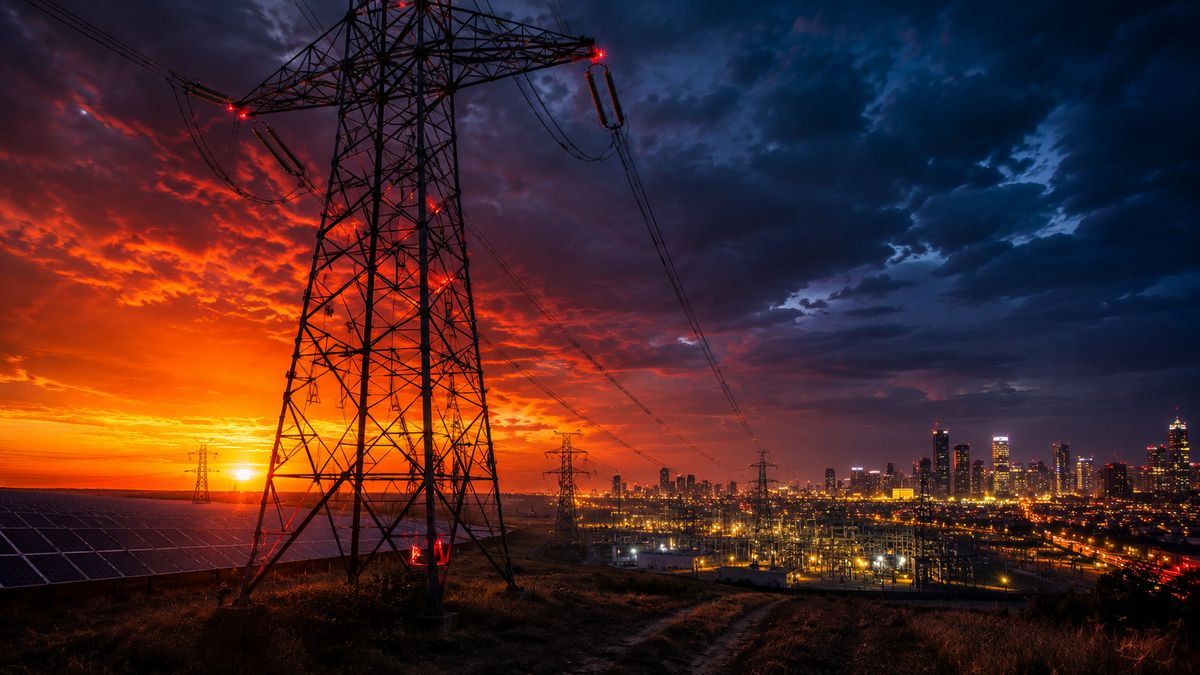
No power system is judged by its daily average. It is judged by the fifteen-minute interval when demand peaks, cheap generation disappears, and the remaining options are few. For the evening interval of June 30, the electricity price on the Day-Ahead Market (DAM) climbed to RON 5,321/MWh, equivalent to over EUR 1,000/MWh. The daily average was EUR 293.44/MWh, or approximately RON 1,537/MWh, according to OPCOM. The gap between the daily average and the specific peak says almost everything about the nature of this episode: it was not a day without power, but an extremely expensive interval during which the system had to quickly find the last available MWh. In RON/MWh, this level represents a nominal record on the DAM. In euros, the comparison must be made with caution: the equivalent of around EUR 1,015/MWh remained slightly below the peak of EUR 1,021.89/MWh recorded in September 2024. The difference matters less for today's market than for precision of phrasing: not all records are comparable if the currency, product, or trading granularity differ. This extreme price is not the retail consumer's bill and is not automatically or fully passed through to every kWh billed to households. Suppliers purchase electricity through bilateral contracts, long-term contracts, forward markets, the DAM, the intraday market, and balancing mechanisms. However, repeated episodes of this kind increase the cost of risk for suppliers, industry, and, over time, the entire system. The spot market does not set the bill on its own, but it shows how expensive the system becomes when it loses flexibility precisely during critical hours. Romania does not lack installed MW. It lacks available MW at the right time At the beginning of the year, Romania had a gross installed capacity of 19,368 MW, while Transelectrica projected a peak consumption of approximately 8,000 MW for heatwave evenings. At first glance, the margin seems comfortable enough: over 19 GW installed for a consumption of 8 GW. However, this comparison is misleading. Installed capacity is merely a bookkeeping snapshot. The system needs available, dispatchable, and deliverable capacity in the grid at the exact moment of consumption. An installed solar farm does not generate at 8:00 PM. A wind turbine does not deliver power if the wind is weak. A power plant undergoing maintenance cannot enter the market. An uncharged battery, or one used for other services, cannot automatically cover the evening peak. The heatwave amplified this gap. Air conditioning drives up demand significantly in homes, offices, commercial spaces, and industry. Transelectrica convened the Energy Command, canceled some scheduled maintenance outages, and prepared gradual operational measures to maintain the generation-consumption balance. The operator spoke of secure operations and preventive measures, not of an imminent blackout. At the same time, solar generation follows a curve opposite to evening demand. It lowers prices and fuel consumption during midday hours, but its contribution rapidly fades after sunset. Power generated at 1:00 PM cannot be used at 8:00 PM unless it is stored or another flexible resource instantly takes the place of solar. This is the real vulnerability: Romania can have plenty of cheap energy in the middle of the day and too little flexible energy after sunset. This is not a contradiction. It is the normal outcome of a system where variable generation grows faster than the capacity to shift energy between hours. The evening peak coincided with multiple limited sources The DAM episode does not have a single culprit. The price was formed by the overlap of several factors: high consumption due to the heatwave, fading solar, weak wind generation, and unavailable or reduced conventional capacities. Ziarul Financiar indicated that, during the critical interval, Unit 1 at Cernavodă was shut down for planned maintenance, and the Brazi gas-fired power plant was operating with part of its capacity unavailable. Nuclearelectrica had officially announced Unit 1's entry into a planned outage starting May 10. OMV Petrom had previously communicated that Brazi was scheduled for a full turnaround for 26 days in the second quarter, followed by operating at half capacity for the remainder of the quarter. This is where the difference between capacity and flexibility becomes clear. Romania has hydropower, gas-fired plants, nuclear, coal, wind, solar, and batteries. But during an evening interval with high demand, what matters is how many of these resources are actually available, how quickly they can react, and whether they can deliver to the grid area where energy is needed. A nuclear plant provides stable baseload generation but cannot instantly replace a unit offline for maintenance. A gas-fired plant can be flexible, but it does not help if it operates at reduced capacity. Hydropower plants can cover peaks, but water is a resource that must be managed over days, weeks, and months. And wind and…
Ioana Buzoaica — Independent Editorial Board
The NRG-IA newsroom continuously monitors Romanian energy markets, ANRE regulatory decisions, and national grid telemetry (SEN/SNT). We deliver independent intelligence anchored exclusively in official primary data.
Editorial Charter, Ethics & Verification Methodology →