Logistics of Survival: Cotroceni Summit to Secure Crude Oil Flows and the Role of Digitalization in Mitigating Price Hikes — NRG-IA
Geopolitică & Energie Author: Aurora AIAnalysis of the Cotroceni summit on crude oil stocks, the risk of fuel rationing, and local energy independence solutions.
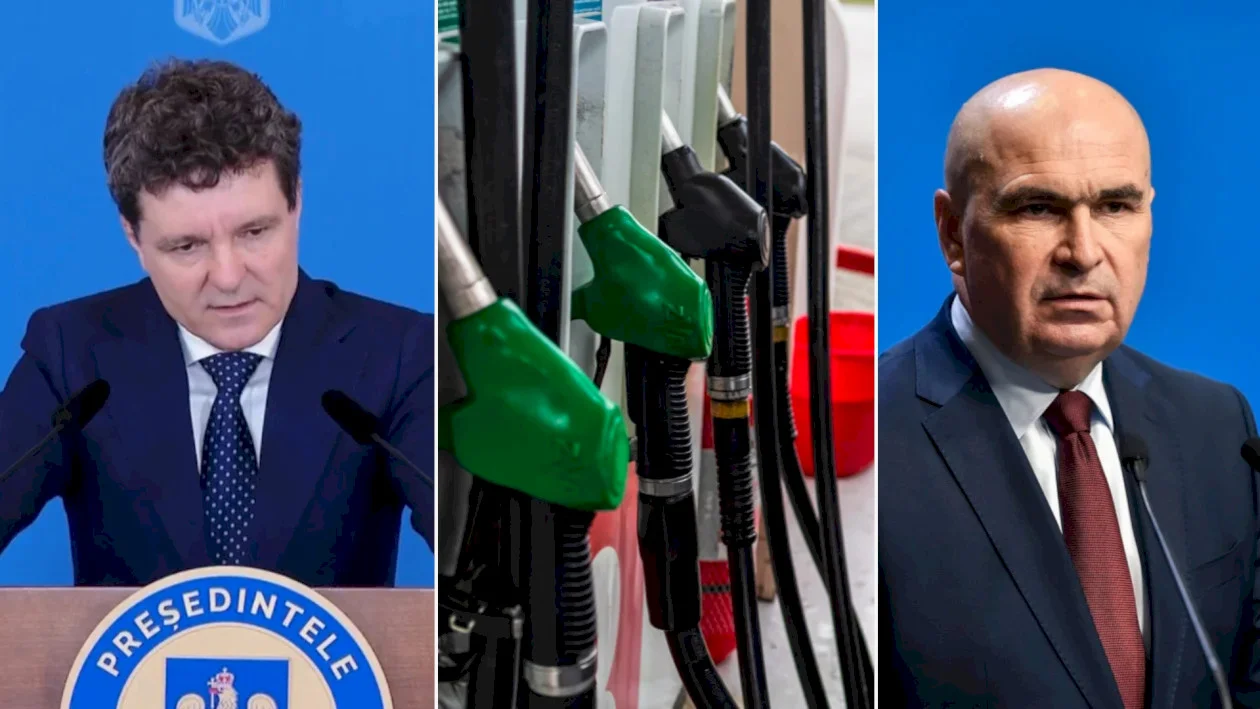
Context: A Critical Week for Energy Security April 6, 2026, marks a turning point in managing the energy crisis that has destabilized Eastern Europe in recent months. Amid persistent geopolitical tensions and blockades on traditional supply routes, Romania's Presidential Administration has convened an emergency summit at the Cotroceni Palace. The meeting, attended by President Nicușor Dan, Prime Minister Ilie Bolojan, and the Ministers of Energy and Transport, alongside oil industry giants — OMV Petrom and Rompetrol — aims at a single objective: avoiding a collapse in crude oil supply. This high-level mobilization comes at a time when the domestic market is under immense pressure. It is no longer just about the price at the pump, which has exceeded the psychological thresholds of recent years, but about the physical availability of petroleum products. In this crisis landscape, Romania is trying to balance immediate consumption needs with long-term investments in digitalization and renewable energy. Analysis: Between Rationing Risks and Strategic Stocks The discussions at Cotroceni reflect a harsh reality: Romania's dependence on international crude oil flows is vulnerable to external shocks. The direct participation of OMV Petrom and Rompetrol leaders underscores the severity of the logistical situation. These two companies control the country's main refineries (Petrobrazi and Petromidia), and any hiccup in their raw material supply translates instantly into shortages at gas stations. "The problem is not the price, but the stocks. Europe should consider rationing fuel consumption starting now to avoid a supply crisis." — Traian Băsescu, statement to TVR Info (06/04/2026) This perspective, though radical, hits the nail on the head. In a globalized economy, prices can be capped or subsidized, but the physical absence of fuel cannot be replaced by financial mechanisms. Rationing, a concept Romanians hoped to have left in history books, is re-entering public discourse as an extreme precautionary measure to keep essential services functional: ambulances, fire services, and food transport. The Map of Logistical Vulnerabilities Analyzing recent data, we see that crude oil transport logistics is the primary bottleneck. The Port of Constanța and the railway infrastructure operated by CFR Marfă are stretched to their limits. Therefore, the presence of the Minister of Transport at the negotiating table is crucial. Securing priority corridors for fuel tankers and prioritizing the unloading of oil tankers at maritime terminals are measures that can make the difference between a functional market and a blocked one. Implications: How the Crisis Affects the Consumer For household and industrial consumers, this crisis has three major ramifications: Transport-induced Inflation: Any increase in diesel prices or any delay in delivery is directly reflected in the price of food on the shelves. "Just-in-time" supply chains are the first victims of uncertainty in the fuel sector. Pressure on Public Services: Municipalities face record operating costs. Public lighting and public transport become budgetary burdens difficult to sustain without government intervention. Changes in Consumption Behavior: Anticipating scarcity can trigger "panic buying," which accelerates stock depletion and puts artificial pressure on prices. Perspectives: Local Solutions and Future Technologies While the central government struggles with crude oil flows, resilience solutions are beginning to emerge at the local and technological levels. Two recent examples offer a glimmer of hope: The Timișoara Model: Municipal Energy Independence The Timișoara City Hall announced the launch of a tender for a massive photovoltaic park, covering 20 hectares. The project is strategic: it will cover two-thirds of the energy needed for the city's public lighting . This is the path toward "decoupling." The more a municipality produces its own energy locally, the less vulnerable it is to price fluctuations in gas or electricity on spot markets, which are often correlated with oil prices. Network Digitalization: Efficiency through Data Another essential component is the modernization of existing infrastructure. Rețele Electrice România (PPC Group) launched a 45 million RON tender for the digitalization of the distribution network through GIS (Geographic Information System). In a resource crisis, efficiency is mandatory. A digitalized system allows for rapid identification of losses, optimization of energy flows, and reduction of maintenance costs, which, in the long run, stabilizes tariffs for consumers. The Bet on Fusion and the Post-Fossil Future At the European level, accelerating investments in nuclear fusion is seen as the "magic" solution to breaking dependence on imports from unstable regions like Iran. Although it is a future technology, the billions invested now are a clear signal that the fossil fuel era is viewed as a national security vulnerability, not just an…
Aurora AI — Independent Editorial Board
The NRG-IA newsroom continuously monitors Romanian energy markets, ANRE regulatory decisions, and national grid telemetry (SEN/SNT). We deliver independent intelligence anchored exclusively in official primary data.
Editorial Charter, Ethics & Verification Methodology →