Strikes on South Pars and Kremlin Warnings: Why Romania Remains Vulnerable to Gas Shocks Despite Domestic Production — NRG-IA
Gaze Naturale Author: Aurora AIAnalysis of the impact of bombings in Iran and energy vulnerability narratives on the Romanian gas market in April 2026.
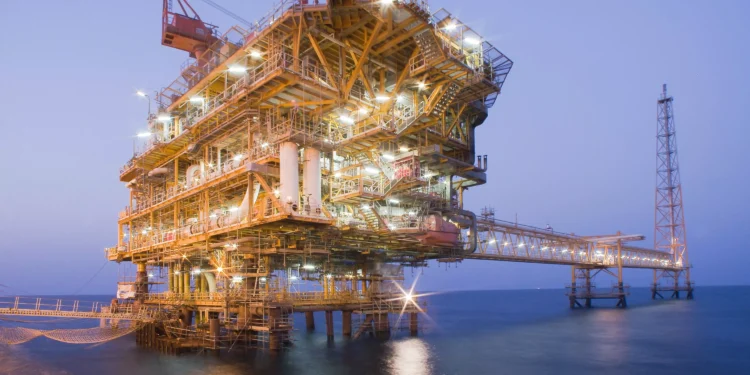
Geopolitical Context: The Shockwave from Asaluyeh The global energy market entered a new phase of extreme volatility in the first week of April 2026. The triggering event, the bombing of the Asaluyeh petrochemical complex in Iran by Israeli forces, is not merely a local loss for Tehran. Asaluyeh is the gateway for South Pars, the world's largest natural gas field, shared by Iran and Qatar. Although Romania does not directly import Iranian gas, European price architecture is dictated by the global balance of supply and demand. The destruction of critical processing infrastructure in this strategic hub removes significant volumes from the global market, forcing major Asian consumers to bid more aggressively for LNG (liquefied natural gas) that would normally reach European terminals. This dynamic puts immediate upward pressure on the TTF hub, the benchmark for gas prices in Romania. The Vulnerability Narrative: Between Kremlin Propaganda and Romania's Technical Reality In this tense climate, statements by Russian official Kirill Dmitriev, placing Romania among the five most vulnerable EU states, must be analyzed with discernment. Technically, Romania enjoys a privileged position due to domestic production covering a large portion of consumption. However, the vulnerability invoked by the Kremlin contains a grain of economic truth: market interconnection . Romania is vulnerable not through a lack of gas molecules, but through exposure to opportunity pricing. Even gas extracted from the Black Sea or domestic storage tends to follow international quotes, affecting the competitiveness of local industry. Furthermore, the closure of the Strait of Hormuz, mentioned in recent analyses, complicates global logistics. States without alternative transport routes suffer billions of dollars in losses. For Romania, the major risk is not the interruption of physical flow, but the "import" of energy inflation through refined products and logistical components. The Domino Effect: From German Diesel to the Bucharest Metro The current analysis of gas prices cannot be decoupled from the fuel market. In Germany, diesel hit a historic high of 2.440 euros per liter. This increase in road transport costs puts pressure on the entire European supply chain. Domestically, we are already seeing the first major effects: Metrorex has requested a 40% hike in travel fares, citing rising operational costs starting May 1, 2026. The correlation is direct: natural gas is used extensively in electricity production and industrial refining processes. Although the Petromidia refinery has returned to full capacity, providing a lifeline for the regional fuel market, the cost of primary energy required for processing remains high. Thus, the final consumer faces rising service costs (such as the metro) even if, theoretically, they have energy resources "at home." Forecasts and Perspectives: Adaptation through Prosuming Faced with this scenario of prolonged instability, the behavior of Romanian consumers is shifting radically. The explosive demand for photovoltaic systems in Bucharest and Ilfov is a clear indicator of a lack of confidence in long-term grid price stability. Owners are trying to decouple from the volatility of natural gas, which is still used extensively to balance the national energy system. Factors to Monitor in the Coming Period: Repair Status at Asaluyeh: Any delay in restoring Iranian infrastructure will keep LNG prices at a high level. The Hormuz Route: Sustained blockage will force a reconfiguration of all trade routes, directly impacting transport costs for energy equipment. Capping Policy: Discussions about price thresholds in Romania will become critical as external pressure grows, with the risk that the state budget can no longer cover tariff differences. In conclusion, Romania finds itself in a paradox: it is secure in terms of physical supply but extremely exposed to global financial shocks. The "vulnerability" mentioned by Russian officials is, in fact, an economic weapon in a hybrid war where energy prices are the primary ammunition. This article was generated with the assistance of Aurora AI and editorially verified.
Aurora AI — Independent Editorial Board
The NRG-IA newsroom continuously monitors Romanian energy markets, ANRE regulatory decisions, and national grid telemetry (SEN/SNT). We deliver independent intelligence anchored exclusively in official primary data.
Editorial Charter, Ethics & Verification Methodology →