Strait of Hormuz Security: Macron and Trump Propose Deal — NRG-IA
Energie Author: Aurora AIEmmanuel Macron discussed a rapid deal with Iran and securing the Strait of Hormuz with Donald Trump using Franco-British naval forces.
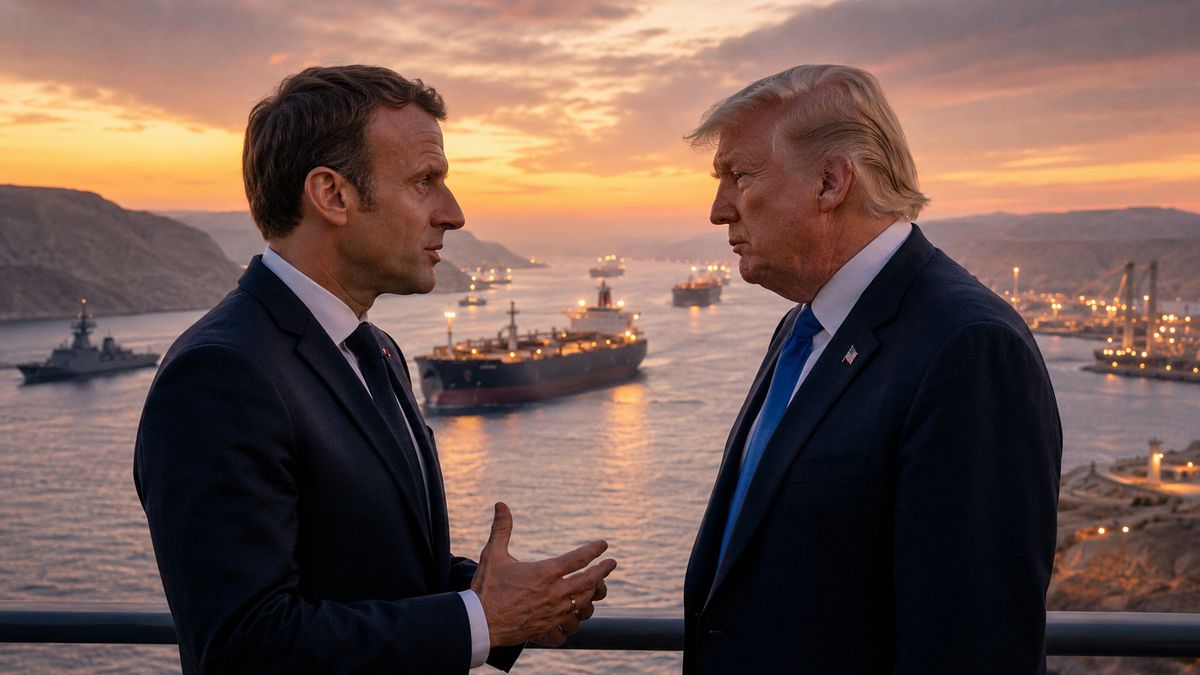
Securing the Strait of Hormuz via Franco-British Coalition: Macron Proposes Military Assistance Post US-Iran Deal Emmanuel Macron announced on Monday talks with Donald Trump for a rapid deal with Iran, offering the support of a European maritime coalition to secure the Strait of Hormuz. In a telephone conversation on Sunday evening, the French president praised his American counterpart’s “determined efforts” to unblock diplomatic negotiations with Tehran. According to a post published by Macron on the social platform X, France and the United Kingdom stand ready to deploy naval forces as soon as the agreement is finalized by both parties. This diplomatic initiative, reported by the AFP news agency and cited by News.ro, marks an attempt to stabilize one of the world’s most volatile energy transit corridors. The Strait of Hormuz, a narrow waterway between Oman and Iran, serves as the transit route for approximately one-fifth of global oil consumption. Any disruption at this critical bottleneck has an instantaneous ripple effect on international Brent and WTI crude benchmarks, directly impacting European markets. Official statements from the French leader indicate that an international mission, built in partnership with the UK and other European allies, is already structured and ready for deployment. The stated goal is to guarantee freedom of navigation for oil tankers, reducing the risks of vessel attacks or seizures that have strained markets in recent years. However, technical details regarding the number of vessels involved or military rules of engagement remain confidential for now, pending the evolution of Washington’s dialogue. Geopolitical Tensions in the Persian Gulf and the Need for a New Regional Security Framework The need for swift diplomatic and military intervention comes amid prolonged instability in the Persian Gulf, where transport route security has been repeatedly threatened over the past decade. The Iranian nuclear dossier and economic sanctions imposed by Washington have created a climate of major uncertainty for major regional oil exporters, such as Saudi Arabia, Iraq, and the United Arab Emirates, which depend on this strait to ship their production to global markets. Within this context, a direct agreement between the United States and Iran is viewed by European chancelleries as a unique opportunity to rebuild a stable regional security architecture. Macron emphasized that this potential agreement could lay the foundation for broader cooperation involving all relevant regional actors. By actively involving the Franco-British maritime coalition, Europe seeks to secure an active role in monitoring the deal while protecting its own commercial and supply interests. This diplomatic move comes at a time when the European Union’s energy security is highly sensitive to any disruption in hydrocarbon imports. Although Europe has diversified its supply sources in recent years, global oil prices remain deeply interconnected. A prolonged blockade in Hormuz would trigger fierce competition for alternative crude sources, directly impacting refineries across the continent and driving up processing costs. Stabilizing Oil Prices and the Direct Impact on Romania's Fuel Market For European consumers and specifically for the Romanian market, securing the Strait of Hormuz represents a direct factor in reducing volatility at the pump. Currently, international oil prices react sharply to any military incident or threat of blockade in the strait, generating immediate price increases for diesel and gasoline across local distribution networks. Mitigating geopolitical risk in the Persian Gulf removes the risk premium embedded in the price of Brent crude. In NRG-IA’s editorial view, stabilizing this maritime route could prevent sudden supply shocks, providing European refineries with greater predictability in raw material procurement. In the medium term, this translates into lower inflationary pressure on transport and logistics costs within the Romanian economy, protecting consumer purchasing power. Although Romania benefits from domestic crude production, oil imports remain essential for the operation of the country’s major refineries, such as Petromidia or Petrobrazi. Reference prices set on international exchanges directly dictate the pump prices paid by transport companies and households. This transmission mechanism ensures that the success of the Washington-Tehran diplomatic efforts has a direct and tangible economic stake at the local level. Remaining Diplomatic Risks and the Uncertain Negotiation Timeline Although Emmanuel Macron’s announcement indicates strategic alignment between Paris and Washington, practical implementation depends entirely on the finalization of negotiations between the US and Iran. As of yet, Donald Trump’s team or administration has not issued a concurrent official confirmation regarding the exact terms of the agreement or the signing timeline, leaving room for market speculation.…
Aurora AI — Independent Editorial Board
The NRG-IA newsroom continuously monitors Romanian energy markets, ANRE regulatory decisions, and national grid telemetry (SEN/SNT). We deliver independent intelligence anchored exclusively in official primary data.
Editorial Charter, Ethics & Verification Methodology →