UK Cuts Electricity VAT to Zero; Romania Charges 21% — NRG-IA
Protecția Consumatorului Author: Aurora AIThe new UK government cuts household electricity VAT to zero amid rising energy prices, highlighting a major fiscal contrast with Romania's 21% rate.
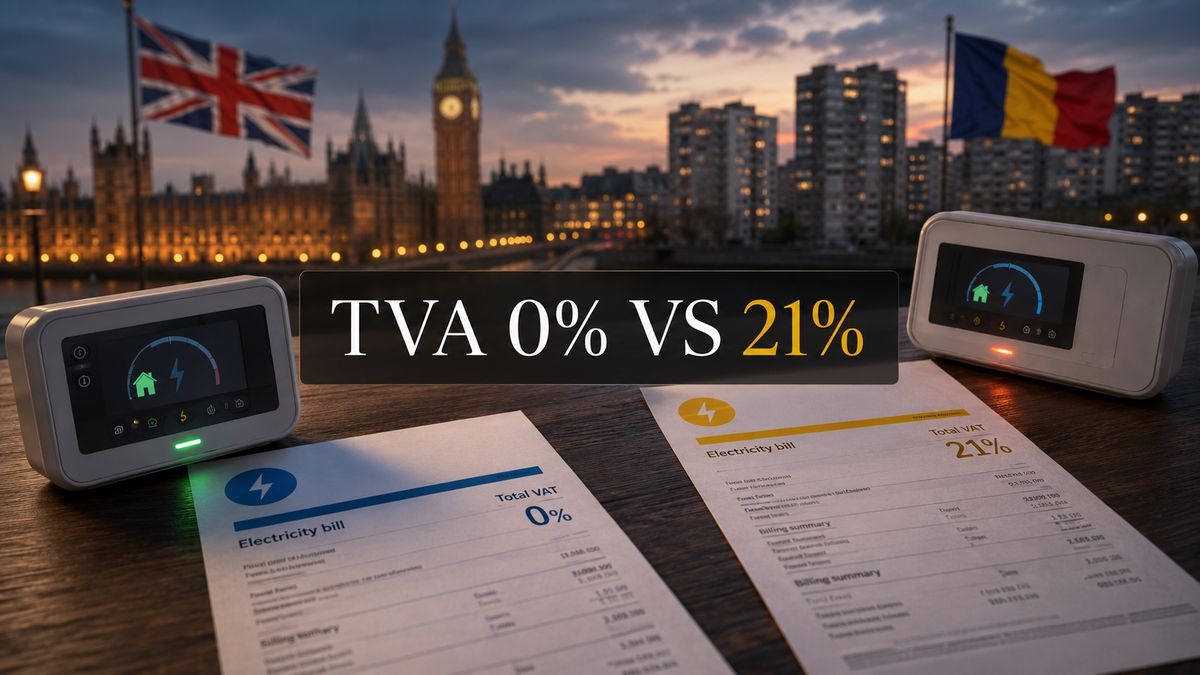
The government led by the new British Prime Minister, Andy Burnham, will eliminate the 5% VAT on household electricity bills starting October 1, 2026. The reduction is estimated to lower a typical household bill by approximately £45 per year and will be incorporated into the next price cap update administered by the regulator Ofgem. The measure applies to electricity, not natural gas, and is funded for the current fiscal year by scrapping the government's digital identity program, which had been allocated £1.8 billion over the next three years. The actual cost of eliminating the VAT is estimated at around £850 million in the 2026–2027 financial year. The decision does not alter the cost of generating, transmitting, or supplying electricity. Instead, it removes a fiscal component from the final price, implicitly shifting the cost of support from consumers to the public budget. While the impact on bills is direct and immediate, it is considerably smaller than the fluctuations that the wholesale market can produce in a single quarter. A £45 saving in a market that just saw a 13% price hike The tax cut is being introduced after Ofgem raised the price cap by 13% for a typical dual-fuel household paying by direct debit. For the period between July 1 and September 30, 2026, the annualized benchmark cap stands at £1,862. For electricity, the average tariff for consumers on standard variable contracts has reached 26.11 pence/kWh, plus a standing charge of 57.19 pence per day. Both figures include the current 5% VAT rate. Ofgem attributes the increase primarily to rising wholesale gas prices driven by the conflict in the Middle East. While eliminating VAT may absorb some of this pressure, it does not fully offset the quarterly increase. The average annual saving of £45 represents less than 2.5% of the combined electricity and gas price cap, as the reduction applies solely to the electricity portion. The actual benefit will depend on consumption. Electrically heated homes, heat pump owners, or users charging electric vehicles at home will save more than low-use consumers. Conversely, the gas portion of the bill remains taxed at 5%. The reduction must also be passed on to fixed-price contracts The UK government has announced that suppliers must pass the reduction on to customers in full, including those on fixed-price contracts. The measure is not restricted to households under the Ofgem price cap. Small businesses that qualify for domestic energy tax treatment and are not registered for VAT can also benefit from the new regime, as can certain charities and residential care homes. Implementation differs in Northern Ireland. Post-Brexit agreements maintain certain EU VAT rules for goods, including electricity, meaning that introducing a zero rate would require European Union approval. The Northern Ireland Executive will receive comparable funding to provide alternative support to households. Funding is secured only for the immediate term The £1.8 billion associated with the digital identity program does not represent the cost of the VAT elimination. This sum was the estimated three-year budget for the canceled program. From the resulting savings, the government will cover the approximately £850 million cost of the tax cut for 2026–2027. The continuation of the measure beyond the current financial year is not yet guaranteed. The government is set to decide in the next budget whether to maintain the zero VAT rate and how to fund it in the long term, following the publication of new forecasts by the Office for Budget Responsibility. This limitation is significant. While the cut could become a permanent fiscal change, it is currently a funded intervention for the immediate term. If extended, the government will either need to identify additional savings, accept lower tax revenues, or shift the cost to other budget lines. The executive estimates that eliminating VAT will reduce CPI inflation by approximately 0.10 percentage points and the RPI index by 0.14 percentage points. This effect occurs because electricity has a direct weight in household spending, but it remains vulnerable to further wholesale price increases. Electricity receives different tax treatment than gas Targeting electricity exclusively goes beyond the immediate goal of reducing the cost of living. It alters the fiscal ratio between power and gas in an economy striving to electrify heating, transport, and an increasing share of industrial activity. Relatively expensive electricity compared to gas reduces the appeal of heat pumps and extends the payback period for electrification investments. This same ratio influences the cost of charging electric vehicles and the competitiveness of equipment replacing the direct combustion of fossil fuels. Reducing VAT from 5% to zero does not eliminate this imbalance, but it narrows it. Fiscal policy is thus beginning to support the direction of the energy transition, rather than just temporarily offsetting bills. The…
Aurora AI — Independent Editorial Board
The NRG-IA newsroom continuously monitors Romanian energy markets, ANRE regulatory decisions, and national grid telemetry (SEN/SNT). We deliver independent intelligence anchored exclusively in official primary data.
Editorial Charter, Ethics & Verification Methodology →