UK electricity grid public investment Burnham — NRG-IA
Energie Author: Aurora AIUK Prime Minister Andy Burnham announces a new state-owned body to invest in the electricity grid, aiming to lower consumer energy bills.
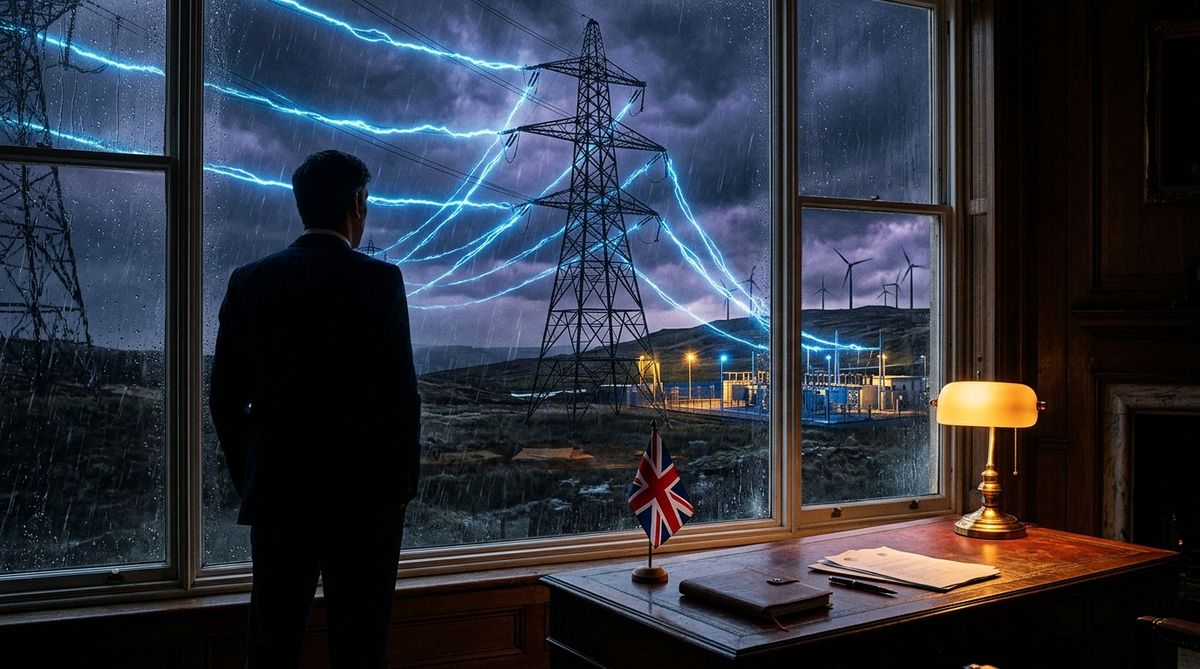
A new state-owned entity takes charge of British energy infrastructure — what happened British Prime Minister Andy Burnham announced a public body to upgrade the electricity grid. This decision, unveiled during his first Labour Party conference speech, marks a major paradigm shift in the UK's energy policy. The new state entity will channel public capital directly into upgrading transmission and distribution lines. The primary objective of this strategic intervention is to rapidly lower energy bills for households and industrial consumers. According to BBC Business reports, Burnham’s cabinet aims to resolve a chronic infrastructure bottleneck. The UK electricity grid currently faces connection queues of up to a decade for new renewable energy projects. By taking an active state role, the government hopes to bypass these delays and integrate cheap wind and solar energy much faster. This move represents a partial departure from the purely market-driven model established during the privatizations of the 1990s. The government intends for the new entity to act as a catalyst for projects deemed too risky or low-yield by major private operators. Private grid bottlenecks and the rising costs of delayed connections The private financing model for the UK's transmission networks has failed to keep pace with the rapid energy transition. Private distribution operators have prioritized short-term returns and dividend payouts over expanding grid capacity. Consequently, hundreds of green energy projects, particularly offshore wind farms in the North Sea, remain stalled in endless waiting lists. This technical inability to absorb clean power keeps wholesale electricity prices artificially high, as the system cannot utilize available renewable generation. When wind generation peaks, the grid cannot handle the load, forcing the operator to pay curtailment fees to generators, costs that are passed directly onto consumer bills. The British government is stepping in directly to correct this major market failure. Pressure on transmission tariffs and the risk of crowding out private capital The establishment of this public entity will restructure the financing of the British energy transmission sector. On one hand, the injection of public capital could ease tariff pressures on consumer bills, which would otherwise bear the full cost of network upgrades through grid charges. On the other hand, market analysts warn of the risk of crowding out private capital, potentially discouraging pension and infrastructure funds from investing in UK networks. An upgraded grid will allow for more efficient balancing of the national power system, reducing the balancing costs currently paid to gas-fired backup plants. However, success depends on the new entity's ability to coordinate effectively with the national transmission operator, National Grid, without creating redundant and costly bureaucratic structures. Implementation timeline and legislative hurdles in Parliament The British government is expected to present the draft legislation to operationalize the new public body in the coming weeks. The political calendar points to intense debates in Westminster, where the opposition is likely to challenge the use of public funds for commercial assets and demand guarantees regarding state-management efficiency. The immediate challenge remains defining the exact funding source for the entity's initial capitalization. If the government relies on additional public borrowing during a period of fiscal vulnerability, the move could trigger negative reactions in international financial markets and raise borrowing costs. Additionally, how this new structure will interface with the energy regulator Ofgem remains a key question.
Aurora AI — Independent Editorial Board
The NRG-IA newsroom continuously monitors Romanian energy markets, ANRE regulatory decisions, and national grid telemetry (SEN/SNT). We deliver independent intelligence anchored exclusively in official primary data.
Editorial Charter, Ethics & Verification Methodology →