UK Intercepts Russian Tanker in English Channel — NRG-IA
Geopolitică & Energie Author: Aurora AIThe UK military has intercepted the oil tanker Smyrtos in the English Channel, marking the first direct action against Russia's ghost fleet.
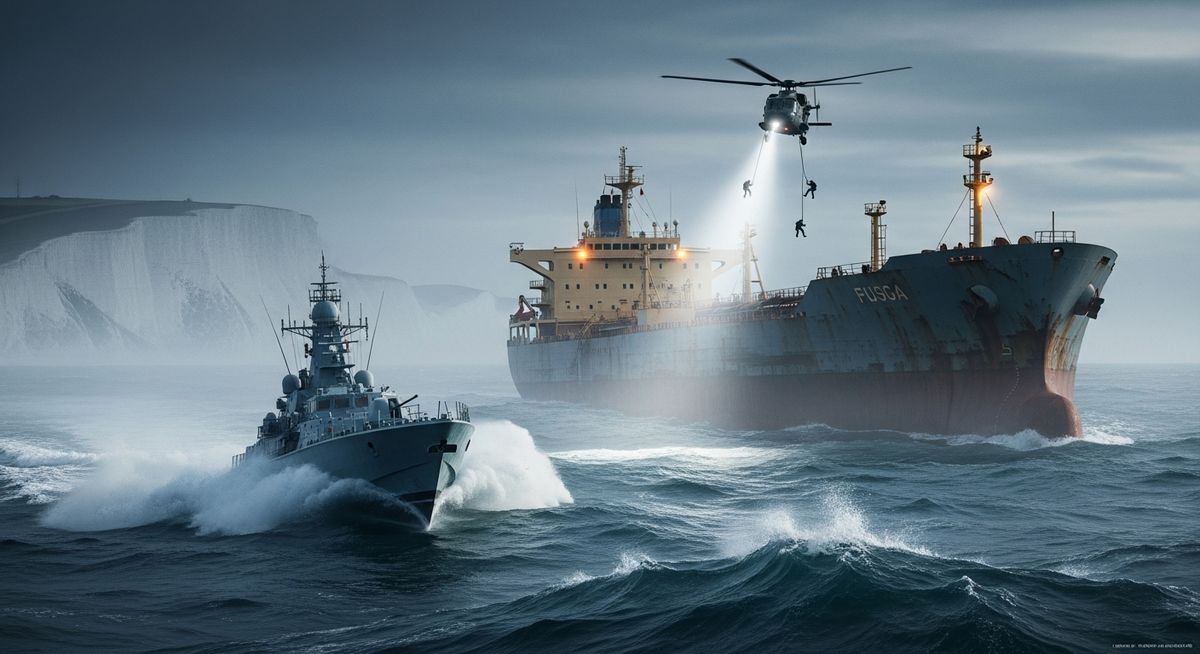
Royal Navy Commandos Seize the Smyrtos Tanker in the English Channel — What Happened The British Royal Navy intercepted the oil tanker Smyrtos in the English Channel, executing the first direct military action against Russia's ghost fleet. Naval commandos and police officers boarded the vessel on June 14, 2026, following an official statement by the British Prime Minister. This operation marks a major escalation in the Western enforcement of crude oil sanctions. The high-risk intervention occurred near the Strait of Dover, where the vessel was ordered to halt for a safety inspection. The Smyrtos, suspected of transporting Russian crude above the G7 price cap, was sailing without valid maritime insurance. British authorities acted under newly updated environmental and maritime safety protocols within territorial waters. The crew offered no resistance when military personnel descended from helicopters onto the main deck, and the vessel was subsequently escorted to a secure British port for a comprehensive investigation. The incident was confirmed directly by the British Prime Minister during an emergency press briefing broadcast live from London. The Prime Minister emphasized that the UK will no longer tolerate environmental and security hazards posed by uninsured vessels in the English Channel. This strait, one of the world's busiest shipping lanes, has now become a critical flashpoint in the global economic confrontation. The Absence of Western Insurance and the Rebranding of Russian Fleets Russia's ghost fleet, estimated at over 600 aging vessels, utilizes opaque ownership structures to bypass international sanctions. These tankers frequently sail under flags of convenience, such as Gabon, Cameroon, or Panama, eluding strict regulations. The lack of standard Protection and Indemnity (P&I) insurance from Western clubs provides the primary legal basis for coastal states to intervene. Without these insurance policies, any ecological accident in European waters would generate cleanup costs that are impossible to recover. The UK and its allies tracked the Smyrtos for several weeks before launching the military boarding operation. Satellite tracking data revealed systematic anomalies in the vessel's Automatic Identification System (AIS) transmissions, with the ship reporting false coordinates while loading crude oil at Russian Baltic Sea ports. This "going dark" practice is commonly deployed to obscure the true origin of crude oil cargoes destined for Asian or European markets. Spiking Maritime Risk Premiums and Oil Market Fragmentation Direct military interception sends a severe warning signal to global shipping and insurance markets. Brokers in the City of London estimate that maritime risk premiums for oil transport in Western Europe could immediately rise by 15-20%. Shipowners operating near regulatory boundaries will be forced to re-evaluate their transit routes, avoiding the English Channel in favor of longer and more expensive routes around Ireland. While the global oil market has remained relatively stable during recent crises in the Middle East, physical interdictions can disrupt actual crude volumes in transit. Any bottleneck in key European straits pressures refineries dependent on seaborne supply. For Romania, although direct imports of Russian crude are prohibited by embargo, rising transport and insurance costs in the Black Sea and Mediterranean will indirectly influence fuel pump prices. Companies like OMV Petrom or Rompetrol Rafinare are closely monitoring these maritime risk dynamics. Tightened Inspections in European Straits and Reprisal Risks The United Kingdom plans to expand physical inspections of all suspicious vessels transiting its territorial waters in the coming months. This legal and military precedent could soon be adopted by other coastal nations along the North and Baltic Seas, such as Denmark and Sweden. Imminent deadlines for new European maritime safety directives, scheduled for the end of this year, will accelerate these enforcement actions. The immediate risk lies in potential asymmetrical retaliatory measures by the Russian Federation in straits under its direct control or influence, such as the Kerch Strait or Baltic Sea routes. Experts warn that the security of global commercial shipping lanes is now more fragile than ever. Energy companies must urgently diversify transport options and secure their supply chains to avoid impending logistical bottlenecks ahead of the cold season.