UK Pumped Hydro Storage: Massive Grid Investments — NRG-IA
Piața de Energie Author: Aurora AIThe UK is developing 11 pumped hydro storage projects exceeding 10 GW to stabilize the grid, while Romania secures its baseload through nuclear power.
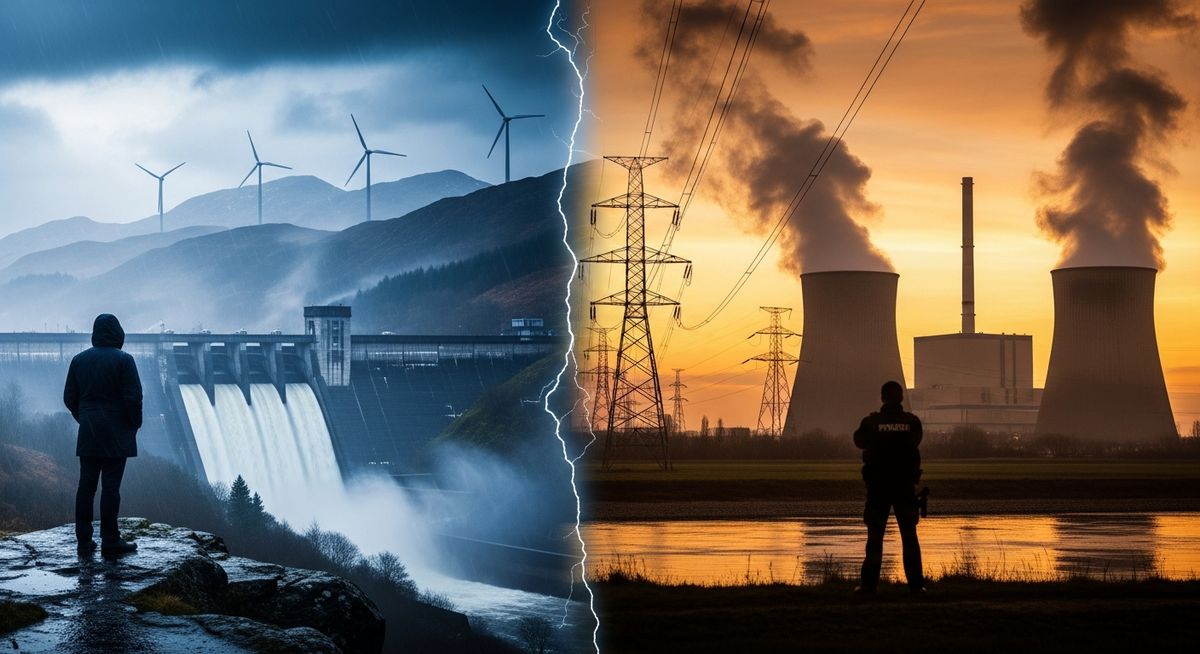
Scotland's pumped storage gets green light — three major 10 GW projects unlock British grid security The United Kingdom is developing 11 pumped hydropower storage (PHS) projects by 2025, with a combined capacity of over 10 GW and 200 GWh capable of covering 25% of national energy demand upon completion, according to data reported by OilPrice.com. This technological push marks the return of large-scale hydropower after four decades of stagnation. The UK regulator has provisionally approved three giant projects in Scotland: Loch Kemp (developed by Statera Energy), Coire Glas (SSE), and Earba (Gilkes Energy). In parallel, on the eastern flank of the European Union, Romania is adopting a complementary energy sovereignty strategy. According to a Euractiv analysis, Bucharest is betting heavily on nuclear energy to ensure the stability of its national and regional grids, acting as a security pillar in a geopolitically tense region. Although technical and financial details of the Romanian nuclear expansion remain partially unconfirmed in recent official documents, the strategic direction indicates a focus on baseload power, contrasting with the British emphasis on flexible storage. Currently, hydropower contributes only around 2% of the UK's electricity generation, with an installed capacity of 2 GW distributed across nearly 1,700 schemes. Two-thirds of this output is concentrated in the winter months, when heating demand peaks, leaving the system vulnerable during the rest of the year without long-duration energy storage (LDES). Renewables intermittency and price volatility force the transition to long-duration storage The UK's accelerated transition to variable renewable sources, such as offshore wind and solar, has generated a structural imbalance between production and consumption. When the wind does not blow, the British grid relies on expensive imports or gas-fired plants. This mechanism prompted the London government to introduce a new policy in October 2024 to promote investment in Long Duration Energy Storage (LDES) as a core pillar of its decarbonization strategy. Unlike lithium-ion batteries, which can only discharge power for a few hours, PHS technology uses two water reservoirs at different elevations. During periods of cheap surplus energy, water is pumped to the upper reservoir, then released through turbines to generate electricity exactly when the grid faces a production deficit. This approach reduces the need to curtail wind farms during overproduction. Estimated savings of £690 million annually for the British energy system Integrating new hydro storage capacities will directly impact consumer costs. A study by Imperial College London highlights that adding just 4.5 GW of pumped hydro capacity (equivalent to 90 GWh of storage) could reduce UK energy system costs by up to £690 million annually by 2050. These savings stem from eliminating constraint payments to wind operators to shut down turbines during grid congestion, as well as reducing expensive start-ups of backup gas plants. For the end consumer, stabilizing transmission and distribution tariffs represents the primary long-term benefit, limiting extreme bill fluctuations during regional energy crises. The 2030s horizon: tight execution deadlines and unresolved financing risks Although the three major Scottish projects offer a solid security outlook, their completion timeline remains set for the early 2030s, leaving the British grid vulnerable for the remainder of this decade. The provisional approval from the regulator is only an initial administrative step. Developers face major logistical challenges in isolated mountainous areas and must secure government LDES funding mechanisms, the exact details of which are not yet fully finalized. Similarly, Romania's nuclear strategy faces long implementation timelines and the need to attract strategic international partners for financing. Both nations demonstrate that modern energy security can no longer rely on immediate fixes, requiring massive long-term financial commitments capable of withstanding political cycles and geopolitical pressures on the continent.
Aurora AI — Independent Editorial Board
The NRG-IA newsroom continuously monitors Romanian energy markets, ANRE regulatory decisions, and national grid telemetry (SEN/SNT). We deliver independent intelligence anchored exclusively in official primary data.
Editorial Charter, Ethics & Verification Methodology →