European EV Sales Surge 34% Amid High Fuel Prices — NRG-IA
Piața de Energie Author: Ioana BuzoaicaEuropean EV sales surged in April as high fuel prices highlighted the cost of oil dependence, accelerating the transition to electric mobility.
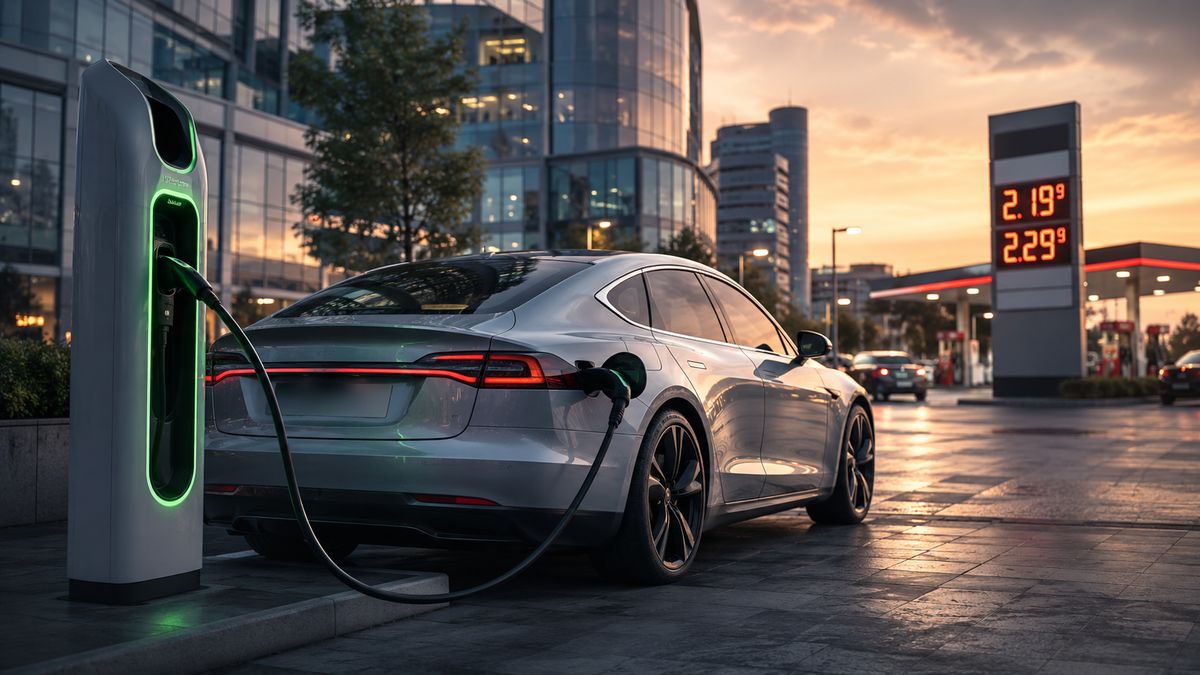
European electric vehicle sales surged by approximately 34% in April compared to the same month last year, according to data cited by Reuters, at a time when oil surpassed the $100/barrel threshold and pump prices became a direct commercial argument for switching to electric. April marks the first full month where the impact of rising fuel costs, fueled by the conflict in Iran and oil supply disruptions, is clearly visible in the behavior of European car buyers. This signal is significant because it reframes the discussion around electric vehicles. The transition to EVs is no longer driven solely by climate regulations, subsidies, emission standards, or industrial strategies. In a market with more expensive gasoline and diesel, electrification is also becoming an economic response from consumers: electric vehicles are starting to be perceived as a hedge against oil volatility. High fuel prices are shifting purchasing decisions Europe has experienced fuel price spikes before, but the current context is different due to the combination of geopolitical tension, high oil prices, an expanding range of electric models, and a charging infrastructure that is far more developed than in previous cycles. Reuters reports that interest in EVs has risen across several markets, as seen on online platforms and in manufacturer order books. Volkswagen, Stellantis, Volvo, Renault, and SEAT/Cupra are among the companies noting stronger demand for electric models, while platforms like Carwow and OLX indicate growing interest even in more affordable Chinese brands, such as BYD, Leapmotor, and Xpeng. This is the crucial takeaway for the market: electrification no longer depends solely on ideologically committed buyers or premium customers. When the cost of filling up with gasoline or diesel rises, the difference in total cost of ownership becomes much more visible to families, fleets, businesses, and urban users. April confirms the trend that began in March The April surge is not an isolated event. In March, Reuters had already reported record EV sales in Europe amid rising fuel prices, with a 37% year-on-year increase in EV and plug-in hybrid registrations, reaching nearly 540,000 units. April data shows that this momentum has continued. A dataset cited by Reuters for major European markets indicates 201,541 new registrations of fully electric vehicles in April, representing a 34.1% year-on-year increase, following a 51.3% jump in March. Germany and France remained the largest markets by volume, while adoption continued to be exceptionally high in Northern Europe, led by Norway and Denmark. This pace should not be interpreted as a rapid phase-out of internal combustion engines. However, it demonstrates that an oil price shock can accelerate an existing trend, especially as electric models become more numerous, cheaper, and easier to compare with gasoline or diesel alternatives. Electrification becomes a response to oil risk For consumers, oil is visible through pump prices. For the economy, oil is felt through inflation, transport costs, logistics, agriculture, industry, and public spending on subsidies or measures to ease the burden on citizens. Therefore, the growth in EV sales has a broader significance than just the automotive market. It shows how an external geopolitical risk can translate into a private consumption decision. When fossil fuels become more expensive and uncertain, electric cars win not only through lower emissions but by partially decoupling from oil volatility. This decoupling is not complete. Electricity has its own prices, peak demand periods, grid challenges, and system costs. However, electricity can be generated from diverse sources: nuclear, hydro, solar, wind, gas, imports, or storage. Gasoline and diesel remain directly tied to crude oil, refining, and global petroleum supply chains. Europe enters an energy security mindset through transport The International Energy Agency estimates, in its Global EV Outlook 2026, that electric vehicles will reach nearly 30% of global passenger car sales this year, after sales exceeded 20 million units in 2025. The IEA notes that Europe has returned to growth after stagnating in 2024, with sales rising by 30% and exceeding 4 million electric vehicles sold. These figures shift transport electrification into the realm of energy security. For Europe, every additional electric car means less direct exposure to oil imports, maritime crises, barrel prices, and Middle East tensions. This is not an instantaneous transformation. The European vehicle fleet is massive, and replacing it will take years. But the direction matters: transport electrification gradually weakens the link between daily mobility and the global oil market. China gains ground as price becomes decisive A major effect of rising fuel prices is the increased interest in affordable electric models. Here, Chinese manufacturers stand to gain ground. Reuters points to growing interest in brands like BYD,…
Ioana Buzoaica — Independent Editorial Board
The NRG-IA newsroom continuously monitors Romanian energy markets, ANRE regulatory decisions, and national grid telemetry (SEN/SNT). We deliver independent intelligence anchored exclusively in official primary data.
Editorial Charter, Ethics & Verification Methodology →