Mintia Power Plant: First Turbine Fired, 1,700 MW Planned — NRG-IA
Piața de Energie Author: Ioana BuzoaicaMintia's first gas turbine fired on Oct 8, 2026, marking a major milestone for Romania's 1,700 MW private power plant. Grid synchronization is next.
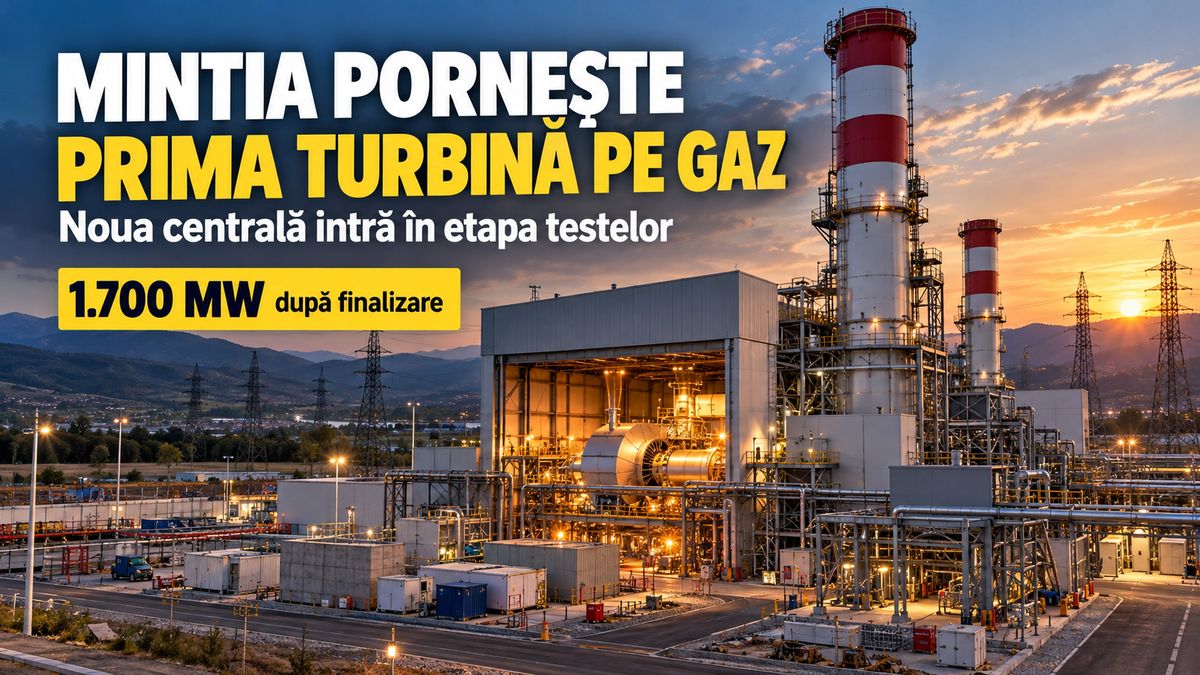
The new Mintia power plant passed a major technical milestone on October 8, 2026: its first turbine fired on natural gas for the first time, marking the entry of the €1.2 billion investment into the commissioning phase. Developed on the site of the former coal-fired power plant in Hunedoara County, the project is designed for a final capacity of approximately 1,700 MW and is set to become one of Romania's most critical electricity generation sources. The first fire of turbine No. 1 was announced by interim Prime Minister Ilie Bolojan, who specified that the next steps include completing tests, synchronizing the generator with the power grid, and delivering the first megawatts to the National Energy System (SEN). The plant's two gas turbines will have a combined capacity of approximately 1,100 MW. Once the steam turbine is integrated and the combined cycle is completed, the installed capacity will reach around 1,700 MW, according to the project's technical configuration. The National Energy Regulatory Authority (ANRE) has authorized a total capacity of 1,677,12 MW. For Romania, bringing the Mintia plant closer to actual production is crucial at a time when conventional plant availability, renewable generation volatility, and import requirements increasingly impact the power system's balance. A modern, new gas-fired plant can provide dispatchable generation, particularly during evening hours when solar power no longer contributes to meeting demand. First Turbine Fired on Natural Gas: Grid Synchronization Next The test conducted on October 8 represents the first ignition of gas turbine No. 1, an operation known in the energy industry as "first fire." This is the moment when the facility operates for the first time using the fuel it was designed for, following preliminary technical checks and preparations. This stage allows for testing the fuel supply systems, the combustion process, control mechanisms, and turbine behavior under real operating conditions. In the coming period, technical teams will continue the necessary checks to synchronize the generator with the power grid. The procedure involves bringing the generator to parameters matching the grid, including frequency, voltage, and phase, before connecting it for power delivery. Following synchronization, the plant can begin injecting electricity into the SEN under the testing program, which will be followed by verifying operations at various power levels and demonstrating compliance with technical requirements. Preparations for this stage began several months ago. On June 15, 2026, Transelectrica announced the energization testing of the 400 kV connection for the first gas turbine, including the transformers required for grid connection and internal services power supply. Energizing the electrical installations allowed testing to continue and prepared the plant for the operation of the generation equipment. In August, the developer completed the necessary formalities for the testing period, including provisional documents associated with operation and grid connection. The first fire in October thus represents the continuation of a technical commissioning process, with the next major milestone being the confirmation of actual electricity generation and delivery. Two Gas Turbines and One Steam Turbine to Produce Nearly 1,700 MW The Mintia plant is built using combined-cycle gas turbine (CCGT) technology, a configuration that enables more efficient utilization of fuel energy. The project includes two Siemens Energy SGT5-9000HL gas turbines, one SST5-5000 steam turbine, and three SGen5-3000W electrical generators. In the first stage of the process, natural gas is combusted in the main turbines, producing the mechanical energy required to drive the electrical generators. The resulting combustion gases retain a significant amount of thermal energy. In a combined-cycle plant, this heat is recovered and used to produce steam, which drives a third turbine. Consequently, the plant can generate additional electricity from the thermal energy remaining after the gas turbines operate, without requiring the combustion of a proportional amount of extra fuel. This configuration explains the difference between the approximately 1,100 MW capacity of the two gas turbines and the final capacity of nearly 1,700 MW for the combined-cycle plant. The Siemens Energy technology used at Mintia belongs to the HL-class of gas turbines. The manufacturer indicates efficiencies exceeding 64% for modern combined-cycle configurations under reference technical conditions. Such efficiency means a high proportion of the energy contained in natural gas is converted into electricity. The actual performance of the Mintia plant will be determined through tests and measurements conducted during commissioning. For the power system, the technology's advantage lies in both fuel efficiency and the ability to adjust generation based on consumption needs and the availability of other sources. The…
Ioana Buzoaica — Independent Editorial Board
The NRG-IA newsroom continuously monitors Romanian energy markets, ANRE regulatory decisions, and national grid telemetry (SEN/SNT). We deliver independent intelligence anchored exclusively in official primary data.
Editorial Charter, Ethics & Verification Methodology →