Norway Arctic Drilling: Lobbying EU to Lift Moratorium — NRG-IA
Geopolitică & Energie Author: Aurora AINorway deploys twelve ministers to Brussels to lift the EU Arctic drilling moratorium, unlocking 66% of its remaining hydrocarbon resources.
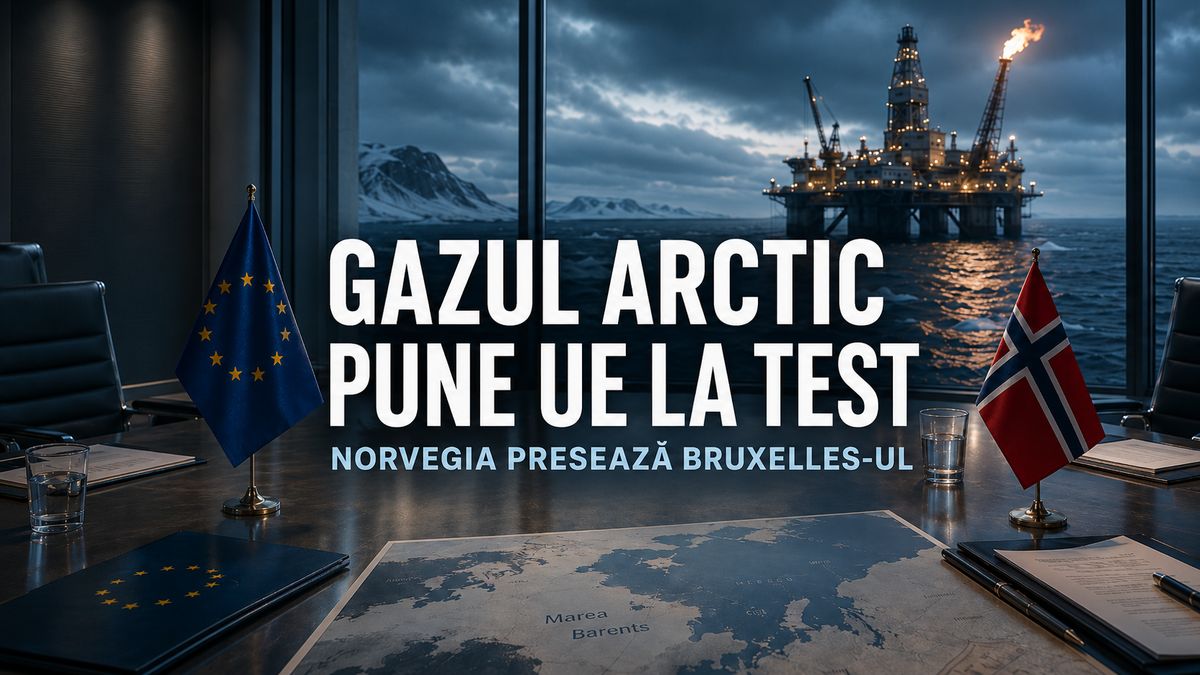
Resource diplomacy in Brussels — Norway demands the unlocking of Arctic drilling Norway deploys twelve ministers to Brussels to lift the EU Arctic drilling moratorium. This major diplomatic offensive, initially reported by OilPrice.com, marks an unprecedented escalation of government lobbying by Western Europe's largest gas supplier. The stakes are directly proportional to the energy wealth hidden beneath the glacial ice. According to data analyzed by Rigzone, nearly two-thirds of Norway's remaining hydrocarbon resources are concentrated in the Arctic region, particularly in the Barents Sea. Currently, commercial access to these fields is hindered by the political pressure of the moratorium proposed by the European Union in 2021, which aims to ban the exploitation of new coal, oil, and gas resources in Arctic regions. Although Norway is not an EU member, its status as a strategic partner through the European Economic Area (EEA) forces it to maintain a fine alignment with Brussels' environmental regulations to avoid disguised trade barriers. The Oslo government is now trying to shift this restrictive paradigm before the European Green Deal policies become irreversible. The Iran war and global supply disruptions accelerate Oslo's diplomatic offensive The escalation of the military conflict in Iran and the largest energy supply disruption in modern history serve as the catalysts for this aggressive lobbying campaign. In a context of extreme global market volatility, the Oslo government is reframing its Arctic resources not as a climate threat, but as a vital safety net for European industry. Deploying nearly a dozen ministers to the European capital this year reflects the strategic urgency of the moment. Norwegian delegations stressed in discussions with European officials that the bloc's energy security directly depends on stable and predictable suppliers. Since imports from Russia have been almost completely eliminated, and Middle Eastern shipping routes remain highly vulnerable due to geopolitical tensions, Norway presents itself as the only viable long-term option for the continent's energy stability. Europe's energy security versus the climate ambitions of the Green Deal The economic consequences of a potential relaxation of the moratorium by Brussels will be felt directly in Europe's energy price architecture. Free access to Norway's two-thirds of Arctic resources would ensure a steady flow of piped natural gas to the European grid for decades to come. This flow would offer a cheaper and more stable alternative to liquefied natural gas (LNG) imported from the US or Qatar, which is subject to the volatility of the global spot market. For industry and household consumers, this additional volume could temper the risk of new price shocks during peak winter periods. However, yielding to Oslo's lobbying risks creating a major fracture within the European Union. Member states heavily oriented toward the green transition will perceive unlocking drilling as a capitulation to the fossil fuel lobby, jeopardizing strict decarbonization targets under the European Green Deal. Ongoing negotiations in Brussels and near-term regulatory risks The final decision on maintaining or adjusting the Arctic moratorium will play out in the coming months as the European Commission redefines its energy security strategy in light of new geopolitical realities. Diplomatic sources indicate that a technical compromise is much more likely than a complete cancellation of the ban. This could allow exploration and exploitation exclusively in Arctic perimeters adjacent to existing infrastructure in the Barents Sea, avoiding drilling in ecologically highly sensitive frontier areas. The major risk for Norway remains the blocking of financing. Even if Brussels relaxes political rules, major European financial institutions apply strict ESG (environmental, social, and governance) criteria, which could significantly increase the cost of capital required for Arctic projects. For the rest of Europe, the outcome of these negotiations will indirectly dictate gas prices on the continental market over the next decade.
Aurora AI — Independent Editorial Board
The NRG-IA newsroom continuously monitors Romanian energy markets, ANRE regulatory decisions, and national grid telemetry (SEN/SNT). We deliver independent intelligence anchored exclusively in official primary data.
Editorial Charter, Ethics & Verification Methodology →