Fuel prices Romania: diesel hits record 11 lei per liter — NRG-IA
Piața de Energie Author: Aurora AIDiesel price surpasses 11 lei/l at OMV, while gasoline tops 10 lei nationwide. Middle East tensions and leu depreciation drive fuel prices to record highs.
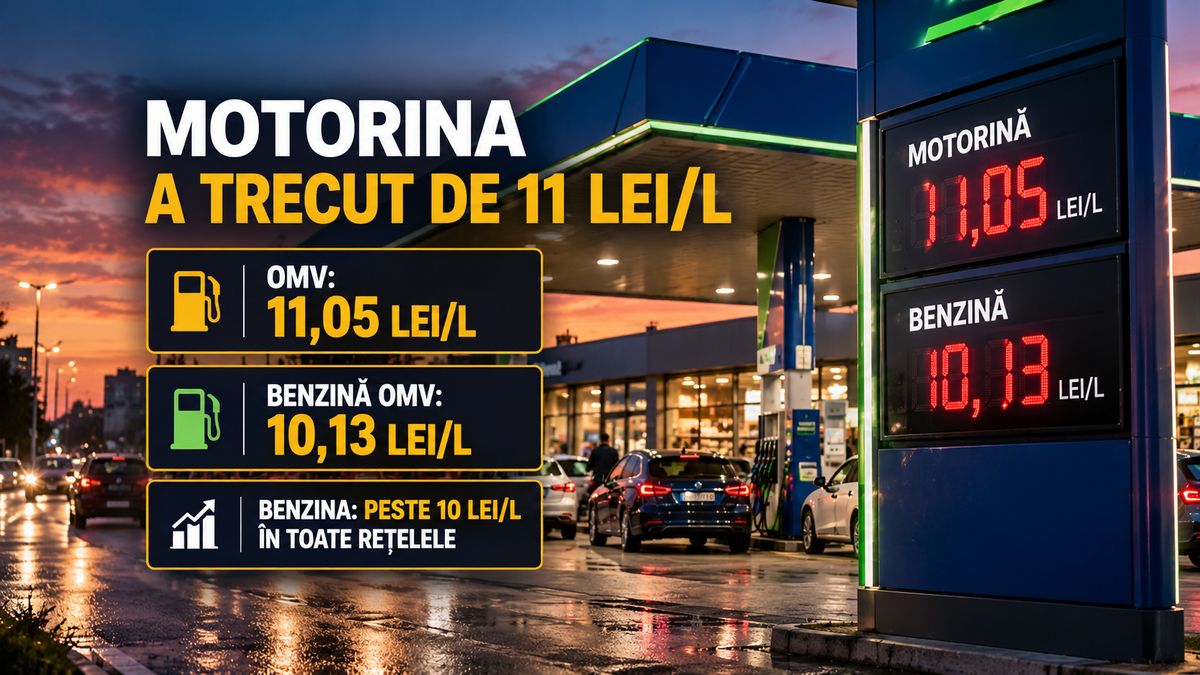
Historic thresholds shattered at the pump: diesel exceeds 11 lei, gasoline tops 10 lei Diesel prices have surpassed the historic threshold of 11 lei per liter at OMV stations, triggering record-breaking fuel price hikes across Romania. This rapid escalation, recorded at the end of September 2026, completely erases the temporary relief previously felt by consumers and marks a new historical peak for the local fuel market. Gasoline followed the same upward trajectory, crossing the 10 lei per liter threshold across all major retail networks operating in the country, according to price monitoring data. This development comes shortly after previous tax and excise duty cuts were quickly neutralized by market dynamics. In early September, major distributors such as Rompetrol and MOL applied price hikes of over 10 bani per liter in a single day, foreshadowing the massive rally that has now culminated in crossing the psychological thresholds of 10 and 11 lei per liter, respectively. This movement places severe pressure on household budgets and transport companies' profit margins. As fuel retailers align prices with new cost realities, Romanian consumers face a new wave of cascading price increases. Road hauliers are already warning that freight distribution rates will immediately reflect these additional costs, which could generate further inflationary pressure on basic goods in stores in the coming weeks. Middle East tensions and leu depreciation drive up supply costs The primary driver of this accelerated growth is geopolitical and logistical. Shipping costs for supertankers have reached a record $1.2 million per day, amid the military conflict in the Middle East involving Iran, which is severely disrupting critical maritime routes. This shipping shortage has doubled charter rates on key Middle East-to-China routes since late August, directly driving up the cost of crude oil delivered to European refineries. On the domestic front, the impact of rising Brent crude and refined product prices is significantly amplified by the depreciation of the Romanian leu against the US dollar, the benchmark currency for energy transactions. This currency pressure directly affects the balance sheets of major Romanian companies. For instance, OMV Petrom was forced to ask shareholders to approve a rectified investment budget for 2026 of nearly 10 billion lei, 11% higher than the level approved in April, driven by national currency depreciation and development costs for the Neptun Deep project. Consequently, the acquisition cost of fuels on the wholesale market has risen much faster than the retail market's capacity to absorb the shock, forcing gas stations to pass these costs directly to the pump to maintain operational viability. Direct pressure on distribution chains and transport costs in Romania The consequences of exceeding these price thresholds will quickly ripple through the entire national economy. Diesel is the primary fuel used in commercial transport, agriculture, and industry, meaning any price increase at the pump automatically translates into higher operational costs for manufacturers and distributors. Logistics companies no longer have the wiggle room to absorb these price differences, following previous months marked by high volatility. Furthermore, this record price hike comes at a time when the state budget is already heavily strained by support measures in other energy sectors. Recently, the Ministry of Finance approved a supplement of over one billion lei for the Ministry of Labor, funds dedicated exclusively to compensating electricity and natural gas bills for vulnerable consumers ahead of the cold season. In this context, the government has limited leverage to intervene again in the fuel market through subsidies or further tax cuts. OMV Petrom’s November decision and the risks of prolonged high prices The next major milestone to watch at the corporate level is the OMV Petrom Extraordinary General Meeting of Shareholders on November 6, 2026, where the approval of the rectified investment budget of 9,978 million lei will be officially decided. This decision will confirm the extent to which inflationary pressures and high capital costs will influence the medium-term development strategy of the region's largest hydrocarbon producer. In the short term, the risk of pump prices remaining at these record levels or even increasing is extremely high. As long as global shipping bottlenecks persist and supertanker rates remain near historic highs due to Middle East risks, there are no real premises for a significant drop in fuel prices. Romanian consumers and businesses must plan their budgets for the winter of 2026 taking into account high mobility and logistics costs.