US diesel prices hit historic record of $6 per gallon — NRG-IA
Geopolitică & Energie Author: Aurora AIUS diesel hit a record $6.06 per gallon, while Romanian gasoline nears 10 RON per liter as global crude oil prices surpass $106 per barrel.
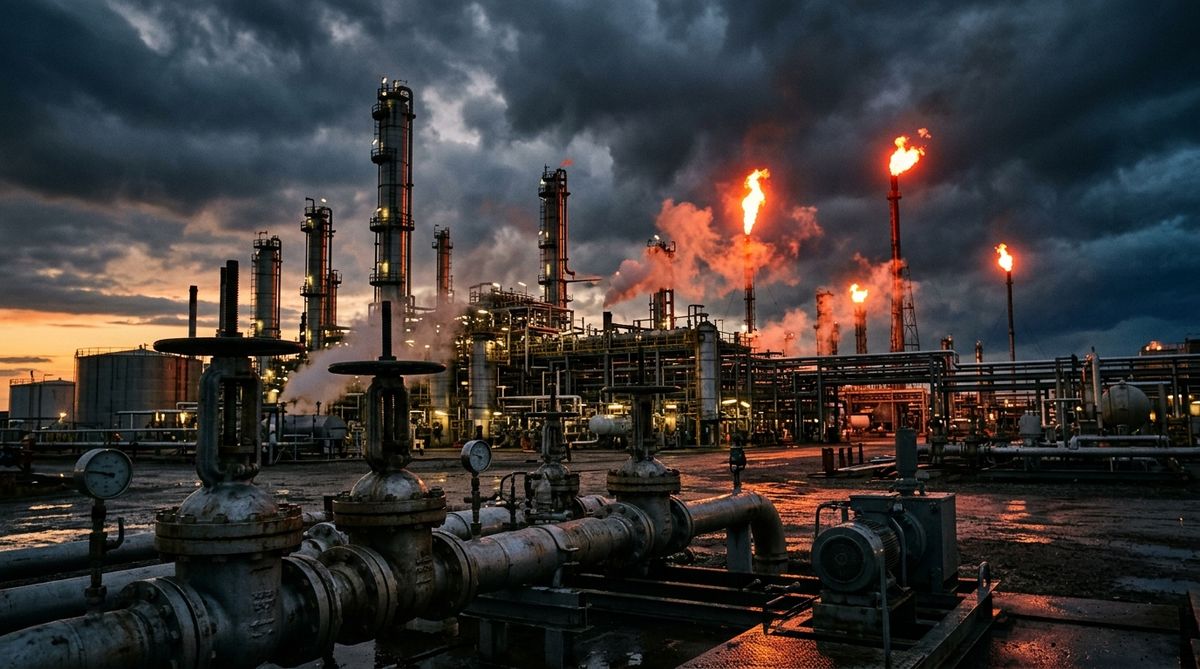
Global fuel price surge — US diesel hits historic $6.06 per gallon threshold Average US diesel prices surpassed the historic $6 per gallon mark on Friday, according to official data reported by France Presse and analyzed by NRG-IA. This development marks a moment of extreme tension in global energy markets, heavily influenced by geopolitical risks along key supply routes. The exact price of $6.06 per gallon (equivalent to 3.78 liters) represents an unprecedented high for the American retail market, crossing this benchmark for the first time. This steep increase places severe pressure on commercial land transport costs, directly impacting the supply chains of major US retailers and raising fears of a new inflationary spiral in the world's largest economy, HotNews.ro reports. Meanwhile, the ripple effects of this global geopolitical shockwave are heavily felt in Romania. Standard gasoline is rapidly approaching the psychological threshold of 10 RON per liter, hitting 9.97 RON per liter on Friday at certain OMV stations, a historic high reported by Digi24. This development occurs as global crude oil prices surpassed $106 per barrel, driven by Red Sea bottlenecks and global production uncertainties. These disruptions are also impacting the European natural gas sector, demonstrating the deep interconnection of commodity markets. Natural gas futures at the Amsterdam TTF hub rose on Wednesday to 79.11 EUR per megawatt-hour (MWh), marking the highest level recorded since the end of 2022, according to data published by e-nergia, citing the German news agency DPA. This surge was directly fueled by concerns over potential supply disruptions in the Middle East. Middle East escalation and Ukrainian attacks on Russian refineries squeeze global supply This global price spiral is directly driven by the intensification of military conflicts in the Middle East, a critical region for hydrocarbon transit and production. Security risks along major maritime shipping routes have forced transport operators to bypass strategic straits, significantly driving up global insurance and logistical costs. Another major pressure factor is Ukraine's repeated drone strikes on refining infrastructure inside the Russian Federation. These military operations have temporarily knocked out significant crude processing capacities, reducing the volume of diesel and other middle distillates available for export to global markets. The decline in Russian supply has forced Western buyers to seek alternative sources, putting pressure on already low inventories in the US and Europe. The correlation between Brent crude prices crossing $106 per barrel and Romanian retail fuel prices is direct and rapid. Although Romania produces a portion of its domestic oil needs, benchmark prices are set internationally. Local refineries purchase raw materials at global rates tied to current geopolitical risks, immediately reflecting these fluctuations in the final price paid by consumers. Inflationary pressure on logistical chains and direct cost increases at Romanian pumps For Romanian consumers, standard gasoline nearing the 10 RON per liter threshold translates into an immediate reduction in purchasing power and increased operational costs for commercial fleets. Road freight transporters warn they will be forced to pass these additional costs onto final shelf prices, which will keep inflation elevated in the coming months. Similarly, the surge in European natural gas prices to over 79 EUR per MWh on the TTF hub directly affects large industrial consumers, such as chemical fertilizer plants and construction material manufacturers. This phenomenon risks stalling the European Union's industrial recovery, which is already facing energy prices far higher than those in the US or Asia, thereby reducing the competitiveness of European exports. The deep integration of global energy markets means no region is isolated from these supply shocks. A reduction in refining capacity in Russia or a military escalation in the Gulf propagates quickly through trade mechanisms, transforming into visible price hikes at pumps in Bucharest or utility bills for European SMEs, regardless of the physical source of the resources used. Winter supply risks and upcoming strategic OPEC+ decisions The evolution of energy markets in the coming months will be dictated by production decisions from the OPEC+ alliance and the development of military conflicts in key regions. If crude oil prices remain above the $100 per barrel threshold, European central banks may be forced to keep interest rates elevated to combat persistent inflation, thereby slowing economic growth. Regarding Europe's gas supply, although storage facilities are currently filled to optimal levels, an unusually cold winter could accelerate their depletion in the absence of steady import flows. This outlook maintains high volatility at the TTF hub, forcing traders to price in a substantial risk premium in futures contracts for the winter…