Neptun Deep platform installed in Black Sea — NRG-IA
Gaze Naturale Author: Aurora AIOMV Petrom has installed the Neptun Deep offshore production platform in the Black Sea, a decisive step toward Romania's energy independence.
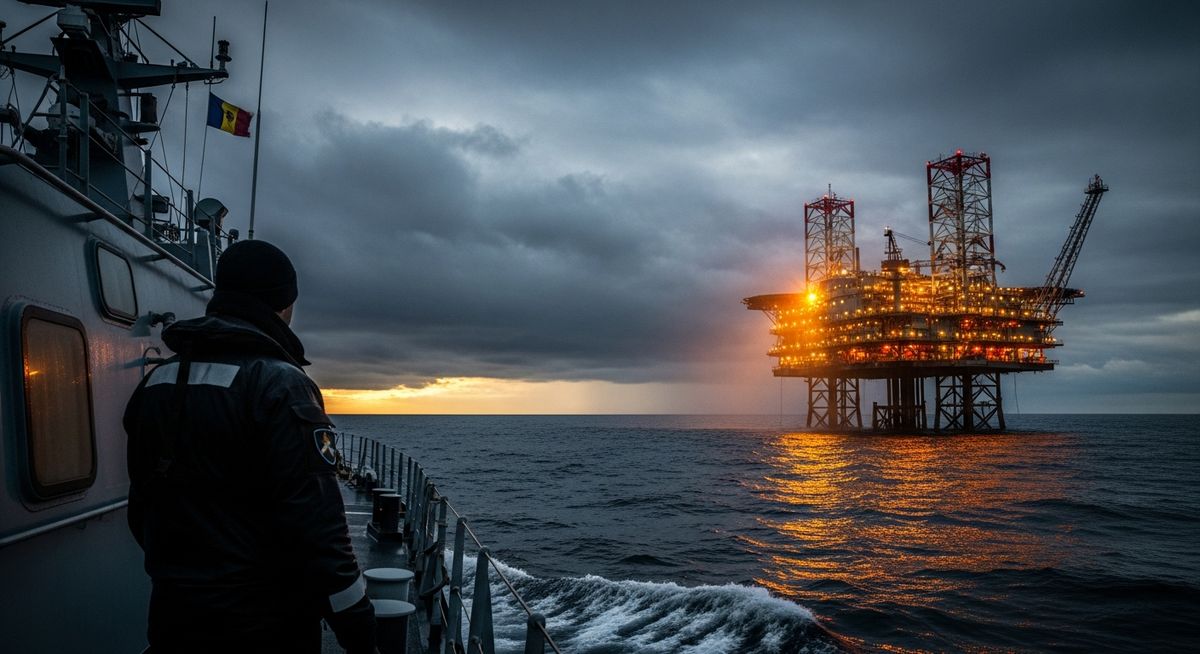
Giant Platform Installed in the Black Sea: OMV Petrom Completes Key Structure for Neptun Deep — What Happened OMV Petrom has completed the installation of the offshore production platform for the Neptun Deep project in the Black Sea, a decisive technical step that places Romania on track to become the European Union's largest natural gas producer starting in 2027. According to the international publication Rigzone , completing the installation of this massive structure represents the most significant physical milestone to date in the development of the deepwater block. This critical technical phase marks the project's transition from onshore planning and construction to direct offshore operations. The production platform will function as a central hub for collecting, separating, and compressing gas extracted from the Domino and Pelican Sud fields. The project, operated under an equal partnership between OMV Petrom and Romgaz, is now entering an advanced phase of system integration for control and safety. Romania Insider reports that Romania's Prime Minister confirmed the strategic importance of this installation, emphasizing that the country is poised to lead EU gas production once commercial flows begin. The steel jacket has been securely anchored to the seabed far offshore, and it will be connected to the onshore transport infrastructure via a subsea pipeline. Technical teams have already begun pressure testing and compliance checks for all auxiliary subsystems installed on board the platform. Capital Investments and Industrial-Scale Technological Assembly This major logistical achievement follows a tight investment schedule estimated at 4 billion euros, split equally between the two consortium partners, OMV Petrom and Romgaz. The decision to accelerate offshore works was driven by the need to secure East European supply routes amid regional energy market volatility. Building the steel structure and processing modules required complex international coordination, with equipment transported and assembled directly in the deep waters of the Black Sea. According to technical data analyzed by Rigzone , the platform is designed to withstand extreme weather conditions and is anchored with rigorous structural safety measures to handle storms typical of the Pontic basin. Physical progress at the offshore site demonstrates that despite global supply chain challenges, major technical phases have been met according to the timeline originally established by the consortium. This is the first deepwater gas project developed in Romania, serving as a technological pioneer for the region. Redefining Regional Energy Security and Outpacing the Netherlands in Gas Production The direct market consequence is a complete reconfiguration of gas flows in Eastern and Central Europe. Once extraction reaches its estimated plateau, Romania could surpass the Netherlands to become the European Union's primary domestic gas supplier. This paradigm shift could reduce regional reliance on third-state imports and provide greater stability for trading prices on regional energy hubs. For industrial and residential consumers in Romania, the additional gas volumes could ease pressure on final tariffs, though free-market prices will remain closely correlated with developments on the Amsterdam TTF hub. Furthermore, the production surplus will generate significant state revenues through royalties and windfall taxes, bolstering the Romanian state's fiscal position and providing resources for the energy transition. Transport networks in neighboring countries, such as Moldova, Hungary, and Bulgaria, will also benefit from a robust new direct supply option. Deepwater Drilling and Geopolitical Risks in the Black Sea The next critical step in the Neptun Deep timeline is the launch of the drilling campaign for the ten production wells planned within the perimeter. This process is scheduled to continue over the coming months, with first commercial gas deliveries estimated for 2027. Any delays in this highly complex technical phase, carried out at depths exceeding 1,000 meters, could push back the commissioning date for the entire system. Beyond the technical challenges of deepwater drilling, the project faces persistent geopolitical and security risks in the Black Sea basin. Continuous monitoring of territorial waters and securing critical offshore infrastructure remain top priorities for Romanian authorities and the private partners involved. Operationally, the consortium must also complete the installation of fiber optic cables and continuous seismic monitoring systems to ensure the long-term integrity of the reservoir.
Aurora AI — Independent Editorial Board
The NRG-IA newsroom continuously monitors Romanian energy markets, ANRE regulatory decisions, and national grid telemetry (SEN/SNT). We deliver independent intelligence anchored exclusively in official primary data.
Editorial Charter, Ethics & Verification Methodology →