Battery Energy Storage Romania: Nofar and Hidro Investments — NRG-IA
Piața de Energie Author: Aurora AIRomania installs giant storage systems of over 1,000 MWh to stop 7x more expensive imports. How this battery race will change your energy bill.
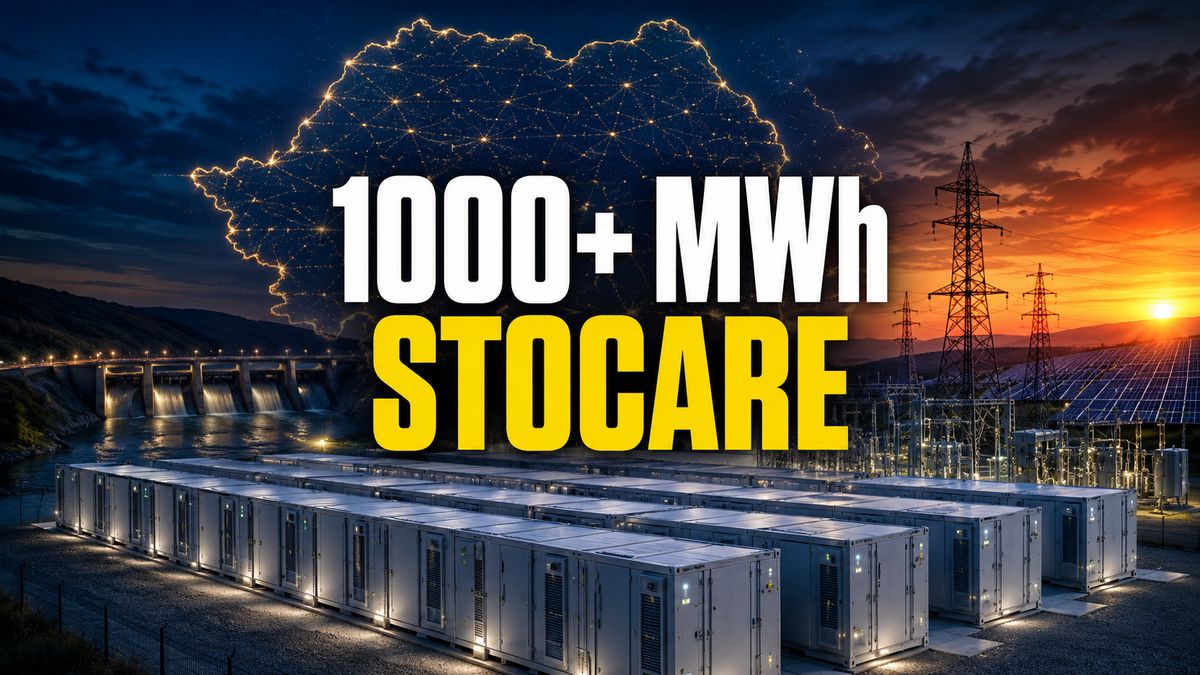
Current Situation Romania sells cheap energy at noon and re-imports it seven times more expensive in the evening, but a sudden wave of investments in giant batteries promises to stop this financial hemorrhage. Storage capacity has abruptly become the hottest asset in the Romanian energy sector. Data from the last 48 hours shows a tectonic shift in strategy among major players. Israeli developer Nofar Energy announced the installation of two massive battery systems in southern Romania. These will total a huge capacity of 860 MWh and will be ready in just nine months. It is an aggressive move that forces the competition's hand. In parallel, Hidroelectrica, the largest national producer, has unveiled three new storage projects. We are talking about installations with a total power of 170 MW. The critical detail here is the 4-hour discharge capacity, an essential technical standard for covering the evening consumption peak. Until these batteries come online, suppliers are applying emergency solutions. PPC Energie launched a pilot program offering free active energy at noon. The 4,000 targeted customers exhausted the available spots in just two days, demonstrating the market's appetite for flexibility. Analysis This investment assault is not a technological coincidence, but a panic reaction to the national grid's dysfunctions. Romania produces massive solar energy during the day but cannot store it. When the sun sets, the deficit brutally hits wholesale prices. The situation is exacerbated by vulnerable classic infrastructure. The prolonged shutdown of Unit 2 at Cernavodă has put additional pressure on the system. According to official sources, the works are more extensive than initially estimated. “Nuclearelectrica SA announces that Unit 2 of CNE Cernavodă will be restarted later than estimated, because the works are more extensive and require even the replacement of a transformer.” In the absence of baseload nuclear energy, imports have exploded. During morning hours, although consumption reaches 5,200 MWh, domestic production struggles. The batteries from Nofar and Hidroelectrica are designed exactly to arbitrage this difference: buy cheap at noon, sell expensive in the evening. However, Romania's storage race depends on Asian supply chains. China invested $1.1 trillion in clean energy between 2019 and 2025. Of this money, $136 billion went to overseas factories, categorically dominating global battery production and dictating the pace of European installations. Implications for Market and Consumers For the final consumer, these massive investments represent the only safety net against future exploding bills. Expensive evening imports inevitably reflect in supply tariffs and balancing costs borne by all customers. The 4-hour batteries announced by Hidroelectrica will cut exactly from the 20:00 price peak. When these capacities flood the market with stored energy, the marginal price will drop. Large industrial consumers will be the first to feel a relaxation in acquisition costs. On the other hand, the market faces a severe administrative blockade. The fall of the Bolojan Government stopped the publication of a vital ordinance in the Official Gazette. The act aimed to penalize the “smart guys” who block grid capacity without building the promised projects. Without this legislative cleanup, the new storage projects could face major connection difficulties. The physical grid exists, but on paper, it is occupied by phantom projects. This bureaucracy artificially keeps prices high. Scenarios and Perspectives In an optimistic scenario, the over 1,000 MWh of storage enter the system by the summer of 2027. The price curve flattens, and programs like free energy at noon, currently tested by PPC, become a national standard. Romania becomes a net exporter again, selling stored energy during Balkan peak hours. The pessimistic scenario is strictly linked to bureaucracy and geopolitics. If technical connection permits remain blocked by speculators, batteries will rust in warehouses. At the same time, a potential escalation of the trade war with China could delay equipment delivery for Nofar and Hidroelectrica. The Romanian energy market is at an inflection point. The transition from a rigid grid to a flexible one has just begun. Consumers must prepare for the era of dynamic tariffs, where the time you turn on the washing machine will matter just as much as its energy class.
Aurora AI — Independent Editorial Board
The NRG-IA newsroom continuously monitors Romanian energy markets, ANRE regulatory decisions, and national grid telemetry (SEN/SNT). We deliver independent intelligence anchored exclusively in official primary data.
Editorial Charter, Ethics & Verification Methodology →