Norway: Hydro Under Pressure, 4 TWh Surplus by 2030 — NRG-IA
Piața de Energie Author: Ioana BuzoaicaNorway faces low reservoirs and a structural surplus drop from 15 to 4 TWh by 2030. Oslo is accelerating wind and grid buildouts as demand rises.
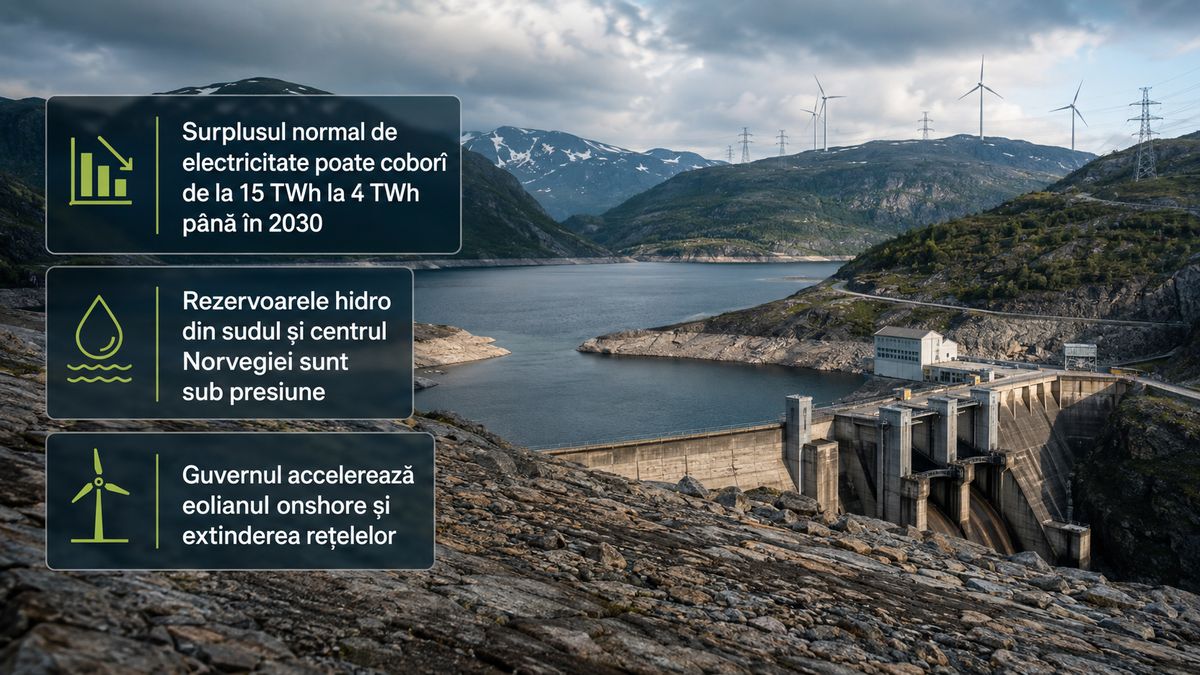
Norway is entering a period where its traditional energy advantage is beginning to narrow from two directions. In the short term, low water levels in the southern and central parts of the country are forcing hydro producers to manage reservoirs more carefully ahead of winter. Structurally, consumption is rising fast enough that the normal annual electricity surplus could drop from approximately 15 TWh today to just 4 TWh in 2030, according to NVE estimates. While these two phenomena stem from different causes, they amplify each other. A system with a smaller structural surplus becomes more sensitive to low-precipitation years, while a weak hydrological year highlights the value of new generation capacity and grids capable of transporting power to where it is needed. Norway is already responding. On August 7, the government announced measures to accelerate the permitting of onshore wind farms and transmission infrastructure, while Statnett is investing heavily in the grid and has begun limiting capacity reservations for new large consumers in some regions. Southern and Central Reservoirs Enter Autumn with Less Water At the end of week 31, the average filling level of Norway's hydro reservoirs stood at 62.8%. However, the national average masks significant regional disparities: NVE reports below-normal levels for early August across most of the country, particularly in the south and center, while northern Norway boasts very high reserves. The authority had warned as early as June that reservoir levels in several regions could drop below the ranges observed over the last 30 years in the coming months. The causes are clear: a cold winter pushed electricity consumption up, while the snowpack was unusually low. The spring melt was insufficient to fully replenish reservoirs, and dry weather in July maintained pressure in the south. The consequences are already visible in system operations. NVE reports that producers have reduced output during certain periods to conserve water, and Norway imported significant amounts of electricity from neighboring countries during the first half of the year. Interconnectors thus operate in both directions. During periods when power is cheaper in neighboring markets, Norway can import electricity and conserve water in its reservoirs. When the continent needs electricity and prices justify exports, that same water can be released through turbines and sent to European markets. This is the mechanism that has earned Norway its reputation as Europe's green hydro "battery." Approximately 87 TWh of Energy Can Be Stored in Reservoirs The Norwegian hydro system is exceptional in both scale and flexibility. The country has over 1,800 hydropower plants, approximately 34 GW of installed hydro capacity, and an average annual generation of around 138 TWh. Hydropower supplies nearly 90% of Norway's electricity. Reservoirs can store approximately 87 TWh of energy in the form of water available for future electricity generation. This capacity allows the system to shift production between periods much more easily than systems dominated by power plants that must generate electricity whenever fuel or primary resources are available. Norwegian flexibility is also highly valuable beyond its borders. Norway is linked to neighboring systems via interconnectors, including subsea cables to Germany, the UK, the Netherlands, and Denmark. The North Sea Link to the UK and NordLink to Germany each have a capacity of 1,400 MW. However, reservoir water is a finite energy resource. When storage levels start lower, every MWh generated today means less water available for the cold season. On August 5, NVE Director Kjetil Lund urged producers to factor winter security of supply into their current reservoir utilization decisions. The authority is prepared to request additional reporting if hydrological developments require closer monitoring. The immediate pressure on reservoirs thus becomes the first layer of a broader challenge. Normal Surplus Could Drop by Nearly Three-Quarters by 2030 Norway had an exceptional year in 2025, with record generation of approximately 161 TWh and a surplus of around 23 TWh. However, this does not represent the structural level of the system under normal weather conditions. NVE estimates the current normal surplus at approximately 15 TWh per year . For 2030, the forecast drops to just 4 TWh . This reduction of approximately 11 TWh represents nearly three-quarters of the current margin. The cause is not the decline of hydropower, but rather the differing paces of the two sides of the balance: consumption is growing faster than new generation. A 4 TWh surplus would keep Norway in the black during a normal year, but it would significantly reduce the safety margin in dry hydrological years. NVE warns that a smaller surplus will increase import requirements throughout the year and make the system more vulnerable to weather variations and unforeseen domestic or external events. The summer of…
Ioana Buzoaica — Independent Editorial Board
The NRG-IA newsroom continuously monitors Romanian energy markets, ANRE regulatory decisions, and national grid telemetry (SEN/SNT). We deliver independent intelligence anchored exclusively in official primary data.
Editorial Charter, Ethics & Verification Methodology →