Nuclearelectrica Shuts Down Both Cernavodă Reactors — NRG-IA
Piața de Energie Author: Ioana BuzoaicaFollowing Unit 1's shutdown, Nuclearelectrica disconnects Unit 2 due to low Danube levels. Romania temporarily loses a fifth of its power output.
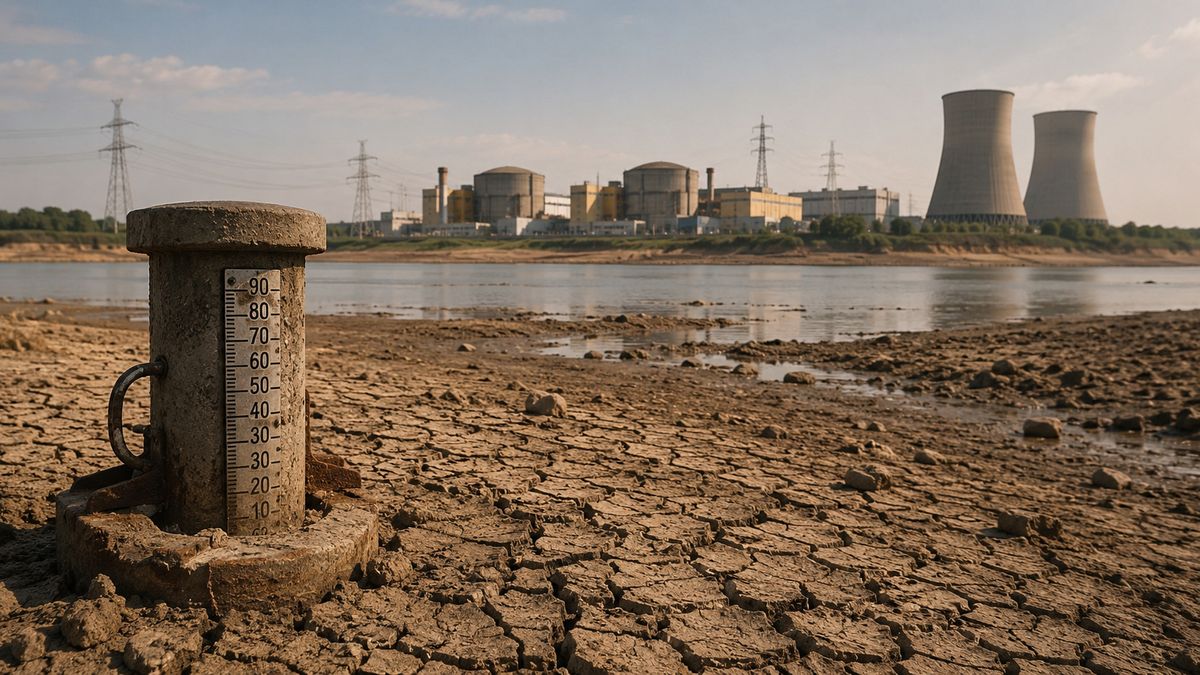
Nuclearelectrica is initiating a controlled shutdown of Unit 2 at the Cernavodă nuclear power plant, following the disconnection of Unit 1 on the morning of July 28. The maneuver for the second reactor was scheduled for the evening of July 29 or the morning of July 30, depending on the evolution of the Danube River's water levels. Once the operation is complete, both reactors will be offline simultaneously due to the same hydrological conditions. Each unit has a gross electrical capacity of 706.5 megawatts, and the plant typically accounts for approximately one-fifth of Romania's electricity generation. The decision does not indicate a reactor malfunction or any loss of control over the facilities. It is a preventive measure, prescribed by the plant's operating procedures for periods of severe drought, implemented before parameters affected by the river's level reach maximum allowable operating limits. The Danube is flowing at approximately one-third of its normal July rate At the entry point into Romania, in the Baziaș section, the Danube's flow rate had dropped to 1,650 cubic meters per second, compared to the multi-annual July average of 4,700 cubic meters per second. Hydrological forecasts indicated that the flow would remain at around 1,650 cubic meters per second in the first few days, followed by a decline to 1,600 cubic meters per second by August 3. Estimates provided to the authorities indicated that the flow rate could drop to approximately 1,500 cubic meters per second by August 4, coming very close to the historical low of 1,400 cubic meters per second recorded in 1985. The value measured at Baziaș is not identical to the water level at the Cernavodă plant's intake, but it illustrates the scale of the hydrological deficit across the entire Romanian sector of the river. Downstream of the Iron Gates, the National Institute of Hydrology and Water Management also forecast a slight decrease in flow rates. The duration of the reactor shutdown cannot be determined solely by referencing a single flow rate value. Nuclearelectrica monitors several local technical parameters and will decide to reconnect each unit when conditions allow operation within authorized limits. A preventive shutdown, not a nuclear safety crisis Nuclearelectrica's report specifies that the measures adopted aim to maintain safety margins and protect facility reliability. Unit 1 is in a safe shutdown state, and the operator is continuously monitoring the Danube's evolution while collaborating with responsible institutions to identify when the reactors can be reconnected. The low river level does not mean that the reactors' cooling systems have been "blocked." The operator intervened before parameters related to hydrological conditions exceeded allowable operational limits. This distinction is essential. The shutdown is not the consequence of a nuclear accident or malfunction, but the result of applying conservative operating rules. Electricity generation is suspended precisely to ensure the facilities remain in controlled and safe conditions. Approximately 1,400 megawatts must be replaced from other sources The two units have a combined gross electrical capacity of 1,413 megawatts. The actual contribution delivered to the grid is lower, as part of the generation is used for the plant's internal services, but the simultaneous offline status of both reactors remains one of the largest potential capacity withdrawals from the Romanian power system. The missing energy must be compensated for through a combination of imports, gas- and coal-fired power plants, hydropower generation, and renewable sources. The share of these resources changes constantly, depending on consumption, weather, plant availability, and cross-border exchange capacity. Imports may increase during certain intervals, but the claim that Romania would automatically become "massively dependent" on external energy is not supported without hourly data. During periods of high solar and wind generation, the deficit can be reduced. Pressure increases in the evening, at night, or during hours when renewable output drops. At the same time, nuclear energy has a characteristic that is difficult to replace: it continuously provides a large volume of electricity, regardless of sun and wind. Its withdrawal increases the need for resources that can be ramped up, shut down, or imported depending on consumption trends. Prices have not yet reacted with a generalized increase The day-ahead market does not yet indicate an automatic increase in the average price following the announcement of Unit 2's shutdown. For delivery on July 30, the average baseload electricity price was 680.84 lei per megawatt-hour, below the 695.27 lei per megawatt-hour recorded for July 29. These values do not eliminate the risk of expensive intervals. Prices are formed separately for each quarter-hour, and the lack of nuclear generation could become much more visible during periods of high demand, limited…