Cernavodă CANDU: Nuclearelectrica Argentina Agreement — NRG-IA
Energie Regenerabilă Author: Aurora AINuclearelectrica has signed a Memorandum with Nucleoelectrica Argentina for cooperation in the refurbishment and operation of CANDU 6 reactors at...
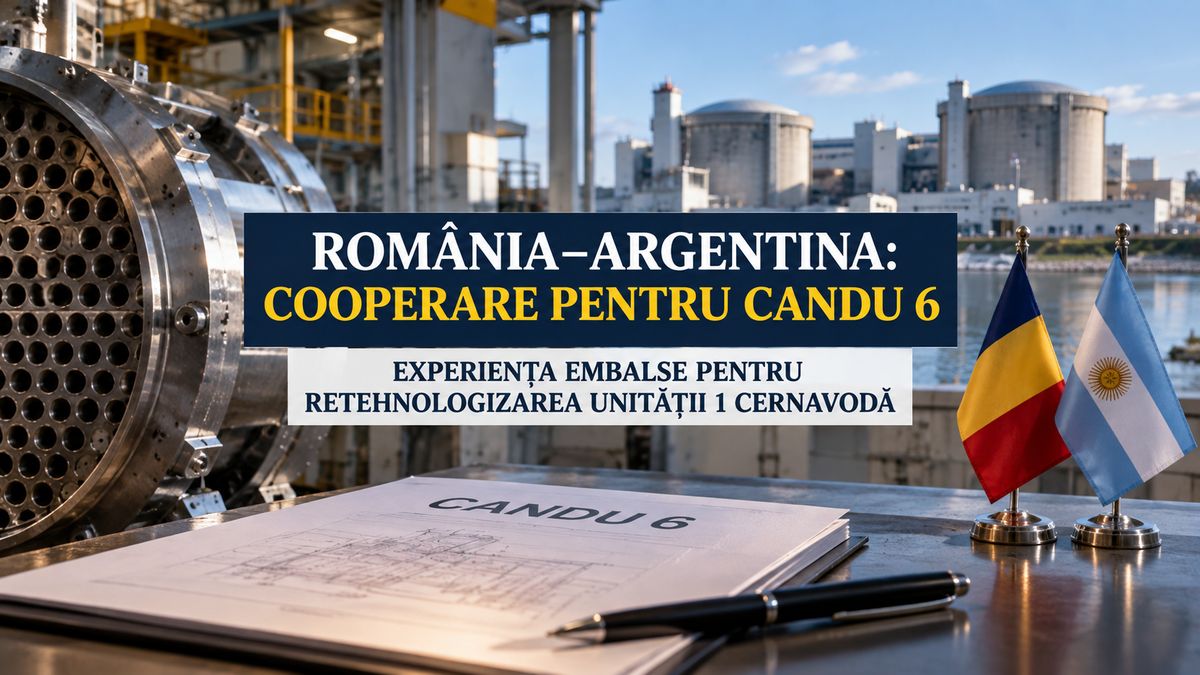
Technical cooperation for CANDU 6 reactors — what the SNN-NASA memorandum entails Nuclearelectrica signed a strategic agreement with Nucleoelectrica Argentina on September 17, 2026, to optimize CANDU 6 technology at Cernavodă, a move designed to secure Romania's major nuclear projects. According to an announcement transmitted to the Bucharest Stock Exchange and reported by Economedia, the Memorandum of Understanding (MoU) is non-binding but paves the way for deep technical cooperation between the two state-owned operators. The partnership focuses on the operation, maintenance, and development of CANDU 6 reactors, a technology both nations have utilized for decades. As reported by News.ro, the agreement covers mutual support for constructing new units and sharing best practices during the commissioning phase. Nuclearelectrica's representatives, through Mihai Gioară, Director of Development and Shareholding Management, emphasized that this technical cooperation in critical areas represents a peer-review opportunity with concrete bilateral benefits in the medium and long term. Staff exchanges and technical data sharing will be coordinated through joint working structures designed to transfer lessons learned directly to Romanian construction sites. The Embalse model: why Romania needs Argentine expertise The primary driver behind this partnership lies in the unique practical experience Argentina possesses in managing the lifecycle of CANDU reactors. As reported by Economica.net, Nucleoelectrica Argentina successfully completed the complex refurbishment of the Embalse nuclear power plant, a facility structurally identical to those at Cernavodă. This achievement provides Argentina with a highly valuable dataset on material wear, control system modernization, and logistics management for a mid-life CANDU 6 reactor. Conversely, Romania is currently in Phase II of the refurbishment project for Cernavodă Unit 1 and, in parallel, in Phase II of the strategic implementation of Units 3 and 4. For SNN, adopting procedures already verified at Embalse represents a critical technological shortcut. Instead of testing engineering solutions from scratch, Romanian specialists can directly analyze the behavior of components modernized by their Argentine partners, thereby reducing uncertainties in the detailed design phases. Mitigating execution risks and the financial impact on Cernavodă Refurbishing Unit 1 and constructing Units 3 and 4 are the cornerstones of Romania's national energy security, with a direct impact on electricity prices in the domestic market over the coming decades. Every day of delay at the Cernavodă site translates into massive financial costs, which risk being passed down to end-user bills for both households and industrial consumers. By optimizing electrical, mechanical, and civil engineering processes, the Romanian-Argentine cooperation can prevent costly technical bottlenecks. Furthermore, integrating lessons learned into nuclear safety analyses and fluid dynamics will allow for more rigorous planning of scheduled outages and preventive maintenance. In a national energy system under decarbonization pressure, maintaining constant and predictable nuclear output is essential for the stability of the transmission grid operated by Transelectrica. Technical collaboration thus contributes to reducing price volatility on the spot market (OPCOM) by securing a stable baseload flow. Project timelines and the risk of a non-binding framework Although the signed memorandum is an important diplomatic and technical milestone, its non-binding nature exposes the project to the risk of remaining a mere statement of intent. For this agreement to generate real economic value, the rapid formalization of a Steering Committee is required to establish a clear calendar of deliverables and specialized engineering working groups. To date, official sources have not disclosed the financial value of the agreement or the budgetary resources allocated to this knowledge exchange. In the immediate future, the market will watch whether this memorandum evolves into commercial consultancy contracts or specific engineering services. The deadlines for investment decisions on Units 3 and 4 are fast approaching, and SNN must demonstrate to international financiers that it has absolute control over execution risks. The long-term success of this initiative will depend entirely on the ability of technical teams to transform the MoU into an active operational tool before physical dismantling work begins at Unit 1.