Stolt Magnesium hit off Oman: Risk spreads beyond Hormuz — NRG-IA
Geopolitică & Energie Author: Ioana BuzoiacaThe Liberian-flagged, Norwegian-operated chemical tanker Stolt Magnesium was hit off Oman, signaling expanding maritime risks beyond the Strait of Hormuz.
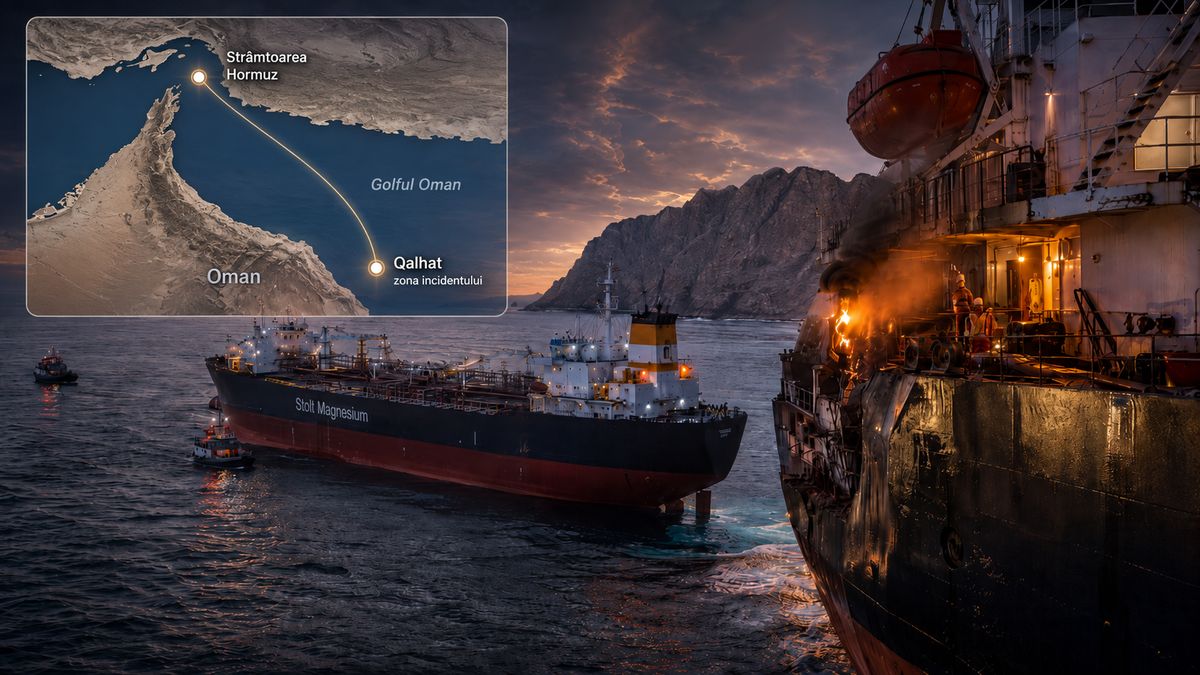
The chemical tanker Stolt Magnesium caught fire off the coast of Oman following the explosion of an unidentified external device near its engine room. All crew members have been accounted for and are safe, and the fire was initially tackled by the seafarers on board. The incident occurred in the Arabian Sea, approximately 40 nautical miles northeast of Qalhat, during the night between Monday and Tuesday. The vessel's master reported that an external object struck the starboard side of the engine room, according to information from the UK Maritime Trade Operations (UKMTO) and the ship's operator. The explosion was not followed by a cargo detonation, and available data does not indicate the loss of the vessel or any environmental disaster. The fire affected the engine compartment, one of the most vulnerable areas of a commercial ship, as damage to it can leave the vessel without propulsion and unable to quickly exit a hazardous area. The perpetrator of the attack had not been confirmed at the time of publication. The type of device, its origin, and the full extent of the damage also remain unknown. A chemical tanker, not a crude oil carrier The Stolt Magnesium is a vessel designed for transporting chemicals and oil products. Built in 2017, it is approximately 165 meters long with a capacity of around 27,500 deadweight tons. The vessel sails under the Liberian flag and is operated by Stolt Tankers, a division of the Stolt-Nielsen group, a company with Norwegian roots listed on the Oslo Stock Exchange. From a journalistic perspective, the vessel is accurately described as a Norwegian-operated chemical tanker, rather than a Norwegian tanker in terms of flag or legal ownership. This distinction is also important regarding the nature of the incident. The Stolt Magnesium is not a supertanker carrying millions of barrels of crude oil, but it is part of the same commercial system that ensures the flow of energy and industrial products between the Middle East, Asia, and Europe. The strike on such a vessel demonstrates that the danger is no longer limited to large oil shipments. Chemical tankers, refined product carriers, gas carriers, and other cargo categories are increasingly exposed on these same routes. Three vessels hit in a single window of escalation The incident occurred during the same period in which two tankers associated with the United Arab Emirates were hit by Iranian cruise missiles in the Strait of Hormuz. The UAE Ministry of Defense stated that the Mombasa B and Al Bahyah were attacked in Omani territorial waters. One Indian seafarer was killed, and eight other crew members were injured. Iranian authorities claimed the vessels had ignored warnings regarding their route. The Stolt Magnesium incident is distinct, and the explosion on board has not been officially attributed to Iran. However, the sequence of attacks demonstrates the rapid deterioration of maritime security around the Musandam Peninsula, the Omani coast, and the routes connecting the Persian Gulf to the Arabian Sea. The risk has expanded geographically. Vessels are no longer vulnerable only within the narrow passage of the Strait of Hormuz, but also after exiting it, along the coast of Oman, and in areas where commercial shipping attempts to regroup. Traffic through Hormuz drops to a two-month low The number of tankers and gas carriers transiting the Strait of Hormuz has fallen to its lowest level in two months, amid renewed clashes between the United States and Iran and strikes on commercial vessels. Public tracking data indicated only six transits on a recent Sunday. No liquefied natural gas (LNG) carriers were visible in public tracking feeds, and an increasing number of vessels were turning off their Automatic Identification Systems (AIS) to conceal their positions. Turning off transponders does not necessarily mean a vessel has halted its voyage. However, the measure reduces traffic transparency, complicates emergency response, and confirms the high level of caution among operators. Some companies have delayed departures, while others have utilized ship-to-ship transfers in the Gulf of Oman to avoid sending large carriers into the most dangerous areas. Each such operation adds time, costs, and logistical risks. Prior to the conflict, approximately one-fifth of the world's daily oil flow passed through Hormuz. The strait is also a critical artery for Qatari LNG exports. The reduction in traffic simultaneously affects crude oil, refined fuels, chemicals, and gas destined for Asian and European markets. US–Iran confrontation returns to commercial shipping lanes The explosion on the Stolt Magnesium occurred after a new round of US strikes against Iran. Washington announced strikes on Iranian missile systems, drones, and maritime capabilities, while Tehran responded with attacks on regional targets and commercial shipping. The resumption of military operations has strained the previously negotiated fragile truce and returned the Strait…
Ioana Buzoiaca — Independent Editorial Board
The NRG-IA newsroom continuously monitors Romanian energy markets, ANRE regulatory decisions, and national grid telemetry (SEN/SNT). We deliver independent intelligence anchored exclusively in official primary data.
Editorial Charter, Ethics & Verification Methodology →