LONGi to Equip 761 MWp Ogrezeni Solar-Storage Project — NRG-IA
Energie Regenerabilă Author: Ioana BuzoaicaLONGi to supply 1.16M PV modules for Enery's Ogrezeni project in Romania, combining 761 MWp solar with over 1 GWh battery storage.
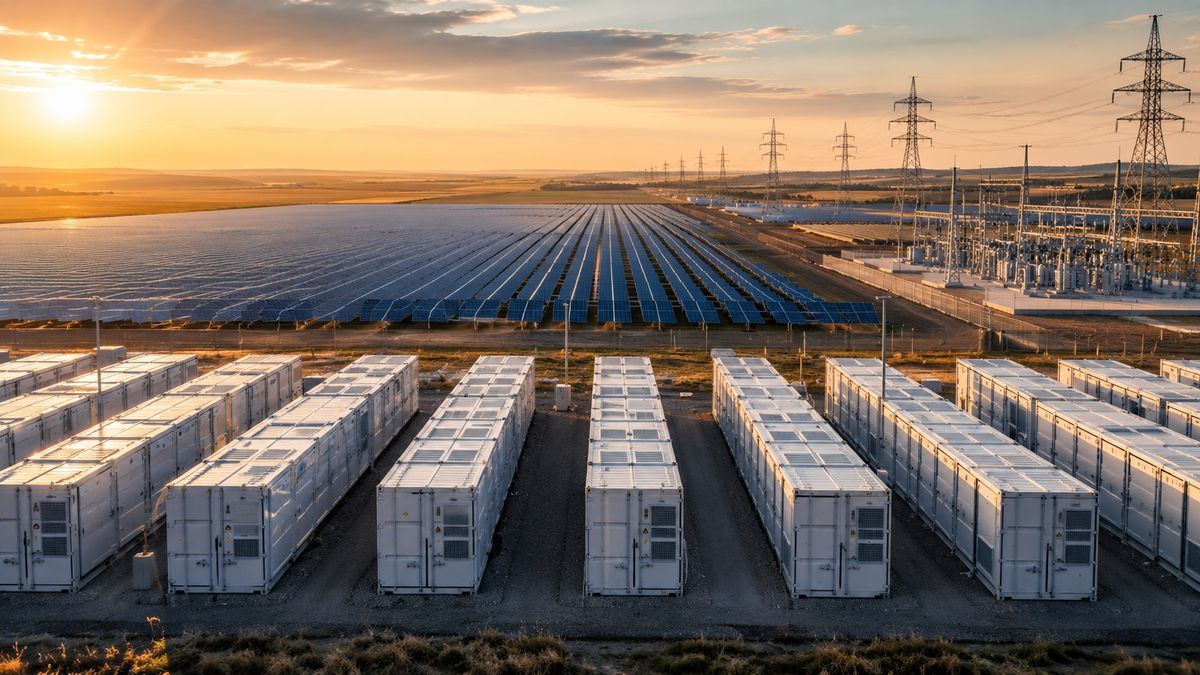
LONGi has announced its entry as the technology provider for the Ogrezeni hybrid project, developed by Enery in Giurgiu County. The company will supply 1,167,120 Hi-MO 9 Back Contact modules for a plant that will feature 761 MWp of installed photovoltaic capacity, 534 MW AC on the alternating current side, and over 1 GWh of battery storage capacity. Construction began in January 2026, with full energization estimated for the summer of 2027. The project marks a step-change in scale for solar investments in Romania. Ogrezeni is not designed as a traditional photovoltaic park, where production is immediately fed into the grid when the sun shines, but as a hybrid asset: solar power and storage are co-designed so that a portion of the electricity generated during peak irradiation hours can be shifted to periods of higher demand and prices. Over 1.16 million modules for a 761 MWp project LONGi will supply Hi-MO 9 modules based on Back Contact technology, with a nominal power output of up to 660 W per module. The manufacturer indicates an efficiency of up to 24.8%, a highly relevant figure for a project of this scale, where the yield of each module directly impacts the required land footprint, balance of system (BOS) equipment, and construction costs. The 761 MWp figure represents the nominal direct current (DC) capacity of the panels under standard test conditions. The 534 MW AC capacity represents the designed alternating current output after inverter conversion, prior to grid injection. The difference between these two metrics is standard for large-scale PV projects and reflects how developers size equipment to optimize solar generation throughout the day. On top of this generation volume is the battery storage system of over 1 GWh. This storage capacity represents the total amount of energy that can be stored and dispatched later. While it does not automatically turn the entire solar output into a fully dispatchable source, it can alleviate the pressure to inject all energy during midday hours, when the market often experiences PV oversupply and lower prices. Solar and storage enter the same market logic The project's value depends on how the battery is integrated into the plant's operations and the power market. In the most favorable scenario, storage can absorb a portion of solar generation during high-supply hours and discharge it when demand rises, including during evening peaks when solar generation ceases. This flexibility is becoming critical for the National Energy System as Romania adds large-scale solar capacities. PV generation can be very high at noon and non-existent after sunset, requiring system resources capable of rapidly balancing these fluctuations. Batteries can contribute to this function, but the actual outcome will depend on grid connection capacity, the operator's commercial strategy, the ancillary services framework, and market conditions at the time of commissioning. LONGi describes the project as a combination of gigawatt-scale solar and massive storage. For Romania, the significant aspect is not just the size of the PV park, but the integration of the battery into a project designed from the outset as a unified generation and flexibility infrastructure. EUR 460 million, eight banks, and a Romanian EPC Ogrezeni is backed by a EUR 460 million syndicated green loan. The project finance agreement was signed on December 24, 2025, with a syndicate of eight commercial banks coordinated by UniCredit, and the project is also supported through Enery's partnership with the Three Seas Initiative Investment Fund. The financing structure is crucial because hybrid projects of this scale require significant upfront capital before generating their first MWh. The investment covers the panels, battery, inverters, substations, grid connection facilities, civil works, logistics, control systems, and the integration of all assets into a single operational architecture. ENEVO Group has been selected as the main engineering, procurement, and construction (EPC) contractor for the PV facility and grid connection. Enery estimates that the construction phase will employ approximately 350 people, with a significant portion of engineering, execution, and services sourced locally. ENEVO's role is also significant because the project goes far beyond a simple solar array. Integrating over one million modules with a storage facility exceeding 1 GWh and high-voltage grid connection infrastructure requires close coordination among the technology provider, developer, EPC, banks, and grid operators. Ogrezeni raises the stakes for the Romanian storage market Enery estimates that the plant will generate annual energy equivalent to the consumption of approximately 684,000 households, avoiding around 303,000 tonnes of CO2 emissions per year compared to fossil-fuel generation. These estimates should be viewed as developer impact indicators; the actual effect will depend on the generation profile, technical availability,…
Ioana Buzoaica — Independent Editorial Board
The NRG-IA newsroom continuously monitors Romanian energy markets, ANRE regulatory decisions, and national grid telemetry (SEN/SNT). We deliver independent intelligence anchored exclusively in official primary data.
Editorial Charter, Ethics & Verification Methodology →