Black Sea AI Gigafactory attracts global investors — NRG-IA
Tehnologie & Inovație Author: Ioana BuzoaicaRomania's Black Sea AI Gigafactory project attracts interest from eight countries. Discover the grid connection risks and the strategic energy stakes.
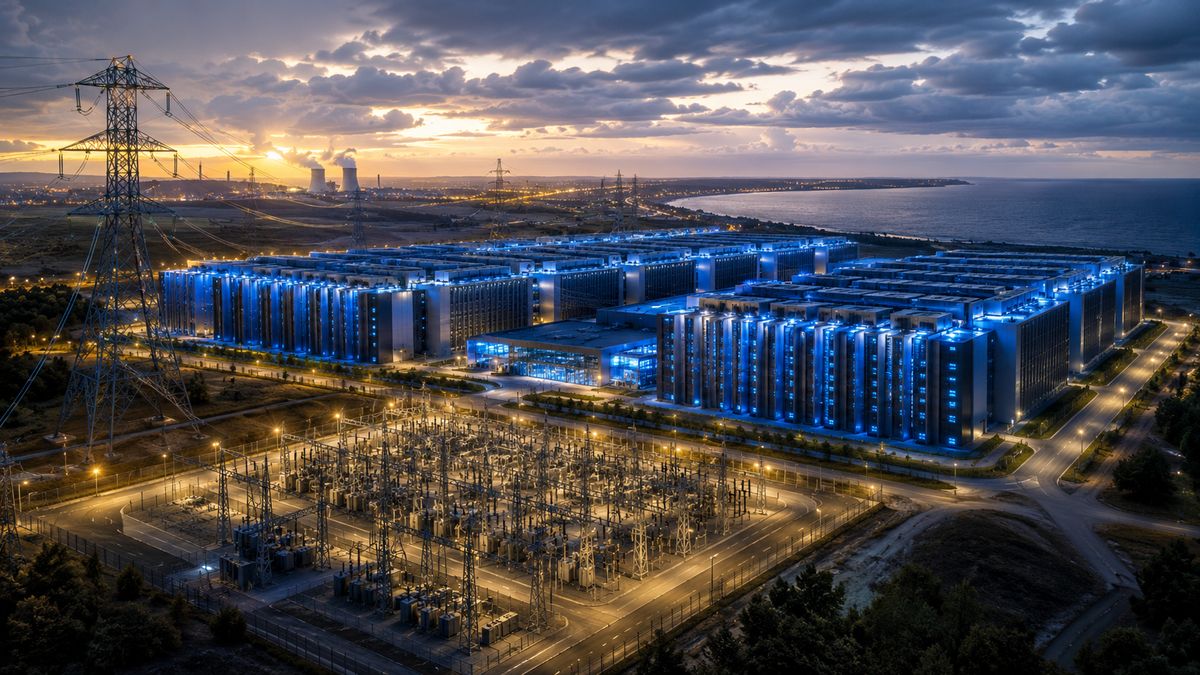
Consortiums from eight nations target the Black Sea digital mega-project — what happened Eight nations across four continents are targeting Romania's digital infrastructure mega-project, according to recent government data. Companies from Europe, North America, the Middle East, and Asia have officially expressed interest in participating in the development of the "Black Sea A.I. Gigafactory". This strategic initiative is jointly coordinated by the Ministry of Finance and the Ministry of Energy, standing as one of the most ambitious advanced technology projects in the region. The development, initially reported by specialized publications e-nergia and Economica.net, marks the completion of a key phase in attracting international private capital. The project aims to build a massive, state-of-the-art data center dedicated to artificial intelligence and high-performance computing. Romania is thus attempting to capitalize on its strategic geographic position at the edge of the European Union to attract global tech giants. The Ministry of Finance stated that the letters of interest received validate the commercial appeal of the concept. However, authorities have withheld the specific names of the interested companies and the exact investment budgets proposed at this stage. This lack of initial transparency maintains a level of caution among energy and technology analysts, who await binding financial commitments. Abundance of clean energy in Dobrogea attracts data center investors The primary draw for foreign investors is the availability of clean energy resources and high-speed communication lines near the Black Sea. The Dobrogea region concentrates most of Romania's wind power production, alongside the two nuclear reactors at Cernavodă. AI data centers are massive industrial consumers, requiring continuous, stable, and completely decarbonized power supply to meet global ESG standards. Furthermore, the project is closely linked to regional energy transit initiatives, including the Black Sea submarine direct current cable. This green interconnector is designed to bring renewable energy from the Caspian region directly to Central Europe. For investors, placing computing infrastructure close to the generation source offers a major competitive edge, minimizing transmission costs and grid losses. Major pressure on the Transelectrica grid and risk of rising transmission tariffs Developing a "gigafactory" scale computing center will put massive pressure on the national transmission grid operated by Transelectrica. AI infrastructure has a constant and extremely high consumption profile, in the range of hundreds of megawatts. Currently, the grid in Dobrogea is already congested due to limited capacity to evacuate renewable energy during peak wind production periods. If the project materializes, Romania could transition from being a net exporter of raw energy to a high-value data processor. However, integrating a consumer of this magnitude risks reducing the energy surplus available for export and increasing competition in the domestic market. Without massive investments in storage and local substation upgrades, the addition of such a giant could lead to higher transmission tariffs for other industrial consumers. Evaluation of letters of intent and risks of bureaucratic delays in public-private partnerships The next critical step in the project involves the technical and financial evaluation of the proposals submitted by international consortiums. The Ministry of Energy and the Ministry of Finance must define the legal structure of the future public-private partnership. The Romanian state will have to decide whether to retain a controlling stake or delegate operational management entirely to the selected private partner. A precise timeline for launching the official tender and construction deadlines has not yet been established by government representatives. The main risk remains administrative bureaucracy and delays in securing technical grid connection permits (ATR). If the selection process drags on, investors from North America or the Middle East could redirect their capital to competing regional markets, such as Poland or Greece, which are actively developing similar hubs.
Ioana Buzoaica — Independent Editorial Board
The NRG-IA newsroom continuously monitors Romanian energy markets, ANRE regulatory decisions, and national grid telemetry (SEN/SNT). We deliver independent intelligence anchored exclusively in official primary data.
Editorial Charter, Ethics & Verification Methodology →