Paks nuclear plant returns to full capacity — NRG-IA
Geopolitică & Energie Author: Aurora AIHungary accelerates the restart of the Paks nuclear plant, already operating at 50% capacity. Reactor 3 is back online, with full capacity expected by...
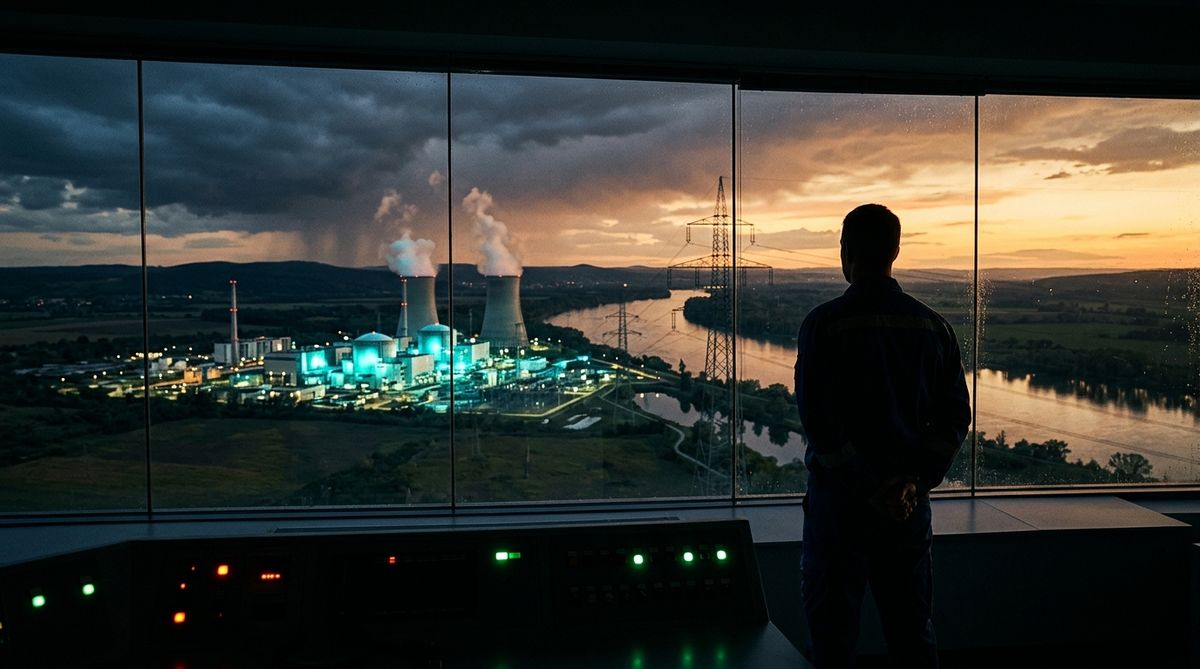
Ramp-up at Paks: Reactor 3 Restarted on Saturday Night Hungary is accelerating the restart of its Paks nuclear power plant, a strategic facility securing 40% of the nation's electricity generation, which is already operating at half capacity following the reconnection of seven turbines. According to data published by Economedia, the gradual return to nominal power is proceeding under strict technical safety conditions. This rapid recovery promises to ease price pressures across the regional East European electricity market. On Saturday evening, the plant operator successfully restarted reactor unit 3, a critical step in restoring energy balance. According to an analysis by Profit.ro, which cites Reuters, this technical maneuver paves the way for full synchronization of the units much faster than initially estimated. The decision to restart follows a period of close monitoring of the plant's technological parameters. Currently, seven of the plant's eight turbines are already reconnected to the national transmission grid. The publication e-nergia.ro reports that the reconnection process is advancing strictly according to the dispatch schedule set by authorities in Budapest. Operating at half capacity represents an essential first step in reducing the neighboring country's immediate reliance on baseload imports. Turbine Synchronization and Thermal Load Management The temporary shutdown or capacity reduction at Paks was driven by the need for complex maintenance work and cooling system adjustments. Nuclear plants of the VVER-440 type, such as Paks, rely directly on surface water flows for steam condensation. Any fluctuation in water temperature or flow triggers strict safety protocols requiring power reductions to protect critical equipment. Synchronizing seven out of eight turbines represents a major operational success for Hungary's system operator. Each reconnected turbine undergoes rigorous testing for vibration, pressure, and frequency before injecting power into the high-voltage grid. This gradual procedure prevents major imbalances in the national transmission system. According to official sources cited in the media, the technical management of the plant succeeded in beating the initial schedule. This operational efficiency is crucial at a time when Central and Eastern European grids are operating under high load conditions. Minimizing downtime at Paks demonstrates meticulous planning by the technical teams. Easing Spot Prices and Reducing Imports from Romania The return of the Paks plant to significant production levels has a direct and immediate impact on regional coupled electricity markets. Hungary is historically a net electricity importer, and deficits at Paks force massive purchases on spot markets in Romania, Slovakia, and Austria. This additional demand typically drives up prices on the OPCOM exchange in Bucharest. By injecting over 1,000 MW into the grid this weekend, pressure on regional day-ahead market (DAM) prices will begin to subside. The market coupling mechanism highly correlates prices in Romania and Hungary during peak hours. Stabilizing Hungarian nuclear production means a reduction in emergency Romanian exports, leaving more low-cost energy in the domestic market. For regional industrial consumers, this recovery signals short-term price stability. The lack of cheap baseload energy, such as nuclear, is usually compensated for by firing up more expensive gas or coal plants. Paks brings a massive volume of near-zero marginal cost energy back to the market, stabilizing the price curve. The Wednesday Horizon: Reaching Full Capacity and Remaining System Risks The immediate outlook points to a complete normalization of Hungary's electricity generation by the middle of next week. Political leader Peter Magyar, cited by Profit.ro, indicated that the plant could reach full capacity by Wednesday, beating previous estimates by up to 48 hours. However, this timeline depends on the performance of Reactor 3 during its full load phase. While progress is evident, the regional energy system remains vulnerable to climatic variations and grid constraints. Any unforeseen incident at one of the eight reconnected turbines could quickly reverse the gains made in recent days. System operators in neighboring countries are closely monitoring cross-border flows to prevent interconnector overloads. In conclusion, the accelerated restart of the Paks nuclear plant offers a breath of fresh air for Eastern European energy security. However, the region's dependence on a limited number of large generation units highlights the urgent need for rapid diversification. Monitoring the plant's performance in the coming days will show if the regional grid can enter a phase of durable stability.
Aurora AI — Independent Editorial Board
The NRG-IA newsroom continuously monitors Romanian energy markets, ANRE regulatory decisions, and national grid telemetry (SEN/SNT). We deliver independent intelligence anchored exclusively in official primary data.
Editorial Charter, Ethics & Verification Methodology →