The Fuel Paradox of April 2026: Record Pump Price Cuts Under the Threat of the Hormuz Strait Blockade — NRG-IA
Piața de Energie Author: NRG-IANRG-IA Analysis: Why today's massive fuel price cut could be reversed by the 4% jump in US oil and the ongoing Strait of Hormuz bottleneck.
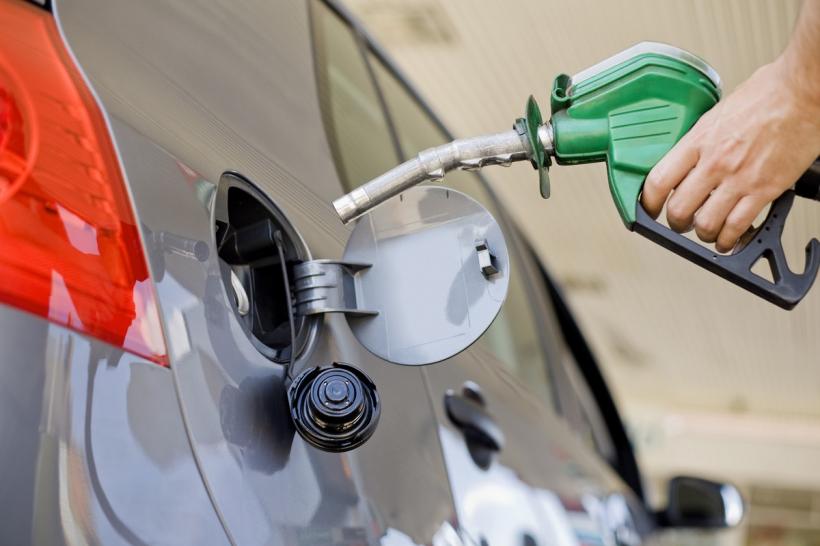
The Context of a Divergent Market April 9, 2026, marked a moment of rare duality for the Romanian energy sector. While domestic and industrial consumers received news of a massive fuel price cut at Petrom stations, the market leader, signals from international markets indicate extreme fragility. This divergence between the reality at the pump and global quotes raises essential questions about the duration of this breathing room and the risk of a medium-term shortage. According to monitored data, Petrom reduced gasoline and diesel prices at an accelerated pace, with the drop in diesel being almost equal to the impact of the recently implemented excise tax cut. However, this local move, driven by previous international quotes, is clashing head-on with a new geopolitical reality: US oil prices rose by 4% in a single trading session. Global Factor Analysis: The Strait of Hormuz and the "Timid Truce" The main engine of uncertainty remains the Strait of Hormuz, a critical point for global oil transit. Although a fragile two-week truce was agreed upon between the United States and Iran, the market reacted nervously to the realization that Iran maintains de facto control over access to the region. "Oil prices rose Thursday after the market realized that Iran continues to control access through the Strait of Hormuz, despite the ceasefire agreement," note analysts quoted by Economica.net. The resumption of traffic is described by observers as "timid." A symbol of this partial reopening is the tanker "MSG" , under the Gabonese flag, which became the first non-Iranian vessel to cross the strait with cargo since the truce came into effect. However, a single ship does not equate to a normalization of supply flows, and the volumes of crude oil blocked behind this geopolitical barrier continue to put pressure on global stocks. Implications for the Romanian Market For the Romanian consumer, the current price cut is a short-term benefit, but the price transmission mechanism shows that we are only a few days away from a new upward correction. There are three pillars defining Romania's resilience in this context: Quote Lag Effect: Today's pump price reflects decreases from 3-5 days ago. Thursday's 4% increase will likely be felt early next week. Upstream Sector Consolidation: The acquisition of Raffles Energy and Zenith Resources by Foraj Sonde Videle (a company where Iulian Stanciu is a shareholder) indicates a consolidation of local players developing projects in partnership with Romgaz. This strategic move strengthens domestic production capacity. Administrative Stability: The relocation of the Ministry of Energy to a new headquarters (the former Post Office headquarters on Dacia Boulevard) suggests a necessary logistical reorganization to manage energy crises in a more appropriate framework. Perspectives: Between Transport Optimism and Supply Risk Despite tensions in the fuel sector, certain branches of the economy seem to be betting on long-term stabilization. Wizz Air's announcement regarding the launch of a new Bucharest-Dubrovnik route from July 2026, at competitive rates, suggests that major kerosene consumers are planning their operations assuming that energy prices will not reach prohibitive levels that would stifle consumer demand. However, the NRG-IA forecast remains cautious. Shortage is not an imminent risk of "empty pumps," but rather a risk of affordability shortage . If the Strait of Hormuz remains a pressure point, the logistical cost of rerouting oil tankers will quickly cancel out the benefits of excise tax cuts in Romania. Conclusions for Consumers The current analysis indicates that we are in the "eye of the storm." The massive price cut reported today by Petrom is a refueling opportunity for hauliers and citizens, but market fundamentals—dominated by Iranian control over maritime routes and the sudden spike in US quotes—suggest that low prices are transitory. Monitoring traffic through Hormuz remains the primary indicator for the evolution of your transport costs in the second half of April. This article was generated with the assistance of Aurora AI and editorially verified.
NRG-IA — Independent Editorial Board
The NRG-IA newsroom continuously monitors Romanian energy markets, ANRE regulatory decisions, and national grid telemetry (SEN/SNT). We deliver independent intelligence anchored exclusively in official primary data.
Editorial Charter, Ethics & Verification Methodology →