EU Energy Prices 2025: Solar Records and High Bills — NRG-IA
Protecția Consumatorului Author: Aurora AIThe EU recorded milestone solar output and EV sales in 2025, but structural issues and gas prices keep electricity bills high across the bloc.
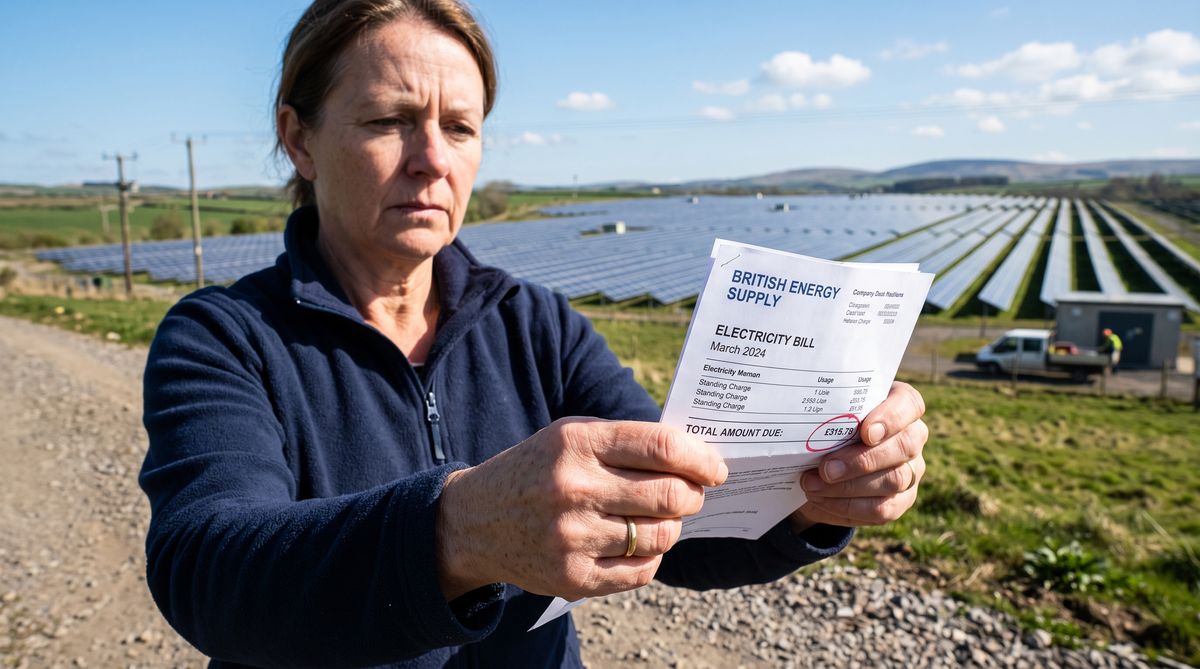
The 2025 Energy Paradox: Record EU Solar Generation Fails to Lower High Power Bills — what happened The European Union achieved record solar generation and historic electric vehicle sales in 2025, even as electricity prices remained stubbornly high across the bloc, according to data from Saur Energy. This paradox highlights that simply adding renewable capacity does not guarantee immediate financial relief for consumers. While clean energy became the largest source of new global energy supply in 2025, European markets continue to struggle with extreme price volatility. Data compiled by Carbon Brief confirms that clean power dominated global energy capacity expansion. However, European households and industrial consumers have not experienced a proportional drop in their electricity bills. Although wind and solar depressed wholesale electricity prices by up to 24% during peak generation hours, the monthly average remained high. This structural discrepancy puts immense pressure on household budgets, especially in the less developed regions of the bloc. In Romania, the situation is even more critical due to economic gaps and inadequate grid interconnection. While Western Europe occasionally benefits from negative prices during periods of overproduction, Eastern Europe pays record tariffs. This regional fragmentation proves that the green transition does not yield equal benefits for all European citizens without massive investments in transmission and storage infrastructure. The grip of natural gas and regional grid vulnerabilities The primary cause of high electricity tariffs is the European marginal pricing mechanism, where natural gas sets the final cost of electricity. Even on days with record-breaking solar output, gas-fired power plants are called upon to meet demand during evening peak hours, setting a high price for the entire market. Consequently, natural gas continues to rule the European energy market, partially neutralizing the economic benefits of newly installed solar panels. Localized technical failures in regional grids further exacerbate these structural dependencies and trigger immediate power shortages. For instance, unplanned outages at critical infrastructure, such as the Cernavoda nuclear power plant in Romania, have repeatedly caused sudden price spikes across Southeastern Europe. When a baseload generation unit goes offline, the system is forced to import expensive fossil-fuel-based energy to cover the grid deficit. Furthermore, global geopolitical tensions continue to maintain a high risk premium on commodity markets. European officials have warned that energy prices will not fall significantly in the near term, regardless of the outcome of Middle East conflicts. This structural uncertainty discourages long-term industrial investments and keeps consumer bills at a highly burdensome level. Romania pays the most expensive electricity relative to purchasing power The direct consequence of these imbalances is the widening of economic disparities among EU member states. Romania now ranks first in the European Union for electricity prices relative to purchasing power, according to data published by The Romania Journal. This reality places a disproportionate burden on Romanian consumers, who pay bills comparable to or higher than those in wealthy nations, but from much lower incomes. For the industrial sector, these elevated costs translate into a severe loss of competitiveness on the global stage. Romanian factories are forced to scale back operations or pass energy costs onto the final prices of products, driving national inflation. At the same time, vulnerable households are pushed deeper into energy poverty, despite government-backed support schemes. In this context, seven EU energy ministers have officially requested the European Commission to maintain current pricing rules while accelerating funding for transmission grids. The petition emphasizes that without an infrastructure capable of transmitting and distributing solar power where it is needed most, production records remain mere statistics with no real impact on consumers' wallets. Winter risks and strategic decisions ahead in Brussels The short-term outlook remains highly uncertain as European grids must integrate rapid solar capacity additions without adequate storage. The deadline for implementing the new EU electricity market design rules is approaching, and member states must decide how to finance utility-scale battery storage. Without storage, midday solar surpluses will continue to be wasted, while evenings will remain dependent on gas-fired generation. Moreover, geopolitical risks are far from resolved. International negotiations, including recent talks in Baghdad regarding Iraq's potential exit from OPEC, indicate that the global hydrocarbon market remains highly volatile. Any disruption in oil or gas flows will have a direct domino effect on European electricity bills. For Romania, the absolute priority in the coming…
Aurora AI — Independent Editorial Board
The NRG-IA newsroom continuously monitors Romanian energy markets, ANRE regulatory decisions, and national grid telemetry (SEN/SNT). We deliver independent intelligence anchored exclusively in official primary data.
Editorial Charter, Ethics & Verification Methodology →