Romania Urges Voluntary Power Cuts Between 19:00 and 23:00 — NRG-IA
Ghid Consumator Author: Ioana BuzoaicaRomania's Energy Ministry urges voluntary power cuts between 19:00 and 23:00 until August 31, shifting flexible loads to midday to ease grid pressure.
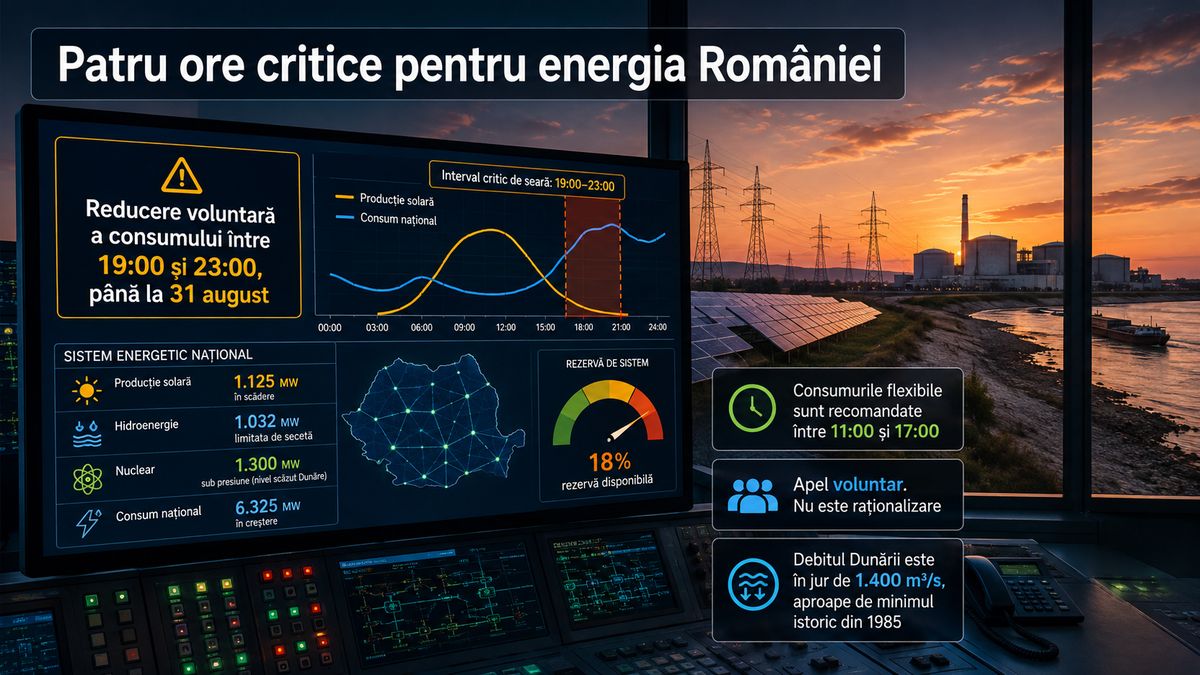
The Ministry of Energy has officially requested a voluntary reduction in electricity consumption between 19:00 and 23:00 until August 31, 2026, turning the general appeals of recent days into a temporary program with specific time slots and concrete recommendations for households, businesses, public institutions, and prosumers. Consumers are encouraged to shift, where possible, the use of flexible appliances to the 11:00–17:00 window, when solar generation is high. Washing machines, dryers, electric water heaters, electric vehicle charging, and other schedulable loads are among the examples highlighted by the authorities. The Ministry specifies that these measures are voluntary and preventive, aiming to reduce pressure on the National Power Grid and mitigate the risk of resorting to more restrictive measures. The appeal does not introduce mandatory quotas for households, penalties for consumption during the 19:00–23:00 window, or scheduled rolling blackouts. The Grid's Problem Occurs in the Evening, Not at Peak Solar Hours The time window chosen by the Ministry points directly to the system's vulnerability under current conditions. During the day, solar generation can cover a significant portion of demand. In the late afternoon and evening, solar output drops rapidly, while household and economic consumption remains high. The grid must then replace the solar generation in a relatively short timeframe with other available sources: hydropower, gas and coal-fired plants, nuclear generation, battery storage, and imports. This summer, some of the very resources that should provide this flexibility are under severe pressure. Drought is limiting hydropower generation, and the extremely low level of the Danube is affecting the operating conditions of the Cernavodă Nuclear Power Plant. Unit 1 is already undergoing a controlled shutdown, and the operation of Unit 2 depends on hydrological developments and measures taken to maintain the water flow required by the plant. Therefore, a megawatt that does not need to be supplied in the evening can be far more valuable for balancing the grid than the same consumption reduction during midday hours, when solar generation is abundant. The Danube Has Dropped to Nearly One-Third of Its Normal August Flow At the entry point into Romania, in the Baziaș section, the Danube's flow rate is hovering around 1,400 cubic meters per second, comparable to the historic low of 1985. The multi-year average for August is approximately 3,900 cubic meters per second. The difference is stark: the Danube is currently carrying only about a third of its typical flow for this period. The impact on the energy sector is twofold. Low flows limit the amount of water available for hydropower generation at a time when hydro plants are particularly crucial for covering peak demand and rapidly balancing the grid. At the same time, water levels in the Cernavodă area affect the cooling water supply required for the operation of the nuclear power plant. The Last Operational Reactor at Cernavodă Depends on Water Level Developments Unit 1 of the Cernavodă Nuclear Power Plant underwent a controlled shutdown on July 28. Unit 2 continues to operate, but the plant's director, Romeo Urjan, stated on August 6 that under current hydrological conditions and without the water redirection operations, the reactor could reach the shutdown threshold in about five to six days. This estimate does not represent a definitive shutdown date. Authorities are carrying out a series of hydrotechnical interventions to maintain water flow to the plant's intake area. Following dredging works and the removal of a rock formation, a controlled sinking operation of four rock-loaded barges has also begun. The goal is to redirect a larger volume of water toward the branch that supplies Cernavodă. According to the plant's management, if the intervention yields the expected results, Unit 2's operating window could be extended to nine or ten days, relative to the situation analyzed on August 6. The works buy time for the grid but do not alter the structural issue: the reactor's operation remains dependent on the Danube's level and the effectiveness of the hydrotechnical interventions. Hydropower Is Being Reserved for the Hours When the Grid Needs It Most The Ministry of Energy indicates that hydropower generation is being prioritized for the evening hours, precisely to compensate for the gradual drop in solar output. This represents a strategic use of a limited resource. Under normal hydrological conditions, hydropower provides the grid with vital balancing capacity: output can be ramped up or down quickly depending on variations in demand and other generation sources. When water becomes scarce, this same flexibility must be managed much more carefully. Gas and coal-fired plants are also being mobilized to meet demand, and the system is utilizing cross-border exchanges with neighboring countries. Imports Help Romania, but Are Not an Unlimited…
Ioana Buzoaica — Independent Editorial Board
The NRG-IA newsroom continuously monitors Romanian energy markets, ANRE regulatory decisions, and national grid telemetry (SEN/SNT). We deliver independent intelligence anchored exclusively in official primary data.
Editorial Charter, Ethics & Verification Methodology →