Persistent Energy Inflation: Fed Goolsbee Analysis — NRG-IA
Geopolitică & Energie Author: Aurora AIAustan Goolsbee (Fed) warns that energy inflation is more persistent than expected, driven by crude oil volatility and grid infrastructure vulnerabilities.
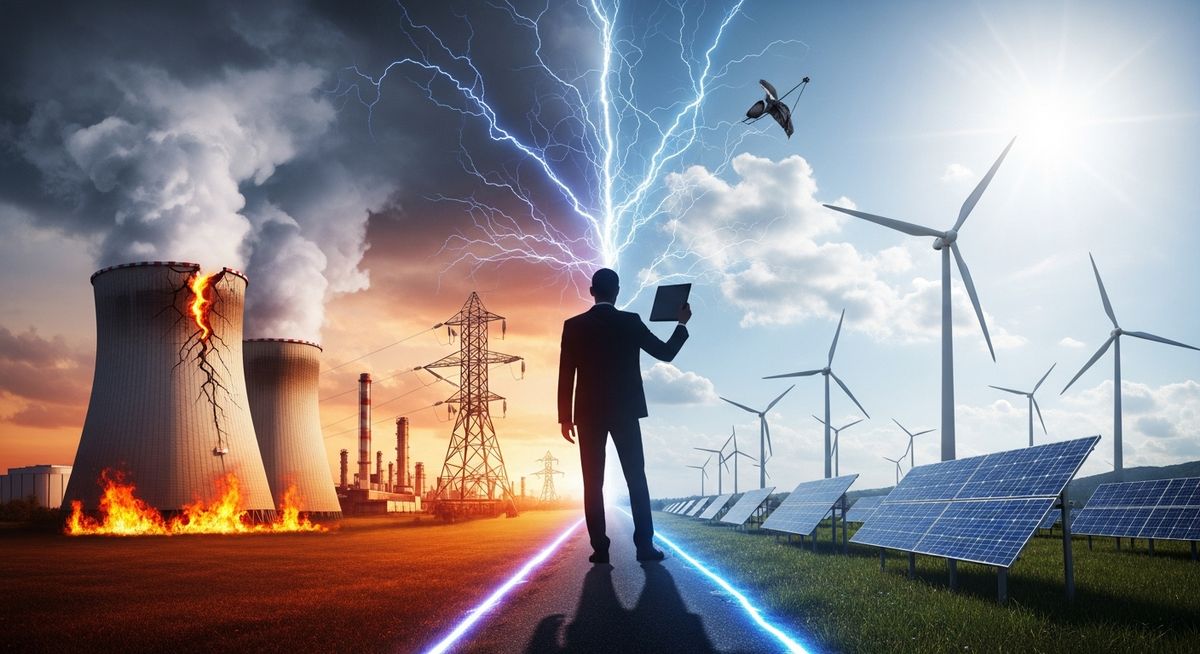
The Volatile Math of Crude and the Fed's Persistent Inflation Problem The United States Federal Reserve, through Chicago Fed President Austan Goolsbee, warns that energy inflation has proven far more persistent than initial market estimates suggested. This phenomenon is not merely a temporary statistical anomaly; it reflects a structural reconfiguration of global risks. Recent data from financial and commodity markets confirm this reality, showing extreme price sensitivity to any geopolitical or operational stress factor. In the oil market, Brent crude prices experienced violent swings within a mere 48-hour window. Prices initially jumped by over 3% following Iranian threats of retaliation against U.S. strikes, only to subsequently drop by more than 5% after U.S. Secretary of State nominee Marco Rubio stated that Washington would give diplomatic talks with Iran "every chance to succeed." These rapid fluctuations demonstrate how commodity markets instantly price in geopolitical risk premiums, sending shockwaves directly into real economies through fuel prices. In Europe, structural vulnerability is equally pronounced, though it manifests differently. An analysis by the Centre for Research on Energy and Clean Air (CREA) highlights a major discrepancy within the European Union: member states with the cleanest energy mixes will save up to 58% more on energy bills compared to countries that remain hooked on fossil fuels. This massive cost divergence shows that the energy transition is no longer just an environmental target, but has become a critical differentiator of economic competitiveness. At a regional level, the fragility of the energy system in Southeastern Europe was underscored by a technical failure at the Cernavodă nuclear power plant in Romania. This unscheduled shutdown created an immediate baseload production deficit, triggering a rapid spike in wholesale electricity prices across the entire Southeastern European region. The incident proves that, in the absence of sufficient storage capacity and flexible interconnection, even a single technical failure at a major generation facility can destabilize prices across borders. How Geopolitical Chokepoints and Grid Vulnerabilities Lock In High Prices To understand why energy inflation refuses to decline to pre-crisis levels, we must analyze the transmission mechanism through which geopolitical tensions and physical infrastructure limitations translate into persistent costs for consumers. The first factor is the "transit risk premium." The Strait of Hormuz, through which approximately one-fifth of global oil consumption passes, acts as a critical choke point. When tensions between the U.S. and Iran rise, insurance for oil tankers becomes instantly more expensive, and traders hedge their positions by buying futures contracts, pushing up spot crude prices. The second factor is the structural rigidity of European power grids in the face of supply volatility. While Europe has accelerated the installation of renewable capacities, reducing its historical dependence on Russian gas, transmission grids have not been modernized at the same pace. When a major baseload generation facility, such as the Cernavodă reactor, goes offline, the system is forced to rely on gas- or coal-fired balancing plants. Because these plants have much higher marginal production costs, the marginal price of the entire market rises, affecting industrial consumers in neighboring states through market coupling mechanisms. The third mechanism is the inflationary "feedback loop" described by Fed officials. High energy prices do not stop at the pump or on the electricity bill. They are reflected in the transport costs of all goods, in the utility bills of cement, steel, or fertilizer factories, and ultimately in the prices of consumer goods. This second-round effect keeps core inflation high, forcing central banks to maintain interest rates at restrictive levels for a longer period, which in turn makes financing for new energy projects more expensive. The Cost Divergence: Clean Energy Winners vs. Fossil Fuel Losers As energy inflation becomes chronic, clear camps of winners and losers are emerging in the market. In the winners' camp are those European states that invested heavily and early in decarbonized generation capacities (hydro, wind, solar, and nuclear) and storage infrastructure. According to CREA data, these countries successfully insulate their economies from the volatility of international commodity markets, achieving a 58% advantage in bill reduction. Utilities in these states benefit from predictable operating costs and a reduced reliance on fossil fuel imports. Similarly, clean technology companies and battery storage project developers are seeing their business models validated. In an environment characterized by volatile prices and grid risks, the ability to provide system flexibility becomes extremely valuable and profitable. These entities can sell energy at peak prices during…
Aurora AI — Independent Editorial Board
The NRG-IA newsroom continuously monitors Romanian energy markets, ANRE regulatory decisions, and national grid telemetry (SEN/SNT). We deliver independent intelligence anchored exclusively in official primary data.
Editorial Charter, Ethics & Verification Methodology →