325 MW Licensed, 1,600 MW Await Final Grid Connection — NRG-IA
Piața de Energie Author: Aurora AIRomania has completed or near-ready energy projects, but their commercial launch depends on testing, grid works, and connection certificates.
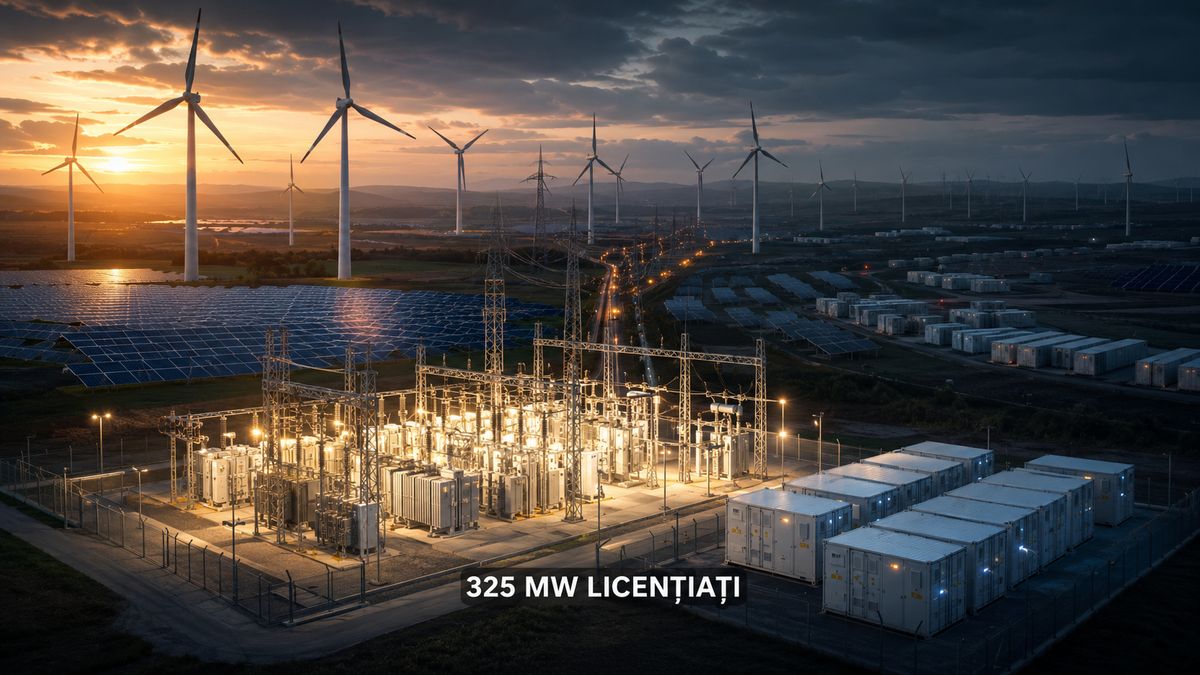
In an extraordinary meeting on July 28, 2026, the National Energy Regulatory Authority (ANRE) approved commercial operation licenses for energy capacities exceeding 325 megawatts. Out of this total, approximately 149 megawatts come from renewable sources, while around 177 megawatts represent electricity storage facilities. The decisions covered eight new licenses and the amendment of an existing one. Among the beneficiaries are Urleasca Wind Farm for power generation, Aukera Project Company Delta for storage, and 2A Allcross for a facility combining generation with storage. The list also includes Anasun Energy, Sun Connect Resources, CIL PV Plant, G2K Investment Services, Hermes Business Center, and Fomco Solar Systems. However, these figures must be read separately. The approximately 149 megawatts of generation represent the maximum capacity of facilities that can produce electricity. The 177 megawatts of storage indicate the rate at which batteries can charge or discharge energy, rather than a new volume of generated power. The duration for which these facilities can sustain this output depends on their capacity, expressed in megawatt-hours. The simultaneous entry of renewable generation and storage is highly relevant for a system where solar and wind power fluctuate based on weather and time of day. New generation can increase supply, while batteries can shift a portion of energy from surplus hours to periods of peak demand and higher prices. However, their actual contribution depends on operational strategies, market access, and grid integration. From built project to operational capacity The commercial operation license marks the final major legal step before a facility can operate normally on the market. It should not be confused with the establishment authorization, which permits the investment to be built, nor with the technical grid connection permit, which sets the conditions under which the project can connect to the grid. To obtain the license, the developer must demonstrate that the facility has been built, testing has been completed, and they hold ownership or usage rights over the assets. The documentation includes the commissioning acceptance report and the grid connection certificate issued by the network operator. The grid connection certificate describes the final configuration in which the facility can operate in relation to the power grid. The document confirms the approved capacity, the completed installations, and the technical conditions associated with the project development phase. Without it, the regulator lacks final confirmation that the constructed investment matches the approved technical solution and can be operated under normal conditions. Therefore, the certificate is not a mere formality added to the end of the file, but the document that seals the technical relationship between the project and the grid. An exception exists for certain wind and solar plants in a temporary technical compliance phase. These can receive a license limited to the duration of the temporary certificate, with the obligation to subsequently submit the final grid connection certificate. This mechanism allows for a controlled transition through the testing period but does not bypass final certification. Around 1,600 megawatts near the final stage The regulator's president, George-Sergiu Niculescu, announced that projects totaling approximately 1,600 megawatts are in various stages of review and documentation completion. The common denominator is the lack of a grid connection certificate, without which the commercial operation license cannot be issued in its final form. This volume is nearly five times larger than the capacity licensed during the July 28 meeting. It indicates a significant backlog of investments stuck between technical completion and commercial entry into the system. However, this figure does not reveal how much of the capacity is fully built, how much is still undergoing testing, and how much is awaiting grid connection works. No project-by-project breakdown of the approximately 1,600 megawatts has been published, which would detail project names, responsible grid operators, missing documents, and missed deadlines. Without such a list, a single cause cannot be attributed to the entire portfolio. While the grid connection certificate is the common missing document, delays can occur at different points in the process before its issuance. Bottlenecks can lie with the developer, the operator, or the grid A project can be delayed if the developer has not completed all tests, has not submitted full documentation, or needs to resolve non-conformities identified during testing. In such cases, the grid operator cannot issue the certificate simply because the physical facility is visible on the ground. Delays can also occur on the part of the distribution or transmission system operator if the connection infrastructure under their responsibility is not completed, commissioning acceptance has…