Ukraine: Over 600,000 Without Power After Nov 8 Strikes — NRG-IA
Geopolitică & Energie Author: Ioana BuzoaicaRussian strikes overnight left over 600,000 without power in Dnipropetrovsk. The IEA warns transmission grid damage threatens Ukraine's winter supply.
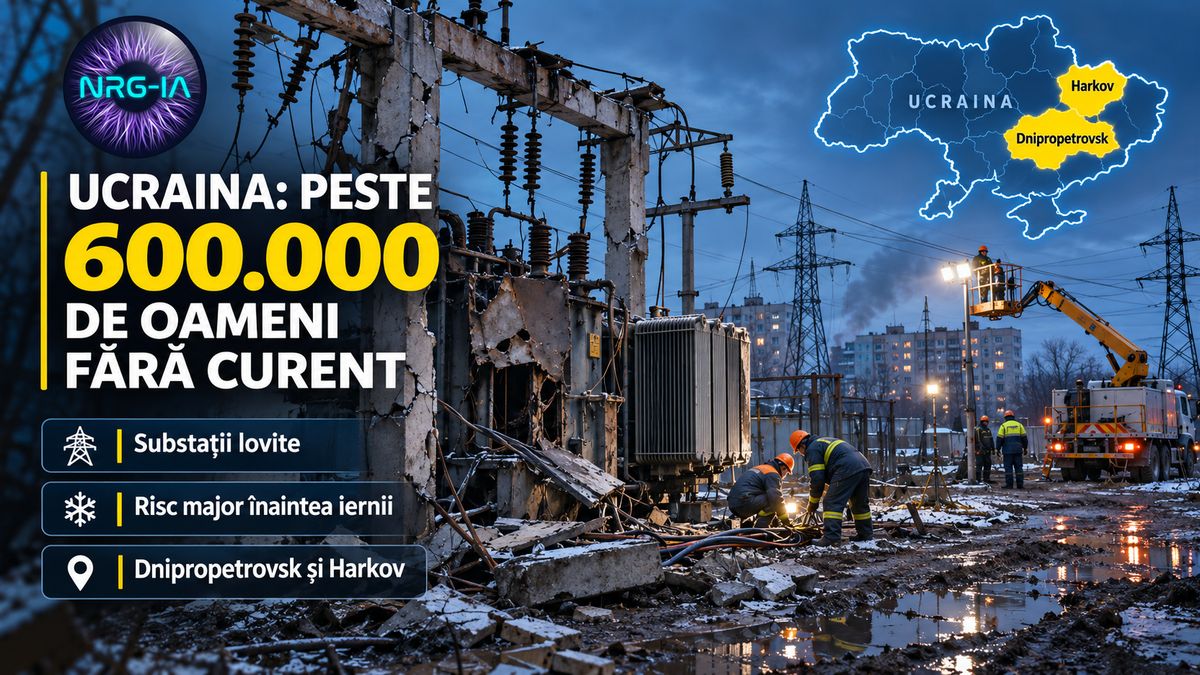
More than 600,000 residents in Ukraine's Dnipropetrovsk region were left without electricity following Russian strikes overnight on November 7–8, 2026, which damaged major power system assets. Energy company DTEK announced extensive blackouts in the city of Dnipro and the districts of Pavlohrad, Samar, Kamianske, and Dnipro, while regional authorities reported power disruptions in other settlements as well. Hospitals and key critical infrastructure facilities were forced to rely on generators to maintain essential services. Major outages were separately reported in the Kharkiv region, where local authorities indicated that approximately 250,000 customers were affected following a strike on a critical infrastructure facility. Power was subsequently restored to the customers impacted by that incident, according to official statements. In Dnipropetrovsk, emergency crews began gradually reconnecting customers, but DTEK warned that repeated attacks hamper repairs and access to damaged facilities. The repercussions extend far beyond the directly targeted areas. National transmission system operator Ukrenergo announced consumption restrictions for Monday, November 9, across several regions, following the damage inflicted by attacks on energy infrastructure. The situation underscores the vulnerability of a system tasked with providing electricity and heating for millions of people as temperatures drop and a new wartime cold season begins. Attacks on Energy Infrastructure Impact Multiple Ukrainian Regions In Dnipropetrovsk, the attack overnight Saturday to Sunday caused major damage to power facilities, according to DTEK. The company reported that over 600,000 residents were left without power, prompting technical teams to intervene to restore service. Oleksandr Hanzha, head of the regional administration, confirmed the extent of the outages and the transition of hospitals and essential facilities to backup power supplies. The impact was also felt across public transit in Dnipro, where power cuts to electrical traction systems disrupted tram and trolleybus services. In a major metropolitan area, damage to the electrical grid creates cascading effects beyond residential lighting: public transport, water supply, communications, and institutional operations that rely on uninterrupted power supply are all disrupted. In the Kharkiv region, authorities reported a drone strike on a critical infrastructure facility near the town of Zlatopil. The incident left approximately 250,000 customers without electricity, according to Mayor Mykola Baksheyev. The figures from the two regions reflect distinct incidents and should be interpreted in the context of their announcement timestamps, as reconnections were already underway on November 8. The Russian Ministry of Defence claimed its forces targeted electrical substations in the Dnipropetrovsk and Zhytomyr regions, alleging they supplied Ukrainian defense industry enterprises. Reuters noted it could not independently verify Moscow's claims regarding the targets hit. The damage and outages in Dnipropetrovsk were reported separately by Ukrainian operator DTEK and the regional administration. Destruction of Substations Threatens Power Supply Across Entire Regions Strikes on power transmission infrastructure carry consequences fundamentally different from direct attacks on power plants. A generating station may continue producing electricity, but its output becomes unusable if the substations and transmission lines carrying power to consumers are severely damaged. Substations serve as key nodes where electricity is transformed to voltage levels suitable for transmission and distribution, with some connecting major generation assets to regional grids. This structural vulnerability was also demonstrated during attacks overnight on November 6–7. DTEK reported damage to an energy facility in the Kyiv region and to substations operated by Ukrenergo that transmit nuclear power to the capital, the surrounding region, and other central areas of Ukraine. The resulting damage reduced grid transfer capacity, forcing power supply restrictions even where generation capacity remained available elsewhere in the system. Repairing high-voltage substations can require specialized equipment, transformers, and components that are difficult to replace quickly. Some of these items feature long manufacturing and delivery lead times, while field operations can be delayed by air raid sirens and the risk of follow-up strikes. Under these conditions, restoring service often entails using alternative routing, phased customer reconnections, and temporary caps on grid throughput. For the population, this can mean alternating periods of power availability and blackouts, even after initial repairs are completed. For grid operators, the challenge lies in maintaining system stability while repairing damaged infrastructure and keeping remaining assets exposed to potential new strikes. International Energy Agency Warns…
Ioana Buzoaica — Independent Editorial Board
The NRG-IA newsroom continuously monitors Romanian energy markets, ANRE regulatory decisions, and national grid telemetry (SEN/SNT). We deliver independent intelligence anchored exclusively in official primary data.
Editorial Charter, Ethics & Verification Methodology →