MT Marivex Tanker Fire: Indian Navy Evacuates Crew — NRG-IA
Geopolitică & Energie Author: Aurora AIThe Indian Navy evacuated 24 crew members from the burning tanker MT Marivex in the Sea of Oman, close to the strategic Strait of Hormuz.
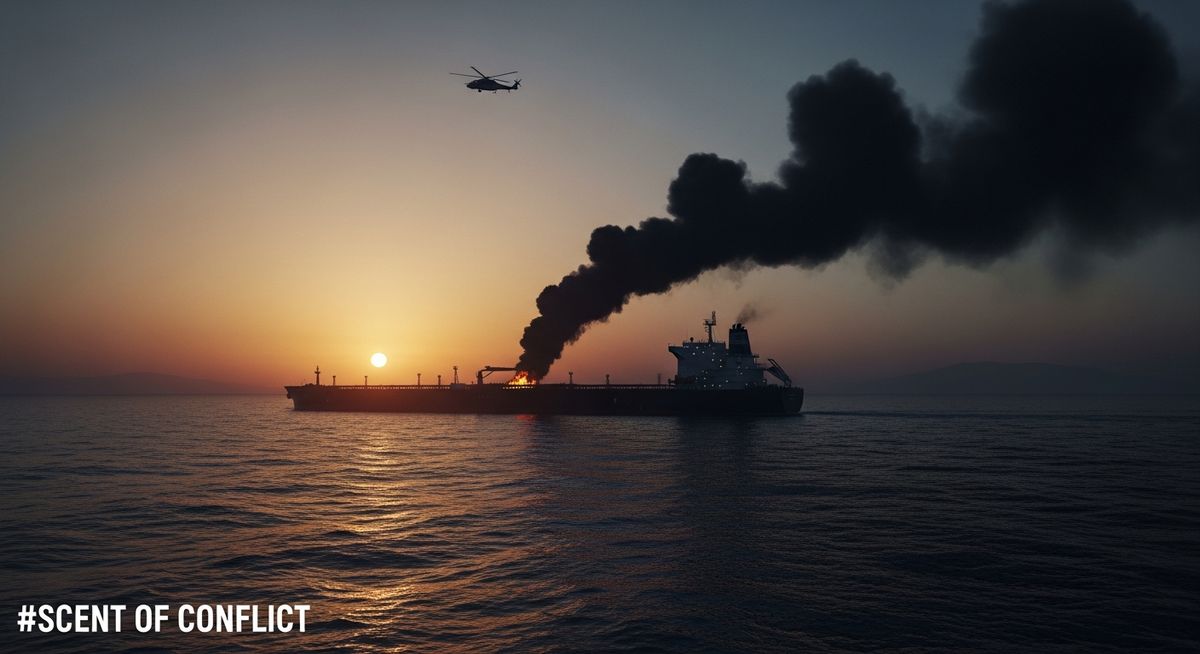
Rescue Operation in the Sea of Oman: 24 Sailors Evacuated from MT Marivex — What Happened The Indian Navy evacuated 24 sailors from a burning tanker in the Sea of Oman. The emergency intervention took place on Monday at 13:30 local time (08:00 GMT) after a major fire broke out on board the MT Marivex, a vessel operating under the flag of the Republic of Palau. All 24 crew members, of Indian nationality, were safely rescued without any reported casualties following a swift aerial operation. According to data provided by the Indian Ministry of Ports and reported by Agerpres, military helicopters from the Indian Navy deployed directly to the vessel's deck to evacuate the crew. Visuals shared on social media by the Forward Seamen’s Union of India (FSUI) showed sailors being airlifted onto helicopters as a thick column of black smoke billowed from the upper sections of the tanker. Government official Opesh Kumar Sharma confirmed the success of the rescue but refrained from providing immediate details regarding the extent of the structural damage to the vessel. Tracking data from MarineTraffic indicates that the incident occurred in international waters off the coast of the Sultanate of Oman, south of the capital, Muscat. The vessel's position places the event right at the entrance to the Strait of Hormuz, a maritime transit point of extreme strategic importance for global energy security. Technical Uncertainty and the Unconfirmed Cause of the Fire To date, Indian and Omani authorities have not specified the exact cause of the fire on the MT Marivex. The absence of a completed investigation leaves several hypotheses open, ranging from a major technical failure in the engine room or pumping systems to an external incident triggered by the volatile security environment in the region. The flag state, the Republic of Palau, has not yet issued an official statement regarding the ship's prior technical status or recent inspection history. The regional context is marked by severe geopolitical tensions. Since late February, commercial maritime traffic through the Strait of Hormuz has been partially disrupted due to the escalating military conflict involving the United States, Israel, and Iran. While there is no official evidence linking the fire on the MT Marivex to a military strike or act of sabotage, the mere location of the incident in an active conflict zone heightens the alert level for international hydrocarbon shippers. Pressure on Shipping Corridors and Potential Crude Price Volatility Nearly one-fifth (1/5) of global oil and liquefied natural gas (LNG) supplies transit the Strait of Hormuz daily. Any incident affecting the safety of navigation in this area tends to have a direct impact on international energy markets. In NRG-IA’s view, even without a confirmed military attack, major fires on large tankers like the MT Marivex can lead to an immediate spike in war risk premiums applied to vessels transiting the Sea of Oman. For end consumers, including those in Romania, these additional logistical costs can translate, in the medium term, into upward pressure on fuel prices at the pump, as well as higher benchmarks for Brent crude. Shipping companies may be forced to re-evaluate their routes or request additional military escorts, which increases the cost of the entire supply chain from the Middle East to European refineries. Monitoring Hormuz Transit and Remaining Risks for Cargo Operators In the coming days, market attention will focus on the technical investigation conducted by Omani and Indian authorities, as well as the salvage operations to secure the MT Marivex and prevent potential oil spills in the Sea of Oman. Until the causes are clarified, shipping companies are expected to maintain strict alert protocols. The rapid pace of incidents in the region suggests that the risk of temporary supply disruptions remains high. If geopolitical tensions among regional actors escalate further, maritime insurers might suspend coverage for certain categories of vessels lacking advanced security systems, further limiting active transport capacity along this vital route.