Caroline Bezengi Oil Slick Reaches Oman, Exceeds 2,000 km² — NRG-IA
Geopolitică & Energie Author: Ioana BuzoaicaThe Caroline Bezengi oil spill has reached Oman's coast, with satellite analysis estimating the slick at over 2,000 km², threatening a marine reserve.
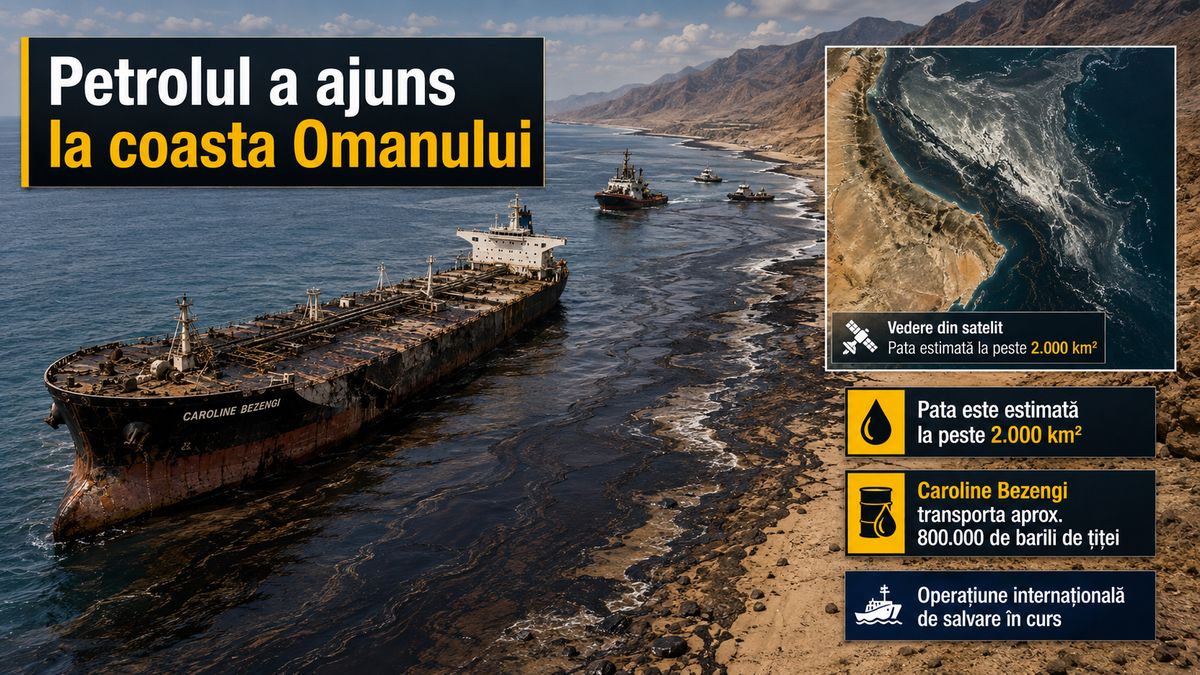
Oil spilled from the tanker Caroline Bezengi has reached the coast of Oman, turning a spill that had been spreading offshore for weeks into a direct threat to the coastline. Oman's Environment Authority has confirmed shoreline contamination, and an analysis of satellite imagery by John Amos, CEO of the organization SkyTruth, estimates that the oil slick has spread over an area of more than 2,000 km² . The tanker was carrying approximately 800,000 barrels of Russian crude oil and has been grounded since June 30 near a marine reserve in the Hallaniyat archipelago. The exact amount of oil lost so far and the volume remaining in the vessel's tanks have not been made public, leaving open the most critical variable of the salvage operation: how much crude oil must still be secured before the deterioration of the vessel triggers another spill. Over 2,000 km² is a satellite estimate, not Oman's official figure The size of the slick has grown dramatically in a very short period, but the available figures come from different times and methodologies. On August 10, Oman's Environment Authority officially reported approximately 390 km² , after Greenpeace had previously estimated around 600 km² based on satellite imagery. Two days later, Amos evaluated images provided to Reuters and estimated the affected area at over 2,000 km². The discrepancy cannot be dismissed as a simple measurement error. The oil slick can expand rapidly under the influence of wind, currents, and waves, and different methodologies can identify different surface areas of the film. The 2,000 km² figure describes the area where oil is detectable on the surface; it does not mean the entire area is uniformly covered with a thick layer, nor does it allow for a direct calculation of the volume of crude oil already lost. Omani authorities estimate that the pollution could affect up to approximately 40 km of coastline in the Ras Madrakah area , and Masirah Island also lies in the potential path of the slick. While oil has already reached the shore, the 40 km figure represents a projected expansion scenario, not the confirmed length of already contaminated coastline. A marine reserve lies directly in the path of the spill The Caroline Bezengi is grounded near an island that is part of the Hallaniyat marine reserve, a protected area home to the Arabian Sea humpback whale and the Socotra cormorant. The entry of oil into shallow waters and onto the coast shifts the impact from the open sea to habitats where hydrocarbons can persist in sediments and ecosystems long after the surface slick has dispersed. Earlier in the week, Oman stated there was no immediate danger to local infrastructure, including desalination plants and tourist facilities. However, the rapid evolution of the slick and the subsequent confirmation of oil on the shoreline have shifted the focus to coastal protection and stabilizing the source of pollution. International salvage operation has begun The most significant development since August 13 is the mobilization of an international operation to secure the tanker. British maritime risk firm Ambrey is coordinating the response alongside Oman and other stakeholders, and has contracted an international company specializing in oil spill response. The operation includes salvage vessels, aircraft, specialists, and approximately 100 tons of equipment . Ambrey has not released a timeline for completing the work, with the seasonal monsoon being the primary natural constraint, limiting access to the vessel and complicating offshore operations. The critical objective is to stabilize the structure of the Caroline Bezengi and safely transfer the remaining oil. The longer the intervention is delayed, the higher the risk that waves and wind will further damage the vessel's hull, turning an already major spill into a catastrophic one. John Amos warned that, in a worst-case scenario, losing the entire cargo could result in tens of millions of gallons of oil being released into the sea. His estimate of 40–50 million gallons must, however, be treated as a scenario rather than the volume already lost. Reuters estimates the vessel's cargo at approximately 800.000 barrels, and the actual volume remaining on board is not public. The figure describes the scale the expert associates with a total loss of the tanker, not the current toll of the spill. A 25-year-old sanctioned tanker without a recognized Western insurer The Caroline Bezengi is approximately 25 years old and is under international sanctions. Reuters identifies it as part of the so-called "shadow fleet" used to transport Russian oil outside traditional Western maritime channels. The vessel departed in April from the Black Sea port of Novorossiysk, bound for India. Its route crossed some of the most tense maritime zones of the moment. On June 8, the Caroline Bezengi reported issues off the coast of Yemen following what maritime security sources described as an apparent explosion. No party has claimed…
Ioana Buzoaica — Independent Editorial Board
The NRG-IA newsroom continuously monitors Romanian energy markets, ANRE regulatory decisions, and national grid telemetry (SEN/SNT). We deliver independent intelligence anchored exclusively in official primary data.
Editorial Charter, Ethics & Verification Methodology →