Brent falls below $79 as US-Iran talks ease Hormuz fears — NRG-IA
Geopolitică & Energie Author: Ioana BuzoaicaOil falls as US-Iran talks ease fears of a Hormuz blockade. Markets eye a gradual export recovery, but physical flows and shipping have yet to normalize.
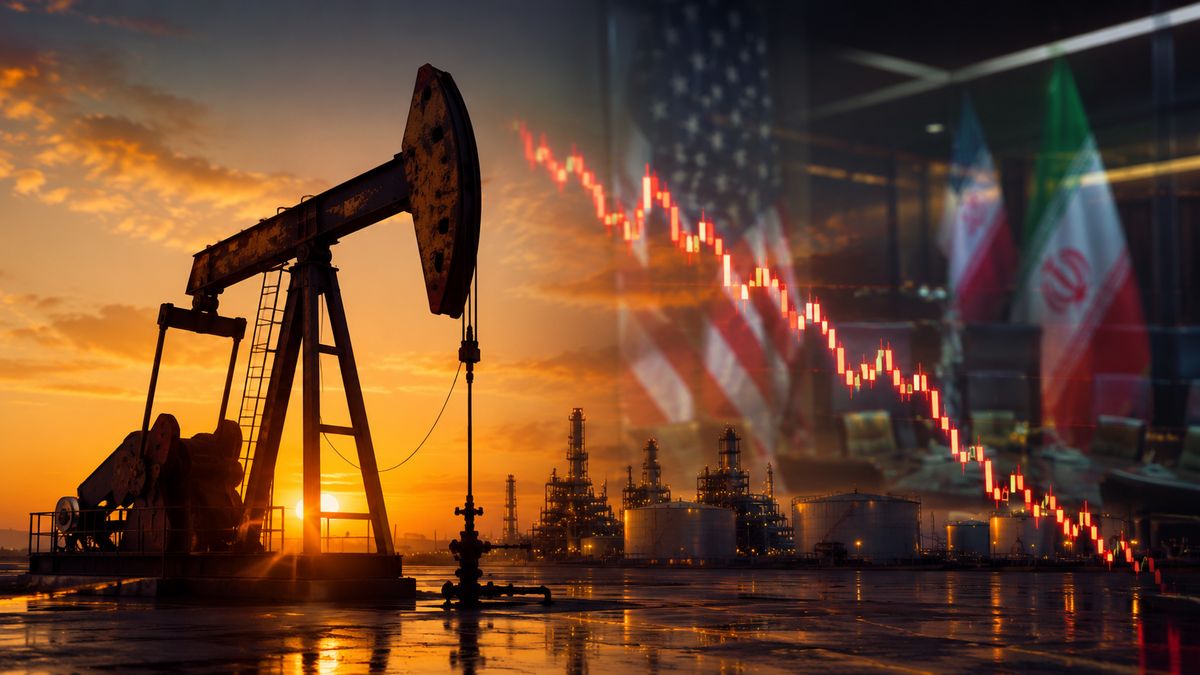
Brent crude fell below the $79 per barrel threshold on Monday morning after the first round of US-Iran negotiations signaled progress toward a broader agreement. At 06:33 GMT, Brent was trading at $78.89 per barrel, down 2.09%, having previously climbed to $82.30 amid conflicting statements regarding the Strait of Hormuz. The US WTI active contract for August delivery was priced at $75.16 per barrel. The market has yet to see proof that oil flows have returned to normal. However, it received information strong enough to quickly erase some of the risk premium accumulated in recent months: Washington and Tehran, through mediators Qatar and Pakistan, agreed on a roadmap to reach a final agreement within 60 days, featuring additional technical talks and measures to reduce maritime incidents in the Strait of Hormuz. This price movement must be clearly separated from the physical reality of the market. Brent is not falling because oil is already flowing without restrictions, but because investors are beginning to price in a higher probability that Gulf exports, maritime traffic, and Iranian sales will gradually recover. Diplomacy has reduced the risk premium, not automatically reopened Hormuz The Strait of Hormuz remains the critical chokepoint of the global oil market. Prior to the conflict, approximately one-fifth of the world's oil supply passed through this route. Any diplomatic progress that reduces the likelihood of a prolonged blockade can quickly move Brent and WTI prices, even before crude loadings, vessel traffic, and physical deliveries return to previous levels. Monday's signal is particularly relevant due to the contrast between financial markets and maritime operations. Tehran declared the strait closed again on Sunday, while transit data indicated heavily disrupted traffic highly dependent on security conditions. Reuters reported that US Central Command tracked 55 commercial vessels in transit on Saturday, while tracking data showed 32 vessels the previous day. These figures do not describe a stable return to normal. They show that traffic can occur on an ad-hoc basis, but it does not yet operate in a predictable manner for shipowners, traders, refiners, insurers, and end-buyers of oil. For the market, this distinction is essential. A strait declared politically open but transited selectively, with rules still unclear and risks of incidents, is not equivalent to a normalized shipping route. Insurance costs, vessel availability, shipowners' decisions, and the level of risk accepted by crews can delay the return of flows even after diplomatic tensions ease. Oil is now trading on the probability of a recovery From its peak of $126.41 per barrel reached in May, Brent has lost over 37%. However, the price of around $79 per barrel remains above pre-conflict levels: at the end of February, Brent was trading in the $72.48 per barrel range. The market has priced out a large portion of the war premium without fully returning to its valuation prior to the Middle East disruptions. This is the actual position of oil at the start of the week: prices no longer incorporate the extreme scenario of a prolonged shutdown of flows through Hormuz, but they still retain a premium associated with operational risk, low inventory levels, and uncertainty regarding the pace of production resumption. The IEA indicated that the interim US-Iran agreement could pave the way for reopening Hormuz and restoring Iranian exports, but warned that recovery will not be instantaneous. Clearing shipping lanes, mine removal, resolving transit rules, and restarting logistics chains could delay the restoration of flows. The financial market can react in minutes. The physical market needs days, weeks, or months to restart under normal commercial conditions. Inventories have become the primary shock absorber The decline in oil prices does not mean the global market has recovered lost supply. In May, observed global inventories fell by 143 million barrels, equivalent to a rate of 4.6 million barrels per day. Since the start of the Gulf conflict, the average rate of inventory draws has been 3.8 million barrels per day. Government inventories in OECD countries have fallen to their lowest level since December 1990, following accelerated releases from emergency reserves. This changes the nature of the risk. The market can navigate a period of deficit by drawing down inventories, but each month of draws reduces the room for maneuver in the event of a new incident in production, transport, or refining. The IEA estimates that global oil production will fall by 3.9 million barrels per day in 2026, to 102.4 million barrels per day. In May, global production had reached 94.5 million barrels per day, 13.6 million barrels per day below pre-conflict levels. The agency foresees a recovery in 2027, but conditions this on the return of Middle East flows and overcoming operational and political constraints. This is where the limit of oil's rapid decline lies:…