IMF: Oil falls, but trade flows need time to normalize — NRG-IA
Geopolitică & Energie Author: Ioana BuzoaicaThe IMF notes falling energy prices as Hormuz transit resumes, but warns normalization takes time. Brent fell to $74, but real economy costs lag.
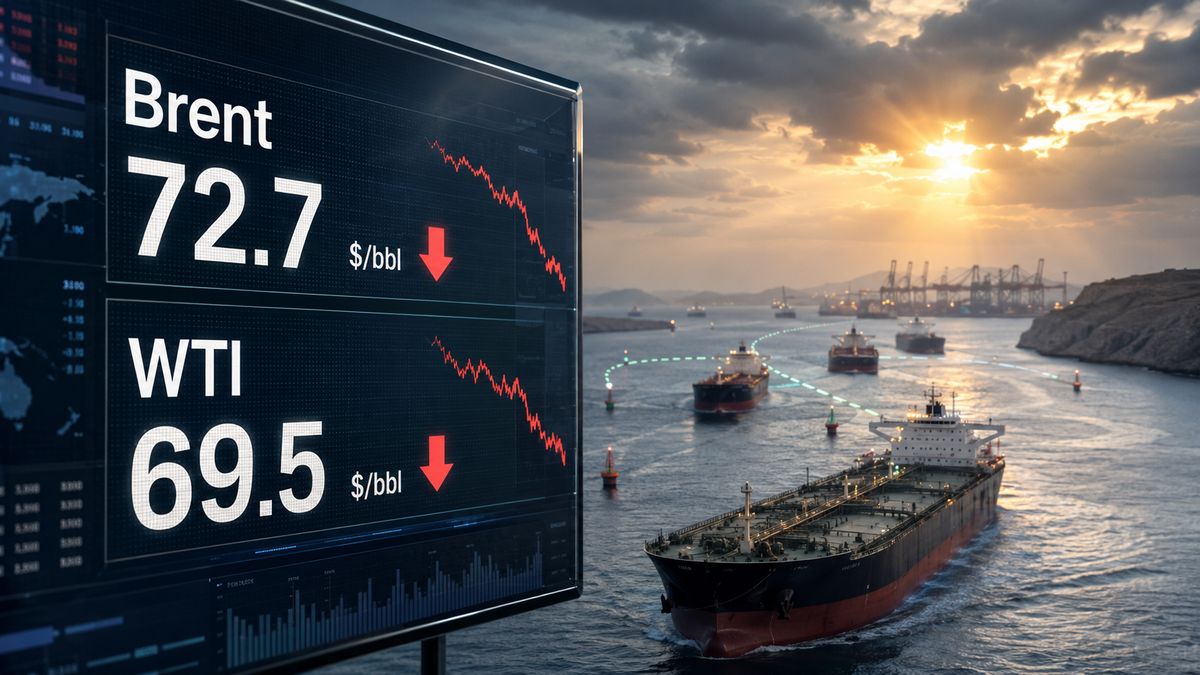
Oil has retreated toward $72 per barrel, but the global economy has not yet returned to normal. This is the key takeaway from the International Monetary Fund following the agreement between the US and Iran and the partial resumption of transit through the Strait of Hormuz. On June 25, the IMF stated that it observed a decline in energy and other commodity prices following the cessation of hostilities and the reopening of the shipping route. However, the institution warned that prices and trade flows in the Gulf require time to normalize. The IMF will reassess the conflict's impact on the global economy in its World Economic Outlook update scheduled for July 8. The correct takeaway is not that "oil has become cheaper and the crisis is over." Rather, the financial market has rapidly priced out the risk premium, while physical infrastructure, shipping, insurance, refineries, importers, and consumers continue to operate in a high-risk environment. The market moved in days. Real trade moves in weeks Brent fell to $72.76 per barrel on the morning of June 26, while WTI dropped to $69.53 per barrel. Both benchmarks were heading for weekly losses of approximately 8%, driven by the departure of several tankers from Hormuz and the resumption of oil loadings at Saudi Arabia's Ras Tanura terminal. The oil market reacted to a large volume of crude suddenly returning to circulation. Reuters reported that approximately 20 million barrels exited the strait within a 24-hour window, pushing the prompt Brent contract into contango—a structure where immediate-delivery oil becomes cheaper than later-delivery contracts. This signal points to abundant supply in the very short term. During the peak of tensions, the market operated in reverse. Prompt Brent was more expensive than longer-dated contracts, as traders paid a premium for quick access to physical volumes. In April, Brent had reached $126.41 per barrel in a market dominated by anticipated deficits, logistical risks, and geopolitical uncertainty. The rapid shift from an anticipated deficit to a localized surplus does not mean the system is fixed. It simply means that stranded or delayed tankers began exiting the Gulf almost simultaneously, putting temporary downward pressure on crude prices. Hormuz is open, but traffic is not yet normalized The Strait of Hormuz remains a high-risk route, even after the agreement to cease hostilities. While crude flows have increased, total traffic remains at a fraction of its pre-conflict levels. Reuters reports that much of the current increase is driven by vessels leaving the Gulf after being stranded or delaying their transit. Inbound traffic of new vessels for loading remains more modest. This distinction is crucial. A vessel exiting Hormuz releases oil that has already been produced and loaded. A vessel entering to load signals a stable recovery in future exports. The market needs both flows to consider the trade route normalized. On June 19, Reuters reported that commercial traffic had recovered to 25 transits per day, more than five times the average of the first ten days of the month. However, this level was well below the pre-conflict average of approximately 120 daily transits. Meanwhile, maritime authorities and shipping companies continued to manage risks related to mines, military traffic control, transit permits, and additional insurance costs. Normalization does not depend solely on signing a political agreement. It depends on the actual safety of the routes, the return of insurers, crew availability, shipowners' risk tolerance, and the capacity of ports and terminals to process steady volumes once again. The IMF correctly separates market prices from the physical economy The IMF speaks of a normalization of prices and trade flows, not just a simple retreat in Brent. This phrasing encompasses four distinct mechanisms. The first is financial normalization: the reduction of the risk premium in oil, gas, and commodity contracts. This was the fastest phase. Brent has returned close to its pre-conflict range, and the contract structure now indicates abundant short-term supply. The second mechanism is maritime normalization: tankers must transit Hormuz, reach terminals, unload, and be replaced by new vessels entering to load. This stage remains incomplete, as total traffic is still below pre-conflict levels. The third mechanism is commercial normalization: refineries, traders, importers, and distributors must replace volumes purchased during the crisis—often at higher costs—with new volumes. At this stage, existing contracts, pre-paid shipments, insurance premiums, inventory financing costs, and the availability of refined products all play a role. The fourth mechanism is consumer normalization. Prices for gasoline, diesel, gas, transport, fertilizers, and food do not instantly track crude oil benchmarks. They incorporate refining, logistics, taxes, commercial margins, exchange rates, supply contracts, and previously purchased…
Ioana Buzoaica — Independent Editorial Board
The NRG-IA newsroom continuously monitors Romanian energy markets, ANRE regulatory decisions, and national grid telemetry (SEN/SNT). We deliver independent intelligence anchored exclusively in official primary data.
Editorial Charter, Ethics & Verification Methodology →