Tanker Attacks Block Main Kazakh Oil Route to Petromidia — NRG-IA
Geopolitică & Energie Author: Ioana BuzoaicaTanker attacks have halted Black Sea CPC loadings, blocking Kazakh crude. Romania's Petromidia refinery is exposed, but immediate impact depends on duration.
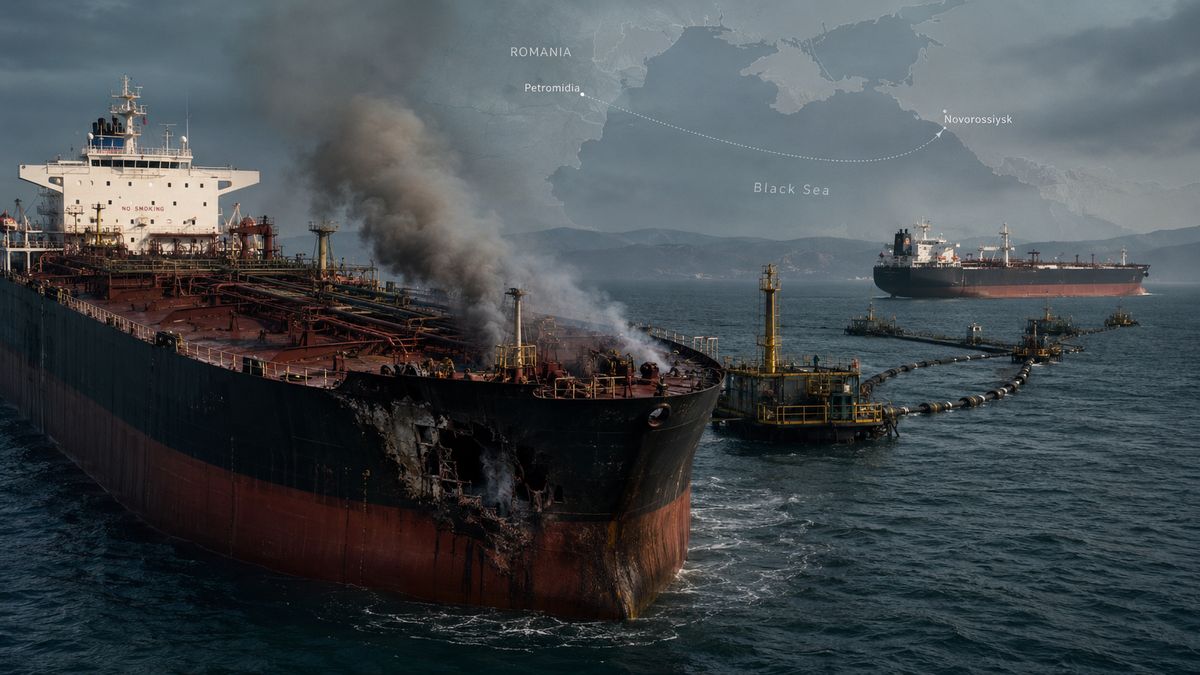
The Caspian Pipeline Consortium (CPC) has stopped accepting crude oil from Kazakhstan following the suspension of loadings at its Black Sea terminal, according to three industry sources cited by Reuters. Two of the sources indicated that the terminal's storage tanks are full, and marine tracking data shows that at least two tankers scheduled to load oil have changed course. CPC has not publicly confirmed the halt in oil intake and declined to comment on reports of full storage tanks. However, the operator had previously confirmed the suspension of loadings following attacks on vessels near the terminal. The Kazakh government stated that the loading facilities were not damaged. The bottleneck is therefore not the result of pipeline destruction or terminal decommissioning. Oil can no longer be evacuated quickly enough by sea, vessels are avoiding the area, and available storage space has run out. When tanks at the end of the pipeline fill up, the operator must reduce or halt upstream flows, even if the facilities remain technically operational. Four Tankers Attacked in Four Days The series of incidents began on July 17, when the tanker Nordic Zenith, chartered to load at the CPC terminal, was attacked and damaged by two drones. The vessel could no longer dock for loading, and part of the crew was evacuated after a fire broke out. La 19 iulie, petrolierele ASIA și NISSOS IOS au fost atacate în timpul operațiunilor de încărcare. Pe ASIA a izbucnit un incendiu, ulterior stins. Nu au fost raportate victime sau scurgeri de petrol, iar instalațiile offshore SPM-1 și SPM-3, prin care țițeiul este transferat către nave, nu au fost avariate. Încărcările au fost suspendate pentru evaluarea situației și reluate ulterior pentru scurt timp. On July 19, the tankers ASIA and NISSOS IOS were attacked during loading operations. A fire broke out on the ASIA but was subsequently extinguished. No casualties or oil spills were reported, and the offshore SPM-1 and SPM-3 single point mooring facilities, used to transfer crude to vessels, were undamaged. Loadings were suspended to assess the situation and later briefly resumed. Operations were halted again on July 20 following an attack on the tanker NELSA. The vessel was struck on its starboard side, between the superstructure and the engine room, and a fire on the deck and lower compartments was extinguished. Twenty-two crew members were evacuated, with the exception of the captain and the chief officer. No spill was reported in this incident either. Russia accused Ukraine of aiming to disrupt CPC operations and destabilize the oil market. Ukraine has not commented on the attacks, and CPC has not publicly identified the perpetrator. Attribution therefore remains tied to allegations made by Russian authorities, rather than an official claim by Kyiv. Infrastructure Intact, but the Logistics Chain is Broken The CPC pipeline spans approximately 1,510 kilometers, transporting oil from Kazakhstan's major fields to the marine terminal located on the Russian Black Sea coast near Novorossiysk. From there, the crude is loaded onto tankers and shipped to refineries in Europe and other international markets. CPC handles approximately 80% of Kazakhstan's oil exports. In June 2026, the system delivered around 1.699 million barrels per day, down 7% from May following an incident at the Tengiz field and a reduction in Russian volumes fed into the pipeline. At this level, the CPC flow represents nearly 2% of global oil supply. This succession of incidents demonstrates how quickly a security risk can translate into a physical supply disruption. Halting exports did not require damaging the pipeline itself. It was enough for the approach to the terminal to become too risky for shipowners, crews, and marine insurers. In maritime shipping, a functional terminal cannot operate without tankers willing to enter the area. Repeated attacks can drive up insurance premiums, limit vessel availability, and prompt charterers to demand additional security guarantees. If oil is not loaded, storage tanks fill up, pressure is transmitted back up the pipeline, and producers may ultimately be forced to curtail extraction. Petromidia Directly Dependent on Kazakh Crude Romania's exposure is primarily concentrated at the Petromidia refinery in Năvodari. The facility is controlled by KMG International, a group owned by Kazakhstan's national oil company KazMunayGas, and mainly processes Kazakh crude grades, including KEBCO and CPC Blend. In the first three months of 2026, Petromidia processed nearly 1.2 million tonnes of feedstock, predominantly Kazakh oil supplied with the support of KazMunayGas. The refinery produced 330,000 tonnes of gasoline and 614,000 tonnes of diesel and aviation fuel, despite a planned maintenance shutdown lasting approximately three weeks. During the same period, 66% of the fuels marketed by Rompetrol Rafinare were directed to the Romanian market. Together, Petromidia and Vega account for…
Ioana Buzoaica — Independent Editorial Board
The NRG-IA newsroom continuously monitors Romanian energy markets, ANRE regulatory decisions, and national grid telemetry (SEN/SNT). We deliver independent intelligence anchored exclusively in official primary data.
Editorial Charter, Ethics & Verification Methodology →