Oil returns, but shipping and diesel remain under pressure — NRG-IA
Piața de Energie Author: Ioana BuzoaicaThe oil market enters a new phase. Middle East crude exports have recovered, but shipping costs, diesel shortages, and vessel attacks keep pressure high.
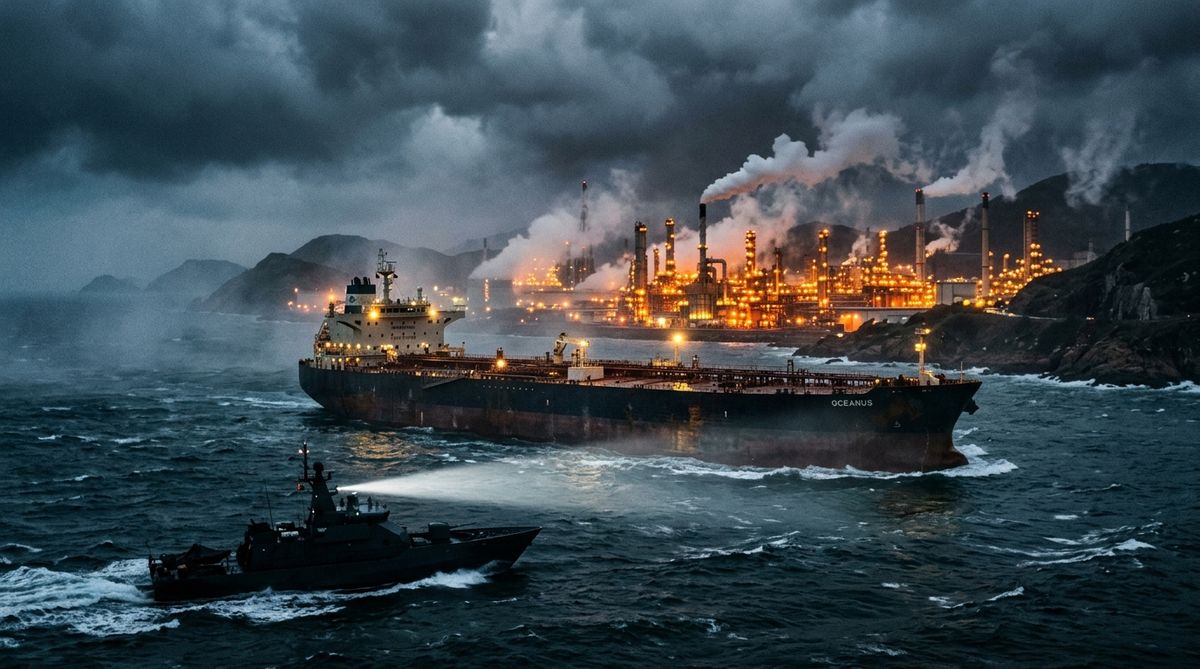
Middle East oil returns to pre-war levels The most significant shift in recent days comes from physical oil flows. Kpler data cited by Reuters shows that Middle East crude exports exceeded pre-war levels in four of the last seven days of September. On September 24 and 27–29, volumes reached between 19.5 and 22.5 million barrels per day . By comparison, average exports from March 2025 to February 2026 were approximately 18 million barrels per day . By October 1, the seven-day moving average had reached 18.5 million barrels per day . When including petroleum products, chemicals, and other liquids, weekly flows reached approximately 22.4 million barrels per day . This is a major shift from the early months of the conflict, when shipping disruptions through the Strait of Hormuz caused the largest oil supply disruption ever recorded on the global market. According to the IEA, before the crisis, approximately 15 million barrels of crude oil and 5 million barrels of petroleum products transited through Hormuz daily, equivalent to nearly 20% of global oil consumption. Oil is returning, but diesel remains the problem The recovery of crude oil does not mean the entire market is returning to normal. The International Energy Agency warns that while Middle East crude exports have recovered significantly, flows of refined products remain severely restricted . The distinction is crucial. Economies do not consume crude oil directly. Oil must be transported to refineries and processed into diesel, gasoline, jet fuel, and other products. This is precisely where one of the market's greatest vulnerabilities persists. The IEA points specifically to pressures on diesel, noting that the situation is exacerbated by Ukrainian attacks on Russian refineries. The result is a tighter refined products market and high prices, even as crude availability begins to improve. The oil crisis is thus shifting shape: the issue is no longer solely whether there is enough crude, but whether it can be transported, refined, and converted into fuel where it is needed. G7 releases another 100 million barrels into the market Governments are intervening directly to ease this pressure. G7 nations have agreed to release 100 million barrels of crude oil and petroleum products from emergency reserves in a renewed effort to stabilize the market. The decision follows the unprecedented coordinated intervention led by the International Energy Agency in March. Of the 400 million barrels pledged by participating nations at the time, approximately 325 million barrels—over 80%—had already been made available to the market by early October . The IEA believes these volumes contributed significantly to covering the deficit and calming the market. The new intervention is also significant in its structure. The pressure is no longer just on crude, and governments are attempting to quickly bring diesel to the market as well. Prices have already reacted. IEA Executive Director Fatih Birol stated that oil fell by about $5/barrel following the announcement of the new intervention, and that the agency stands ready to support the release of additional volumes if the situation demands it. Brent falls toward $101, but the market remains tense On the morning of October 5, Brent was trading around $101.5/barrel , while US WTI crude was hovering around $90/barrel . The decline stems from two factors: larger volumes of oil returning to the market and the deployment of strategic reserves by major economies. However, the fact that Brent remains above the $100 threshold shows that the market is still far from normal. Military risks persist, shipping is far more expensive than before the conflict, refined products are less readily available, and any new disruption to Middle East flows could quickly reverse price trends. Oil shipping has become up to 15 times more expensive on a major route One of the most spectacular distortions is occurring in maritime shipping. The cost of chartering a Very Large Crude Carrier (VLCC) on the Persian Gulf-to-China route has reached approximately $1.2 million per day , compared to around $80,000 per day a year ago . This represents a roughly 15-fold increase. These costs ripple through the entire supply chain. A barrel may exist and be available for export, but delivering it to major Asian consumption hubs has become far more expensive. Producers are already trying to offset this issue. Saudi Aramco cut its official selling prices for oil delivered to Asia in November to their lowest levels in about six years. For the Arab Light grade, the reduction was $3/barrel , resulting in a discount of approximately $5/barrel against the Oman/Dubai benchmarks. For some heavier grades, the adjustment reached $5/barrel. The move highlights how much the economics of oil shipping have changed: producers may be forced to discount the price of the barrel to at least partially offset astronomical delivery costs. Vessels return to Hormuz as attacks multiply However, there…
Ioana Buzoaica — Independent Editorial Board
The NRG-IA newsroom continuously monitors Romanian energy markets, ANRE regulatory decisions, and national grid telemetry (SEN/SNT). We deliver independent intelligence anchored exclusively in official primary data.
Editorial Charter, Ethics & Verification Methodology →