Brent tops $92 after Hormuz attacks; US gas drops under $4 — NRG-IA
Geopolitică & Energie Author: Ioana BuzoaiacaBrent crude rebounded to $92.53/bbl after briefly dipping below $90. US gas fell below $4/gal, but Hormuz attacks show how fragile energy market relief is.
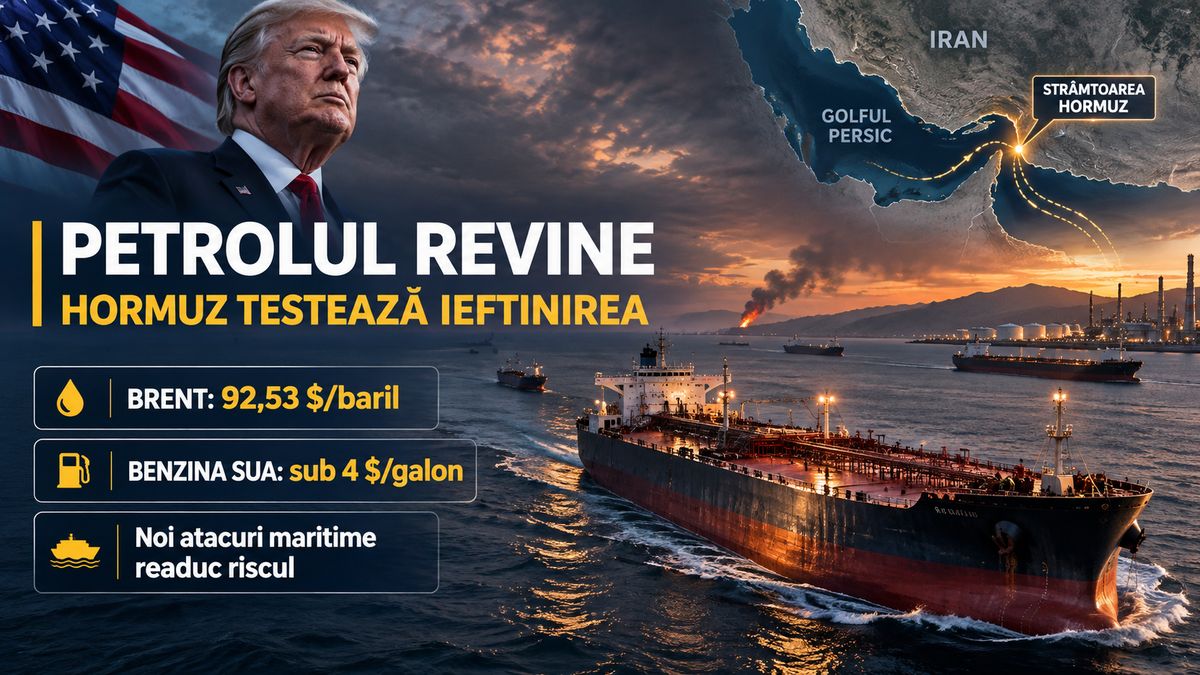
Crude oil rebounded above $92 per barrel on Wednesday, November 11, 2026, after fresh attacks on shipping in the Strait of Hormuz dampened optimism surrounding a potential agreement between the United States and Iran. Brent crude rose to $92.53 per barrel, up roughly 1.1%, while US West Texas Intermediate (WTI) crude reached $86.71 per barrel. The rebound comes just a day after Brent temporarily fell below the $90 threshold amid hopes for de-escalation in the Middle East. The surge in global oil benchmarks contrasts sharply with the trajectory of pump prices in the United States. According to the American Automobile Association (AAA), the national average price for regular gasoline dropped to $3.9788 per gallon on November 10, crossing below the psychological $4 mark for the first time since July. The decline reflects a temporary dip in international benchmarks, lower seasonal demand, and the transition to cheaper winter-blend gasoline formulations. These diverging dynamics highlight the disconnect between international crude markets and consumer-facing retail prices. While American drivers are benefiting from weeks of cumulative price declines, oil market traders are reassessing the risk of fresh supply disruptions. Although a diplomatic breakthrough can quickly push benchmarks lower, a sustained return to cheaper energy ultimately depends on shipping security, crude availability, and inventory replenishment. From sub-$90 to over $92: testing the durability of Iran peace hopes On Tuesday, November 10, Brent crude fell intraday to around $89.89 per barrel following statements from US President Donald Trump that tempered expectations of an immediate military escalation against Iran. Investors viewed the White House signals as a potential opening for de-escalation, stripping out part of the geopolitical risk premium embedded in oil prices. The decline briefly brought Brent to one of its lowest levels in two months. However, optimism was quickly tempered by fresh strikes on commercial shipping in the Middle East. Reuters reported attacks on tankers, including an incident off the coast of Oman and reports of two vessels catching fire after striking sea mines near the Strait of Hormuz. According to agency data, 37 ships were targeted in October alone—the highest monthly tally since the regional conflict broke out. The persistence of such incidents fuels lingering uncertainty over one of the world's most vital maritime chokepoints for global oil trade. Even if a political compromise is achieved, restoring normal shipping flows hinges on mine clearance, lower marine insurance rates, and shipowners' willingness to resume transit. Consequently, physical transport risks may continue to weigh on prices well after encouraging diplomatic signals emerge. This disconnect between political signals and actual maritime normalization explains the swift rebound in benchmark prices. Crude oil is priced not just on production volumes, but on the likelihood of those volumes reaching refineries and consumers on schedule. When disruption risks rise, market participants face inflated freight, insurance, and financing costs, which traders promptly price back into crude contracts. US gasoline drops below $4, but remains nearly 30% higher year-on-year In the United States, falling gasoline prices are providing tangible relief at the pump. AAA data shows a national average price of $3.9788 per gallon on November 10, down from $4.1493 a week earlier and $4.3669 a month prior. The monthly drop of roughly 38.8 cents per gallon translates to savings of nearly $5.82 on a standard 15-gallon fill-up. Yet this decline comes on the heels of a prolonged price surge. Compared to the $3.0707 per gallon recorded a year ago, regular gasoline remains approximately 29.6% more expensive. While dropping below $4 offers immediate relief to American drivers, it falls far short of a return to price levels seen prior to the 2026 energy escalation. Data released on November 10 by the Bureau of Labor Statistics underlines the magnitude of accumulated inflationary pressures. The US gasoline price index in October 2026 stood 37.4% higher than in the same month of the previous year. On a seasonally adjusted basis, the index rose 1% in October compared to September, even as unadjusted figures showed a 0.7% monthly decline—a divergence underscoring the critical role of seasonality in assessing fuel trends. The recent price drop is also driven by shifting consumption patterns. Heading into the colder months, American driving demand typically tapers off, allowing refiners to switch to winter-grade fuel blends that are generally cheaper to produce than summer formulations. This seasonal mechanism helps drag pump prices down even when crude benchmarks remain elevated. This trajectory further illustrates that changes in global crude benchmarks do not translate instantaneously or fully into retail prices. Refining margins, distribution logistics, shipping costs, taxes,…
Ioana Buzoaiaca — Independent Editorial Board
The NRG-IA newsroom continuously monitors Romanian energy markets, ANRE regulatory decisions, and national grid telemetry (SEN/SNT). We deliver independent intelligence anchored exclusively in official primary data.
Editorial Charter, Ethics & Verification Methodology →