Oil Rebounds to $85 as Iran Denies US Talks — NRG-IA
Geopolitică & Energie Author: Ioana BuzoaicaOil rebounded to $85 as Iran denied US talks, the Hormuz dispute remained unresolved, and a new shipping incident highlighted persistent physical risks.
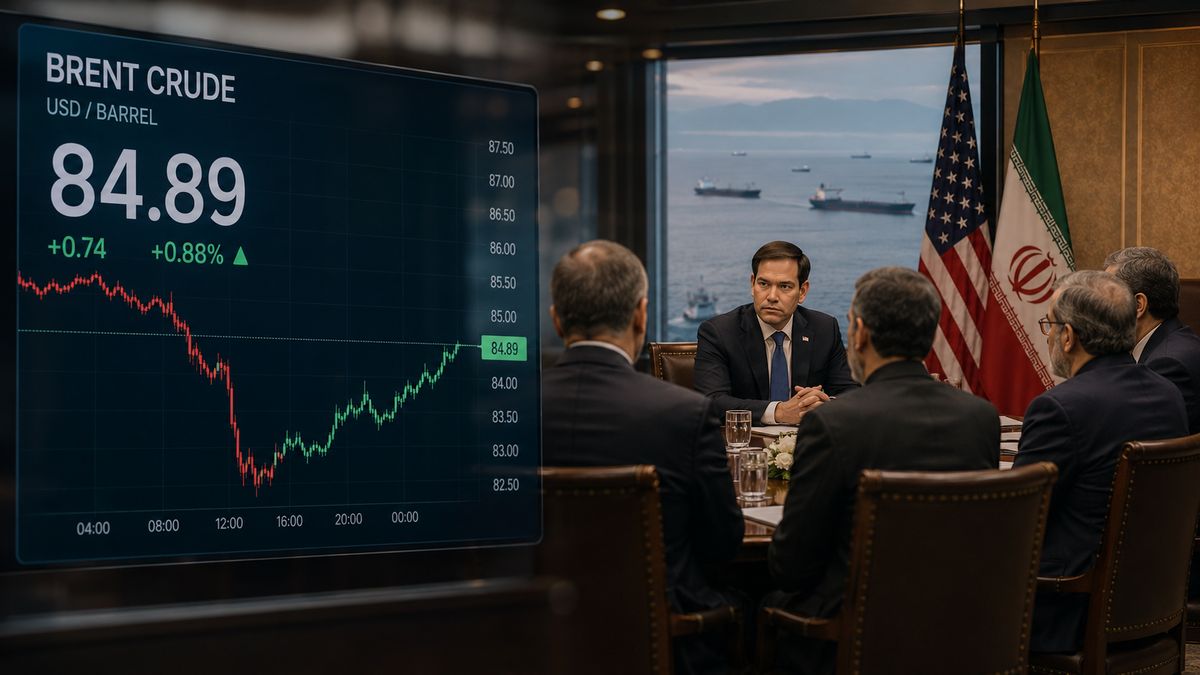
Oil recovered some of its steep losses from the previous session on Tuesday, after hopes of a de-escalation between the United States and Iran pushed prices down by over 7% on Monday. Brent crude front-month contracts rose by $1.12, or 1.3%, to $84.89 per barrel , after dropping to a three-week low in the previous session. US West Texas Intermediate crude rebounded to $81.11 per barrel, following a decline of over 5% on Monday. The movement over the last two sessions shows a market rapidly repricing geopolitical risk before the diplomatic and physical situation in the Strait of Hormuz has cleared up. On Monday, investors reacted strongly to US President Donald Trump's decision to suspend new attacks against Iran and his assertion that negotiations to end the war are underway. On Tuesday, the premise of this de-escalation is being directly challenged by Tehran. The 7% drop came ahead of any normalization of flows Monday's decline did not follow a confirmed reopening of the Strait of Hormuz, nor did it mark a return of oil shipments to pre-conflict levels. The primary driver was political: Trump announced he was postponing new attacks on Iran amid alleged talks to halt the war and resolve the dispute over traffic control through the strait. This shift in outlook allowed the market to quickly price out some of the risk premium built into oil prices. Brent fell by about 7% on Monday, settling around $83.77 per barrel . The move reflects the difference between pricing a risk and its actual materialization. Oil contracts react not only to volumes actually lost or recovered, but also to the probability assigned to future escalation or de-escalation. A credible prospect of a deal can immediately reduce the geopolitical premium, even before vessels and cargoes actually return to normal routes. The problem for the market is that the diplomatic signal sent by Washington is not being confirmed by the other side. Washington says talks have begun; Tehran says they do not exist Donald Trump stated on Monday that talks with Iran were already underway, describing the moment as a final opportunity for Tehran to reach an agreement. Iran's Ministry of Foreign Affairs presents a different picture. Spokesperson Esmail Baghaei stated that no negotiations are taking place with the United States and no meetings are scheduled . According to him, Iran has no plans to receive foreign delegations or send negotiators abroad in the coming days. The only confirmed talks are with Oman regarding the management of the Strait of Hormuz. This contradiction is significant for oil because the market is evaluating not just the possibility of ending the war, but also the prospect of restoring much larger energy flows through the Gulf. The Strait of Hormuz remains one of the primary potential chokepoints of the global energy system. In 2025, prior to the current conflict, an average of approximately 20 million barrels of crude oil and petroleum products per day passed through this route, representing about 25% of global maritime oil trade . Approximately 80% of these volumes were destined for Asia. Exports rise from crisis lows, but recovery remains incomplete There is, however, a positive signal in the physical data. Barclays analysts, cited by Reuters, estimate that net exports of crude oil and petroleum products through Hormuz averaged 4.2 million barrels per day in the week ending July 31 , up from 3.2 million bpd the previous week. This represents a week-on-week increase of approximately 31%. However, these two figures must be interpreted within the context of the same indicator. They show a recovery in net exports compared to the previous week, not a return to pre-war commercial conditions. The 4.2 million bpd figure is not directly comparable to the historical benchmark of approximately 20 million bpd, which includes total flows of crude and petroleum products through the strait. The relevant signal is the direction: volumes are recovering, but the process remains incomplete and dependent on maritime security and the evolution of the confrontation between Washington and Tehran. A struck vessel shows physical risk has not disappeared The gap between financial optimism and operational reality became visible again on Tuesday. The United Kingdom Maritime Trade Operations reported an incident approximately 20 nautical miles (37 kilometers) northeast of Al Khasab, Oman . A cargo vessel reported via maritime radio that it had been struck by an unknown projectile . There is no confirmed attribution of the attack in the available information, so the incident cannot be blamed on any specific actor. However, it indicates the persistent risk to navigation in an area where insurance costs, shipowners' decisions, and vessel availability have become direct components of energy pricing. At the same time, the dispute over Hormuz remains one of the central issues between Washington and Tehran. The United States maintains that the memorandum agreed upon in…